Introduction to Investing
Introduction to Investing
What Is Investing?
Investing is the act of using your money to buy something with the hope that it will be worth more in the future. Think of it as putting your money to work for you. Instead of just letting it sit, you're using it to acquire assets—things like stocks, bonds, or real estate—that have the potential to grow in value or generate income.
The goal of investing is to build wealth over the long term, helping you reach financial goals like retirement, buying a home, or paying for education.
Saving vs. Investing
People often use the words “saving” and “investing” interchangeably, but they are very different concepts with different purposes.
Saving is putting money aside in a very safe place, like a savings account at a bank. This money is easy to access and is meant for short-term goals or emergencies. It's your financial safety net.
Investing involves taking on some risk for the chance of a higher return. The money you invest is typically for long-term goals, giving it time to grow and recover from any short-term dips in value.
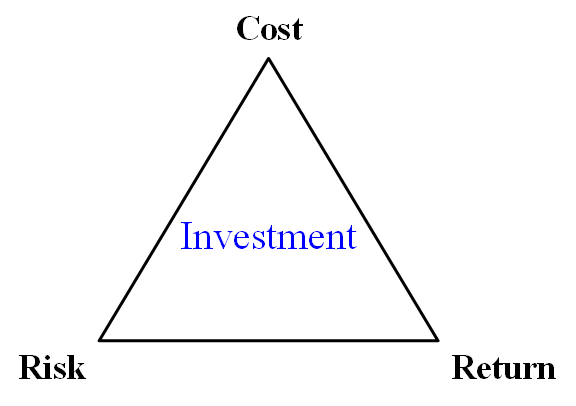
Here’s a simple breakdown of the key differences:
| Feature | Saving | Investing |
|---|---|---|
| Goal | Short-term goals, emergencies | Long-term wealth growth |
| Risk | Very low | Varies (low to high) |
| Potential Return | Low (often less than inflation) | Higher (potential for significant growth) |
| Accessibility | High (easy to withdraw) | Lower (may take time to sell assets) |
The Power of Time
One of the most important concepts in finance is the time value of money. The idea is simple: a dollar today is worth more than a dollar tomorrow. Why? Because the dollar you have today can be invested and start earning a return immediately.
Imagine you have $100. If you invest it and earn a 7% return, you'll have $107 in a year. If you wait a year to receive that $100, you miss out on that $7 of potential growth. This is why starting to invest early, even with small amounts, can have a huge impact over your lifetime.
The future value () of an investment can be calculated with a simple formula:
Here, is the present value (your initial amount), is the annual interest rate, and is the number of years the money is invested. The longer your time horizon, the more powerful the effect of growth becomes.
Investment principles learned early will stay with you forever.
The Silent Thief
While your money is working for you, there's another force at play: inflation. Inflation is the rate at which the general cost of goods and services rises, which causes the purchasing power of your money to fall.
Think about it this way: if a cup of coffee costs $3 today and inflation is 3% for the year, that same coffee will cost about $3.09 next year. Your dollar just doesn't stretch as far as it used to.

This is a critical reason why investing is so important. Money sitting in a low-interest savings account often loses purchasing power to inflation. For your wealth to truly grow, your investments need to generate a return that is higher than the rate of inflation.
This is known as the real rate of return. It's the return an investment provides after the effects of inflation have been taken out.
If your investment earns 7% in a year and inflation is 3%, your real return is approximately 4%. Your purchasing power has increased, not just your dollar amount.
Understanding these core ideas—what investing is, how it differs from saving, the value of time, and the impact of inflation—is the first step toward making smart financial decisions that will benefit you for years to come.