Introduction to Investing
Introduction to Investing
What Is Investing?
Investing is the process of using your money to buy things that have the potential to grow in value. Think of it as putting your money to work for you. Instead of letting cash sit in a savings account where it might grow very slowly, investing gives it a chance to grow much faster over time.
The main purpose is to build wealth. Whether you're planning for retirement, a big purchase, or just want your money to grow, investing is a key tool. It helps your money outpace inflation, which is the gradual increase in the price of goods and services that makes your cash less valuable over time.
Saving is for short-term, predictable goals. Investing is for long-term wealth creation, and it involves taking on some risk for the possibility of higher returns.
The Building Blocks
When you invest, you put your money into different types of assets. These are often grouped into categories called asset classes. Each has its own characteristics, level of risk, and potential for growth. Here are the most common ones you'll encounter:
| Asset Class | What It Is | Primary Goal |
|---|---|---|
| Stocks | A share of ownership in a public company. | Capital growth |
| Bonds | A loan made to a company or government. | Steady income |
| Real Estate | Physical property, like land or buildings. | Income and growth |
| Commodities | Raw materials like gold, oil, or wheat. | Hedges against inflation |
Stocks, also known as equities, represent a slice of ownership in a corporation. If the company does well, the value of your stock can go up. Bonds are essentially IOUs. You lend money, and in return, you get regular interest payments and your original investment back at a future date. Real estate and commodities are other ways to invest, each with its own unique set of risks and rewards.
Risk and Reward
Every investment carries some level of risk. The most important relationship in investing is the one between risk and return. Generally, the higher the potential return an investment offers, the higher the risk involved. There is no such thing as a high-return, no-risk investment.
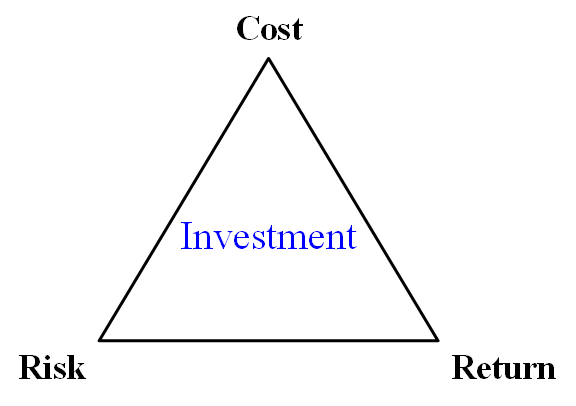
For example, stocks have historically provided higher returns than bonds over the long term, but they also come with more volatility. Their value can swing up and down significantly. Bonds are generally safer and more stable, but they typically offer lower returns. Understanding your own comfort level with risk is a crucial first step before you start investing.
Your Secret Weapon
Two of the most powerful concepts in finance are the time value of money and compound interest. Understanding them is key to seeing how wealth is built over time.
The time value of money is the idea that money you have now is worth more than the same amount in the future. This is because you can invest the money you have today and make it grow. A dollar today can be turned into more than a dollar tomorrow.
Compound interest is what makes this growth so powerful. It's the process of earning returns not just on your original investment, but also on the returns you've already accumulated. It creates a snowball effect that can dramatically increase the value of your investment over time.
In this formula, is the final amount, is the principal (your initial investment), is the annual interest rate, and is the number of years. The longer your money is invested, the more powerful compounding becomes.
Let's say you invest $1,000 at a 7% annual return. After one year, you'd have $1,070. The next year, you earn 7% on $1,070, not just the original $1,000. It might not seem like much at first, but over decades, the difference is huge. This is why it pays to start investing as early as possible.
Now, let's test your knowledge on these foundational ideas.
What is the primary purpose of investing?
Which statement best describes the relationship between risk and return?
Understanding these core concepts—what investing is, the basic asset classes, the risk-return trade-off, and the power of compounding—is the first step toward building a solid financial future.