Introduction to Interior Design
Design Principles
The Language of Design
Have you ever walked into a room and it just felt right? Everything seemed to be in its perfect place, creating a sense of calm and order. That feeling isn't an accident. It's the result of applying core design principles. Think of these principles as the grammar of interior design. They're the guidelines that help arrange furniture, art, and accessories in a way that is both beautiful and functional. By understanding them, you can learn to create spaces that feel intentional and harmonious.
Balance and Stability
Balance is all about distributing the visual weight of objects in a room to create a sense of equilibrium. It’s what makes a space feel stable and comfortable, rather than chaotic or lopsided. There are three main ways to achieve balance.
Symmetrical Balance: This is the most formal and traditional approach. Imagine a line down the center of a room; the elements on one side are a mirror image of the other. Think of a fireplace flanked by two identical armchairs. It creates a feeling of order and tranquility.
Asymmetrical Balance: Here, the objects on either side of a central line are not identical, but they still have similar visual weight. A large sofa on one side might be balanced by two smaller chairs and a side table on the other. This approach is more dynamic, modern, and visually interesting.
Radial Balance: This is when elements are arranged around a central point. A round dining table with chairs placed around it is a perfect example. It naturally draws the eye inward and is great for creating a focal point in areas meant for gathering.
Harmony and Unity
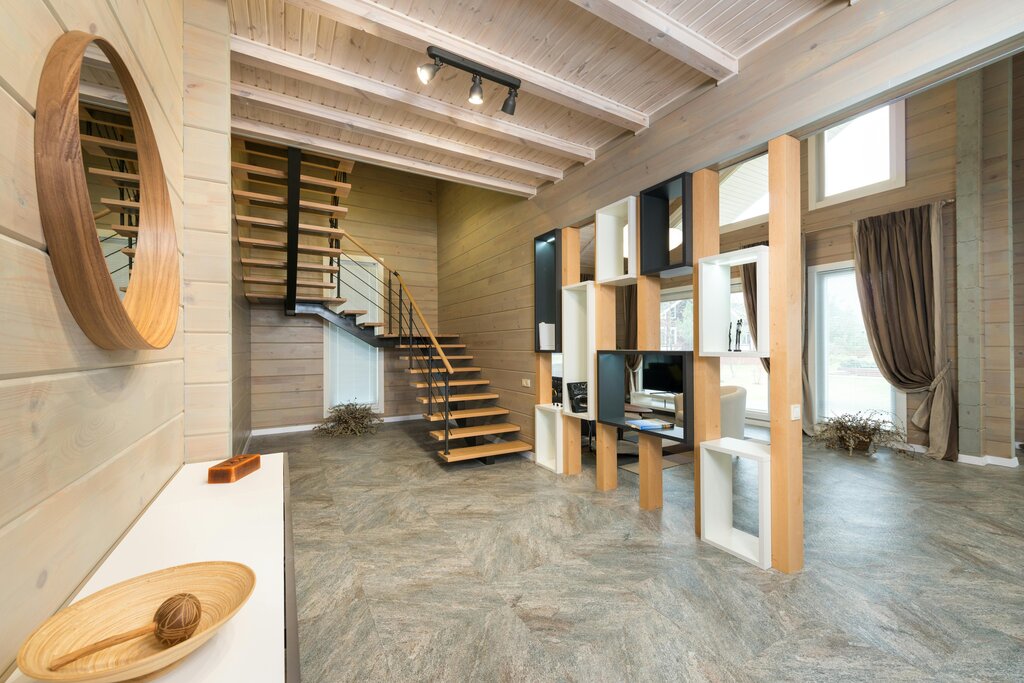
Harmony is the principle that ensures all the elements in a room feel like they belong together. When a space is harmonious, it creates a sense of unity and calm because everything works toward a common look and feel. This is achieved by using similar colors, textures, shapes, or styles throughout the space.
A harmonious room isn't boring; it's cohesive. You can achieve it by choosing a consistent color palette, repeating a particular wood finish on different pieces of furniture, or using fabrics with similar textures. The goal is to create a unified whole where no single element feels out of place.
Rhythm and Flow
Rhythm in design is about creating a sense of movement that guides the eye from one part of the room to another. Just like in music, visual rhythm creates a flow that makes a space feel dynamic and organized. It can be created in a few ways:
Repetition: Repeating a specific pattern, color, shape, or texture throughout a space. This could be using the same accent color on pillows, a vase, and a piece of art.
Progression: Taking an element and gradually increasing or decreasing its size or color intensity. Think of a set of nesting tables or a collection of candles that go from small to large.
Transition: Using a continuous line to carry the eye through the space. An arched doorway or the curving lines of a piece of furniture can create a graceful transition from one area to another.
Rhythm helps connect different parts of a room, turning a collection of objects into a thoughtfully composed space.
Emphasis, Contrast, and Scale
While harmony and rhythm create unity, other principles are needed to add excitement and visual interest. That's where emphasis and contrast come in.
Emphasis
noun
The creation of a focal point in a room. It’s the area your eyes are drawn to when you first enter the space.
Every room needs a star. This focal point could be a fireplace, a dramatic piece of art, a large window with a beautiful view, or even a bold accent wall. All other items in the room should play a supporting role to this main feature. Without a clear point of emphasis, a room can feel scattered and uninteresting.
Contrast is a key tool for creating emphasis. It involves placing two opposing elements next to each other to highlight their differences. This can be achieved with color (black and white), shape (a round mirror over a rectangular table), or texture (a rough, woven rug on a smooth, polished floor). Contrast adds depth and prevents a room from feeling flat.
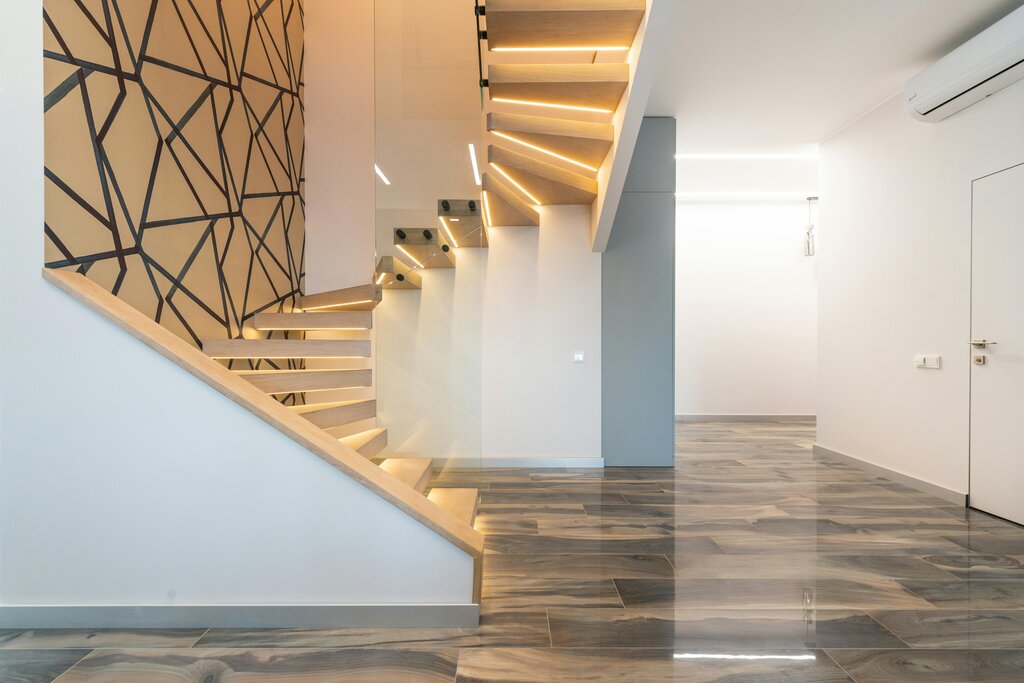
Finally, scale and proportion are about relationships. Scale refers to the size of one object in relation to another, while proportion refers to the size of the parts of a single object.
Getting these right is crucial. A tiny rug in a huge living room will feel lost, just as an oversized sofa will overwhelm a small den. The goal is to select items that are appropriately sized for the space itself and for the other objects within it. When the scale and proportion are correct, the room feels balanced and comfortable.
The principles of design suggest how a designer can best arrange the various components of a page layout to connect to the overall design and to one another.
Ready to test your knowledge? Let's see how well you understand these foundational principles.
Which design principle is primarily concerned with creating a sense of unity where all elements in a room feel like they belong together?
Placing a large, bold piece of artwork above a fireplace to immediately draw attention is an application of which principle?
Mastering these seven principles—balance, harmony, rhythm, emphasis, contrast, scale, and proportion—is the key to creating interiors that are not only beautiful but also feel just right.