Introduction to Intelligent Agents
Introduction to Intelligent Agents
What Are Intelligent Agents?
In artificial intelligence, an agent is anything that can view its environment through sensors and act upon that environment through actuators. Think of it as an autonomous entity that observes and acts. This could be a simple software program or a complex robot.
An AI agent is a software program designed to understand its environment, process information, and take actions to achieve specific goals.
A thermostat is a basic example. Its sensor perceives the room's temperature. If the temperature is below the target, its actuator turns on the furnace. The goal is simple: maintain a specific temperature. The environment is the room, the perception is the temperature reading, and the action is controlling the heat. This continuous cycle of perceiving, thinking, and acting is fundamental to all intelligent agents.
Whether it's a character in a video game reacting to a player, a stock-trading bot analyzing market data, or a smart assistant on your phone listening for a command, the principle is the same. The agent takes in information, processes it, and does something in response to achieve a goal.
Core Characteristics
Not all agents are created equal. What makes an AI agent 'intelligent' are certain key characteristics that go beyond simple stimulus-response. These qualities allow them to operate effectively and independently.
Autonomy
noun
The ability to perform tasks and make decisions without direct human control.
An autonomous agent has its own internal state and can control its actions. It doesn't just follow a script; it makes choices based on its perceptions and programming to achieve its objectives.
Another key trait is reactivity. An agent must be able to respond in a timely fashion to changes in its environment. A self-driving car that can't react quickly to a sudden obstacle isn't very useful or safe.
Intelligent agents are also pro-active. They don't simply wait for things to happen; they take initiative to achieve their goals. A pro-active agent might anticipate future problems and work to prevent them.
Finally, many agents possess social ability, meaning they can communicate and cooperate with other agents or with humans. This is crucial for systems where teamwork is required to solve complex problems, such as a team of rescue robots coordinating a search in a disaster area.
| Characteristic | Description | Real-World Example |
|---|---|---|
| Autonomy | Operates without direct control | A smart thermostat adjusting the temperature based on its schedule and sensors. |
| Reactivity | Responds to environmental changes | An email spam filter automatically moving a suspicious message to the junk folder. |
| Pro-activeness | Takes initiative to meet goals | A digital assistant reminding you to leave for a meeting based on traffic conditions. |
| Social Ability | Interacts with other agents/humans | A customer service chatbot answering questions and resolving issues. |
The Role of Agents in AI
Intelligent agents are the workhorses of AI. They provide a framework for building systems that can perform complex, goal-oriented tasks in dynamic environments. By encapsulating perception, decision-making, and action into a single entity, developers can create modular and capable AI systems.
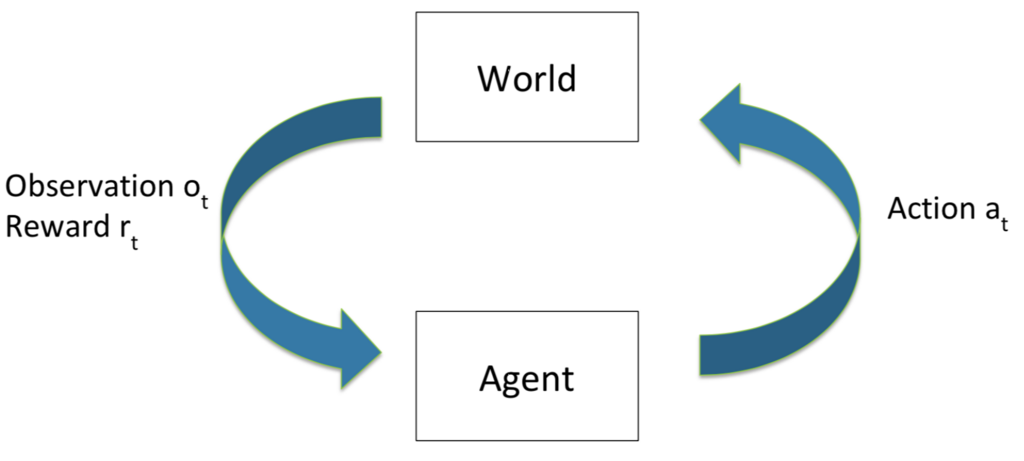
This agent-based approach is central to nearly every field of AI, from robotics and game development to automated financial trading and smart home devices. Understanding the concept of an agent is the first step toward understanding how modern AI systems are designed to intelligently interact with the world.
According to the definition of an AI agent, what are the two fundamental components it uses to interact with its environment?
A stock-trading bot automatically sells a stock when its price drops by 15% in an hour. Which key characteristic of an intelligent agent does this immediate response to market changes primarily demonstrate?