Introduction to Industrial Robotics
Introduction to Industrial Robotics
What Is an Industrial Robot?
An industrial robot is a machine designed to automate tasks in a manufacturing setting. Think of it as a programmable arm that can be taught to perform repetitive jobs with high precision and consistency. While the idea of automated machines is ancient, the story of the modern industrial robot begins in the 1950s.
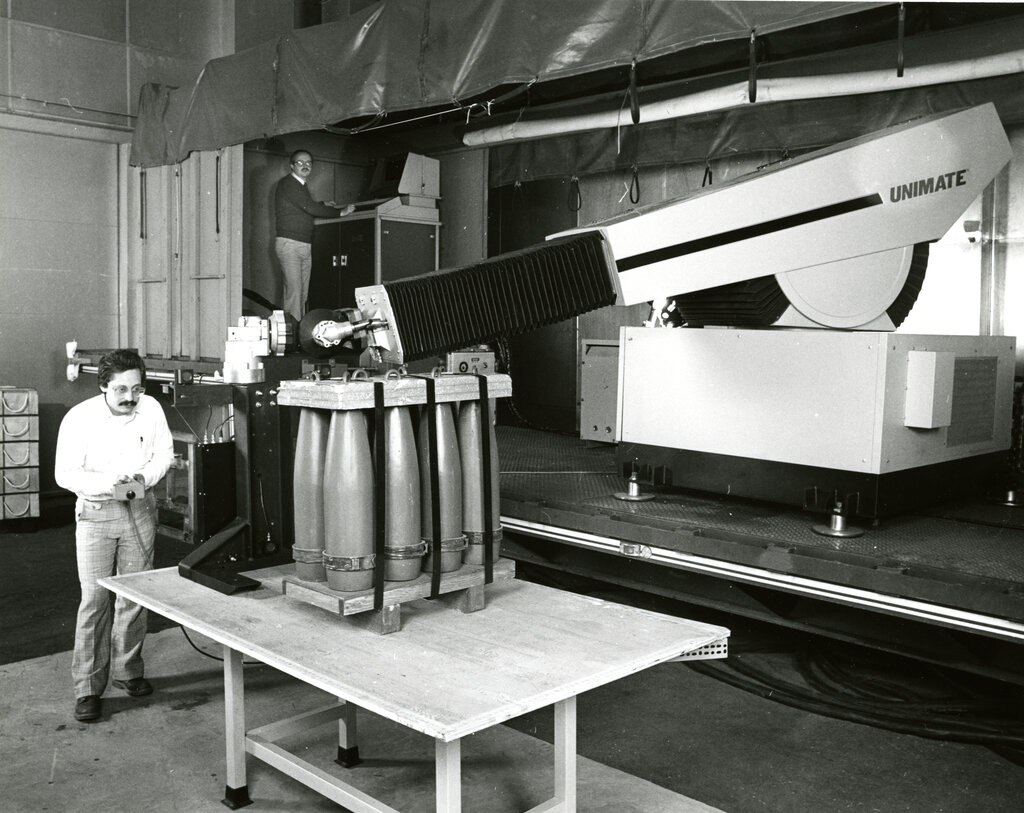
The first successful industrial robot, named Unimate, was installed at a General Motors plant in 1961. Its job was to lift and stack hot pieces of metal from a die-casting machine, a dangerous and unpleasant task for humans. This single machine proved that robots could work tirelessly and safely in factories, sparking a revolution in manufacturing.
The Building Blocks of a Robot
Every industrial robot, regardless of its shape or size, is made from a few key components that work together. Understanding these parts helps demystify how these machines operate.
Think of a robot's components like parts of a human body: a brain, muscles, senses, and a hand.
Here's what each part does:
- Controller: This is the robot's brain. It's a computer that holds the program, processes data from sensors, and tells the actuators how and when to move. It coordinates all the robot's actions.
- Actuators: These are the robot's muscles. Usually electric motors, they convert energy into movement, allowing the robot's joints to rotate or extend.
- Sensors: These are the robot's senses. They collect information about the robot's position or its environment. Common sensors include cameras for vision, pressure sensors for touch, and position sensors to track joint angles.
- End-Effector: Also called an End-of-Arm Tool (EOAT), this is the robot's hand. It's the specific tool attached to the end of the robot's arm to perform a task. It could be a gripper, a welding torch, a drill, or a suction cup.
A Family of Robots
Industrial robots come in various shapes and sizes, each designed for different types of work. While there are many specialized designs, most fall into one of a few main categories.
articulated
adjective
Having two or more sections connected by a flexible joint.
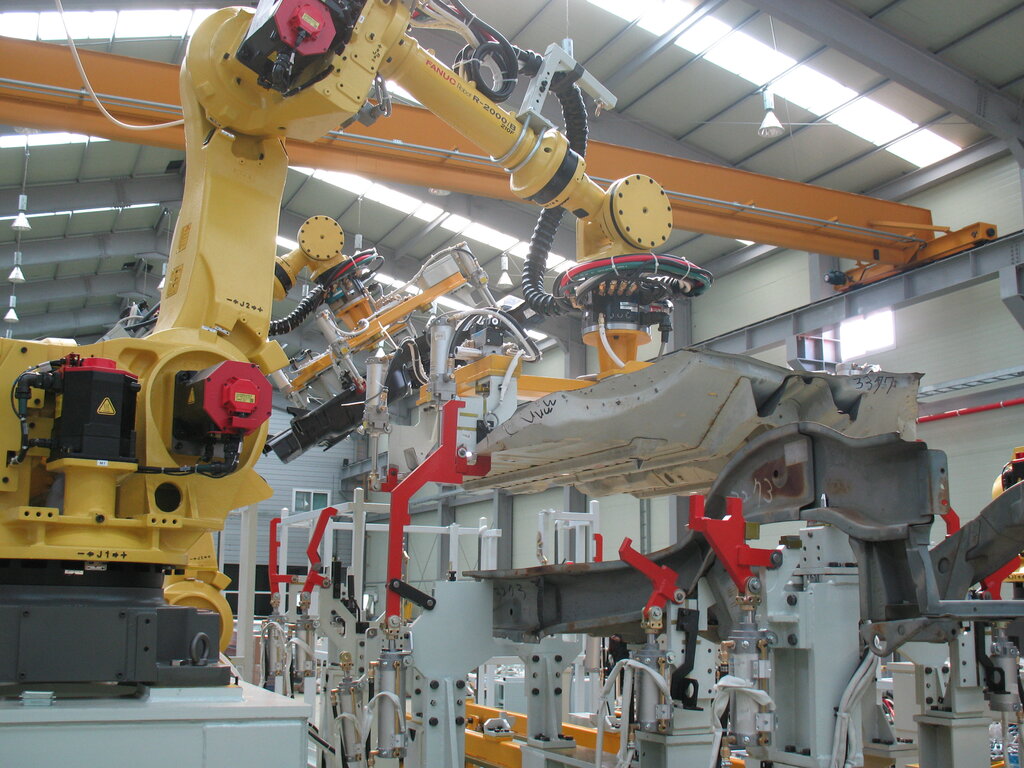
Articulated Robots are the most common type. They look and move like a human arm, with a series of joints that allow for a wide range of motion. This flexibility makes them suitable for complex tasks like welding, painting, and assembly. Their versatility is why you see them so often in car factories.
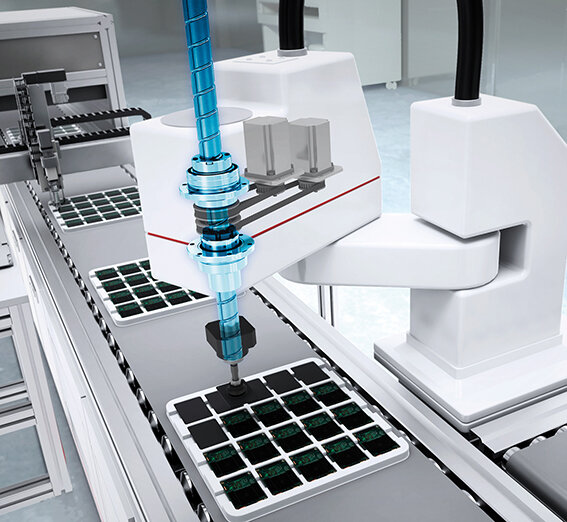
SCARA Robots are built for speed and precision in a horizontal plane. The name stands for Selective Compliance Assembly Robot Arm. They have two joints that allow the arm to swing side-to-side and a third joint that moves a tool up and down. They excel at 'pick-and-place' tasks, quickly moving small parts from one spot to another, like placing components on a circuit board.
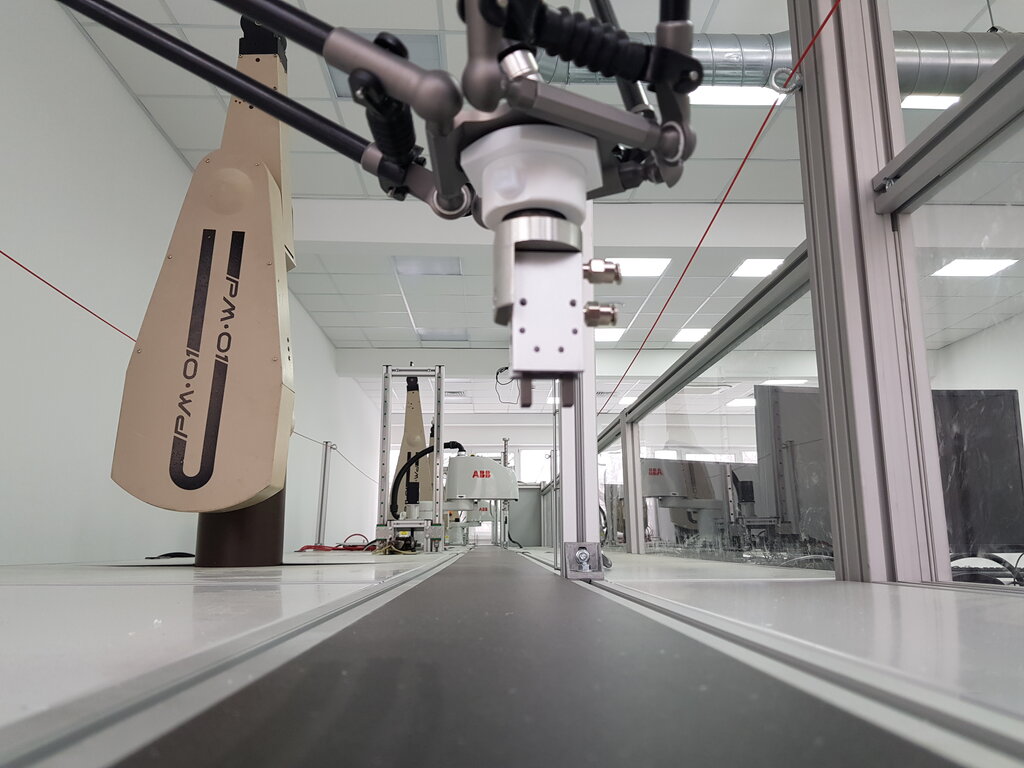
Delta Robots are spider-like machines known for their incredible speed. They consist of three arms connected to a single point, allowing them to make very fast, precise movements within a confined workspace. You'll often find them in the food and electronics industries, where they rapidly package small, lightweight items.
Collaborative Robots, or 'cobots,' are a newer and rapidly growing category. Unlike traditional industrial robots that are kept in safety cages, cobots are designed to work safely alongside humans. They are equipped with sensors that stop them if they bump into a person. This allows for new workflows where human creativity and a robot's strength can be combined on the same task.
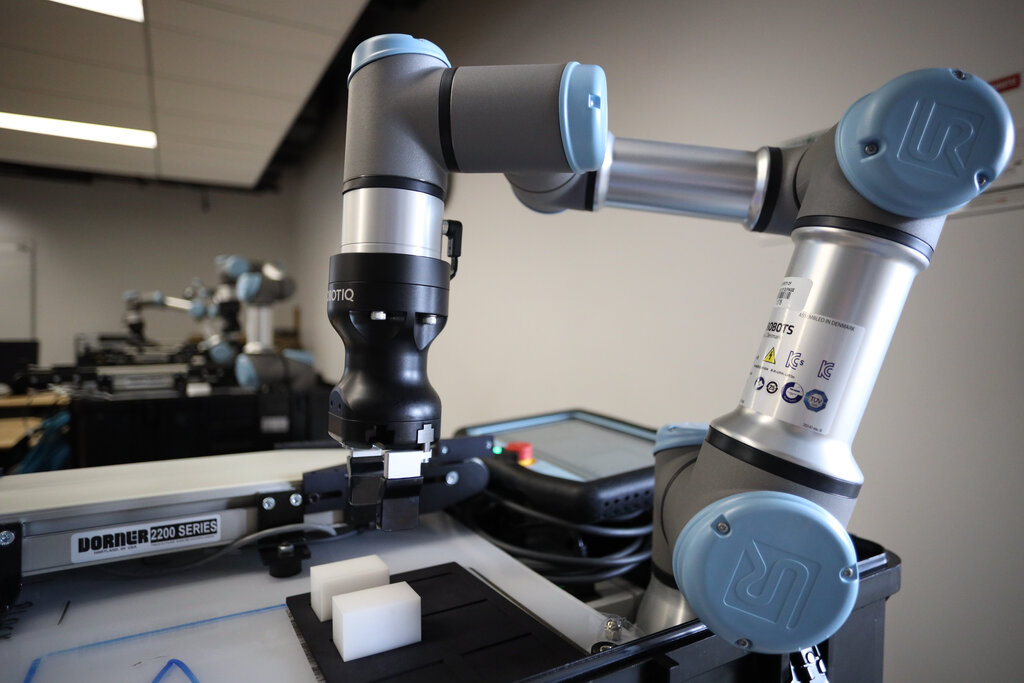
These different robot types provide manufacturers with a toolbox of options, each suited for a specific need, from heavy lifting to delicate, high-speed assembly.
Ready to check your understanding of these robotic building blocks?
Which component of an industrial robot is analogous to the human brain, processing data and sending instructions?
What was the primary task of the first industrial robot, Unimate, when it was installed in a General Motors plant in 1961?