Introduction to Hydrological Analysis
Introduction to Hydrology
The Journey of Water
Water is constantly on the move. It flows in rivers, sits in lakes, and hides underground. It’s in the air we breathe and the plants around us. Hydrology is the science of this journey, studying how water moves, where it goes, and its quality along the way.
Understanding this cycle is crucial. It helps us predict floods, manage droughts, and ensure we have clean water to drink. When we build cities or farm land, we change how water moves. Hydrology gives us the tools to manage these changes wisely.
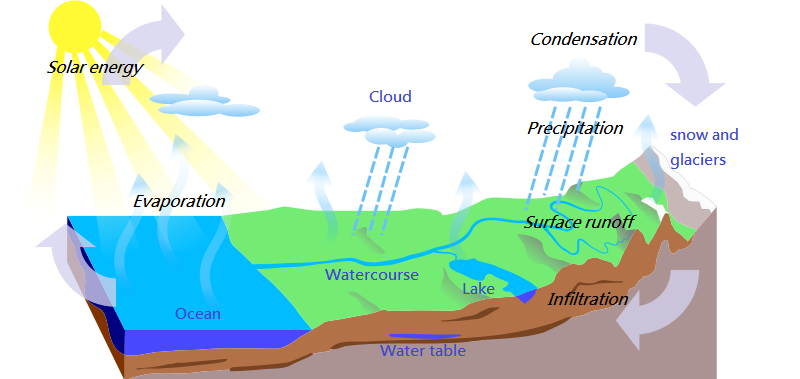
The water cycle, also known as the hydrologic cycle, refers to the continuous movement of water between the earth and the atmosphere.
From Surface to Sky
The sun is the engine of the water cycle. It warms up water in oceans, lakes, and rivers, causing it to change from a liquid to a gas. This process is called evaporation.
evaporation
noun
The process where a liquid turns into a gas, typically as a result of heat.
Plants play a part, too. They draw water from the soil through their roots and release it as vapor from their leaves. This is called transpiration. You can think of it as plants breathing out water. Together, evaporation and transpiration send huge amounts of water vapor into the atmosphere.
From Sky to Ground
As water vapor rises, it cools and turns back into tiny liquid water droplets. This is condensation, and it’s how clouds are formed. When these droplets clump together and become heavy enough, they fall back to Earth as precipitation.
Precipitation isn't just rain. It can be snow, sleet, or hail, depending on the temperature.
What Happens on Land
Once water reaches the ground, it can take two main paths. Some of it soaks into the earth in a process called infiltration. It seeps down through soil and rock, replenishing groundwater, which is a major source of our drinking water. Think of the ground acting like a sponge.
When rain falls too fast for the ground to absorb, or when the ground is already saturated, the water flows over the land's surface. This is runoff. It travels downhill, collecting in streams, rivers, and eventually making its way back to lakes and oceans.
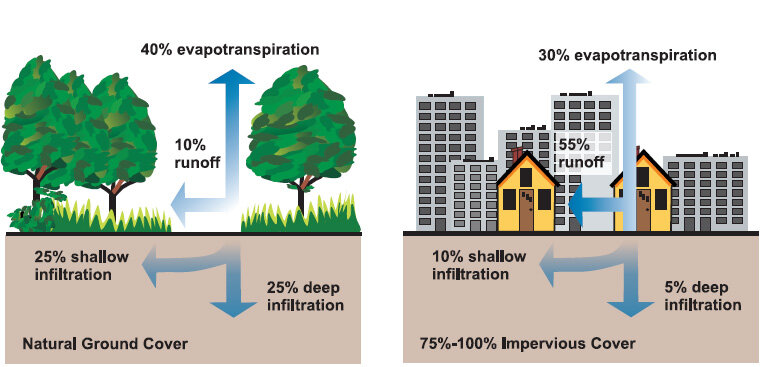
Urban areas with lots of concrete and pavement have high runoff, which can lead to flooding. In contrast, forests and grasslands have high infiltration rates, which helps recharge groundwater and prevent erosion.
Let's review the key terms we've covered.
Now, let's test your understanding of these core concepts.
What is the primary energy source that drives the water cycle?
The process of plants drawing water from the soil and releasing it into the atmosphere as vapor is called:
Every drop of water is on this continuous journey. By understanding its path, we can better protect and manage this essential resource.