Introduction to Human Anatomy
Introduction to Human Anatomy
From Cells to Systems
The human body is like an incredibly complex building. It’s not just one solid structure, but a collection of smaller parts working together. To understand the whole building, you first have to understand the basic materials.
The most basic building block of the body is the cell. We have trillions of them, and they come in many varieties, each with a specific job. Muscle cells contract, nerve cells send signals, and skin cells form a protective barrier.
It is convenient to consider the structures of the body in terms of fundamental levels of organization that increase in complexity, such as (from smallest to largest): chemicals, cells, tissues, organs, organ systems, and an organism.
When cells of the same type band together, they form a tissue. For instance, many muscle cells working together form muscle tissue. There are four main types of tissue: epithelial (linings and coverings), connective (support), muscle (movement), and nervous (communication).
Different types of tissues then join forces to create an organ. The heart, for example, is an organ made of muscle tissue to pump blood, nervous tissue to control the heartbeat, and connective tissue to hold it all together. Each organ has a distinct, complex job.
Finally, organs that cooperate on a major task form an organ system. The digestive system includes the stomach, intestines, and liver, all working together to break down food. These systems all work together to create a functioning organism: you.
The Language of Anatomy
To talk about the body accurately, scientists need a shared map and a common language. Imagine trying to give directions in a city where no one agrees on what “up” or “down” means. It would be chaos. That’s why anatomy starts with a standard reference point: the anatomical position.
This position is of a person standing upright, with their feet flat on the floor and shoulder-width apart. The arms are at the sides, and importantly, the palms face forward. No matter how a body is actually positioned, all descriptions refer back to this standard pose.
From this position, we use directional terms to describe where one body part is in relation to another. These terms always come in pairs of opposites.
| Term | Definition | Example |
|---|---|---|
| Superior / Inferior | Above / Below | The head is superior to the chest. |
| Anterior / Posterior | Front / Back | The sternum is anterior to the spine. |
| Medial / Lateral | Toward / Away from the midline | The nose is medial to the ears. |
| Proximal / Distal | Closer to / Farther from the trunk | The elbow is proximal to the wrist. |
| Superficial / Deep | Closer to / Farther from the surface | The skin is superficial to the muscles. |
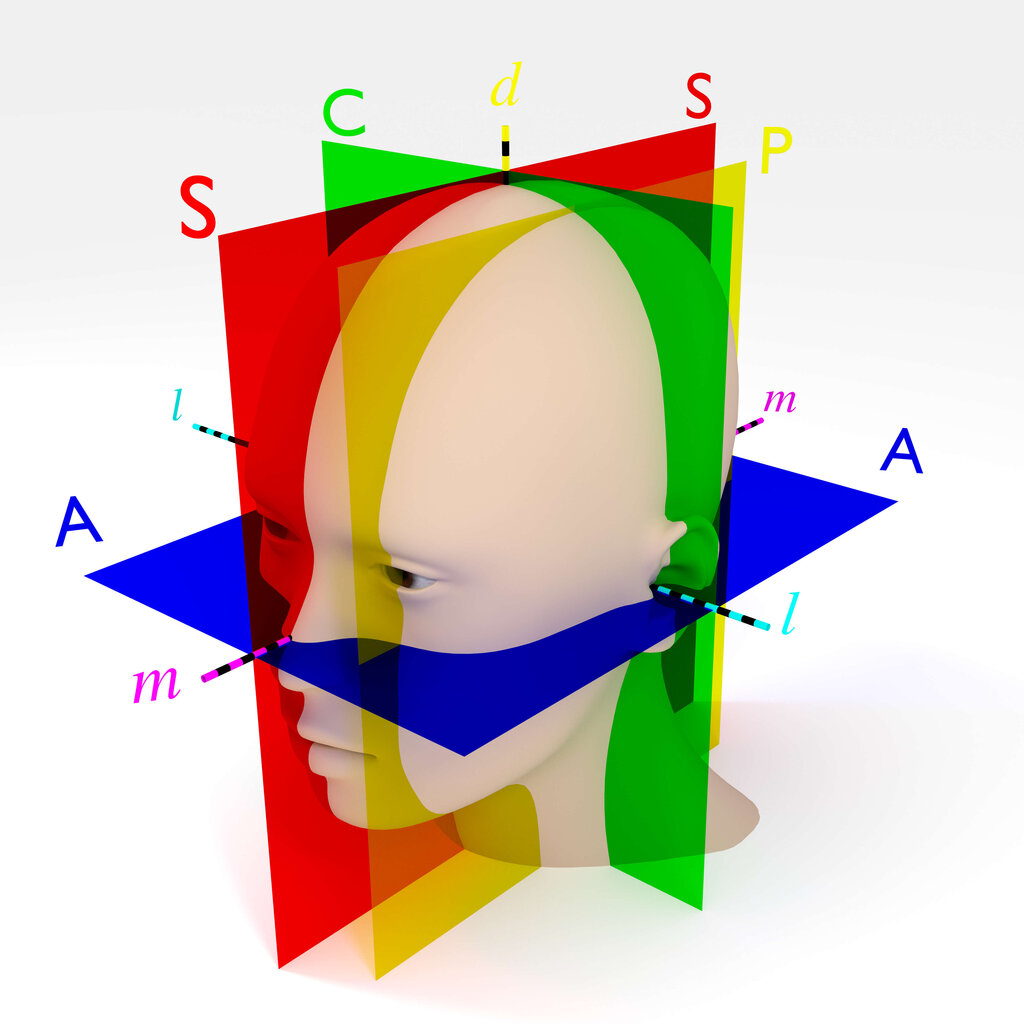
We also use three imaginary planes to slice through the body, which helps us see internal structures. These are like the different ways you might slice a loaf of bread.
- Sagittal Plane: Divides the body into left and right portions. If the cut is directly down the midline, it’s a midsagittal plane.
- Frontal (or Coronal) Plane: Divides the body into front (anterior) and back (posterior) portions.
- Transverse (or Axial) Plane: Divides the body horizontally into upper (superior) and lower (inferior) portions. It’s often called a cross-section.
A Quick Tour of the Body
The human body is composed of several organ systems, each with a primary role. While we study them separately, remember that they are all interconnected and constantly work together.
Here is a brief overview of the major systems:
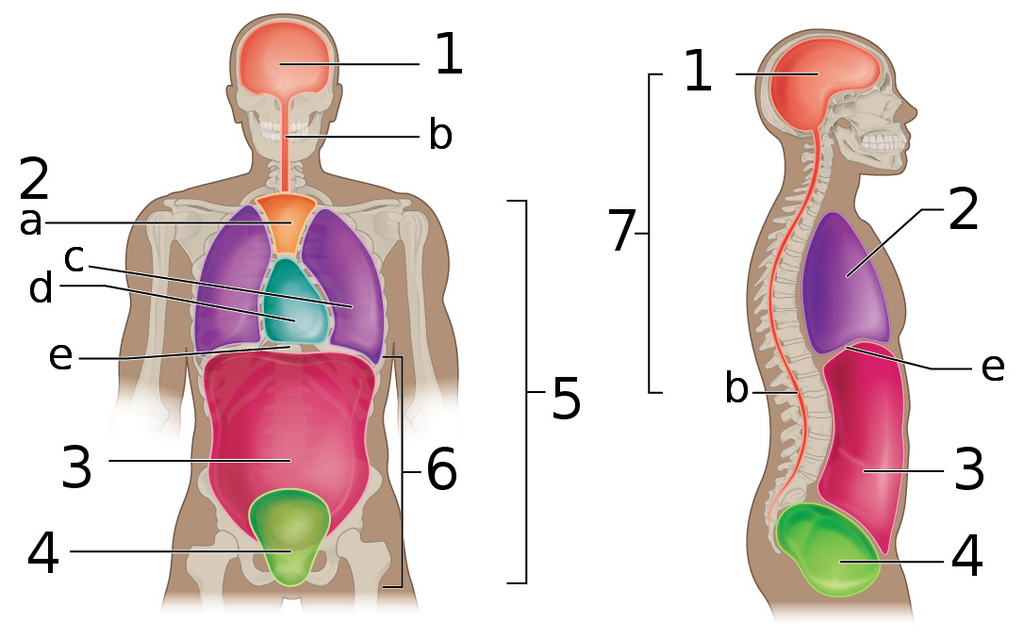
- Integumentary System: The skin, hair, and nails, which form a protective outer barrier.
- Skeletal System: Bones and joints that provide structure, support, and protection.
- Muscular System: Muscles that enable movement, maintain posture, and produce heat.
- Nervous System: The brain, spinal cord, and nerves that act as the body’s control and communication network.
- Endocrine System: Glands that secrete hormones to regulate processes like growth and metabolism.
- Cardiovascular System: The heart and blood vessels that transport blood, oxygen, and nutrients throughout the body.
- Lymphatic System: A network of vessels and nodes that returns fluid to the blood and is a key part of the immune system.
- Respiratory System: The lungs and airways, responsible for taking in oxygen and removing carbon dioxide.
- Digestive System: Organs that break down food, absorb nutrients, and eliminate waste.
- Urinary System: Kidneys, bladder, and tubes that eliminate waste from the blood and regulate water balance.
- Reproductive System: Organs involved in producing offspring.
Now let's review some of the key terms we've just covered.
Ready to check your understanding?
Which of the following correctly lists the levels of anatomical organization from the simplest to the most complex?
In the standard anatomical position, which direction do the palms face?
This framework of organization, terminology, and systems provides the foundation for exploring the incredible complexity of the human body.