Introduction to Hindi
Devanagari Script
The Devanagari Script
Hindi is written in a script called Devanagari. At first glance, it might look complex, but it's remarkably logical. One of its best features is that it's almost perfectly phonetic. This means words are pronounced exactly as they are written. Once you learn the sounds of the letters, you can read any Hindi word you see.
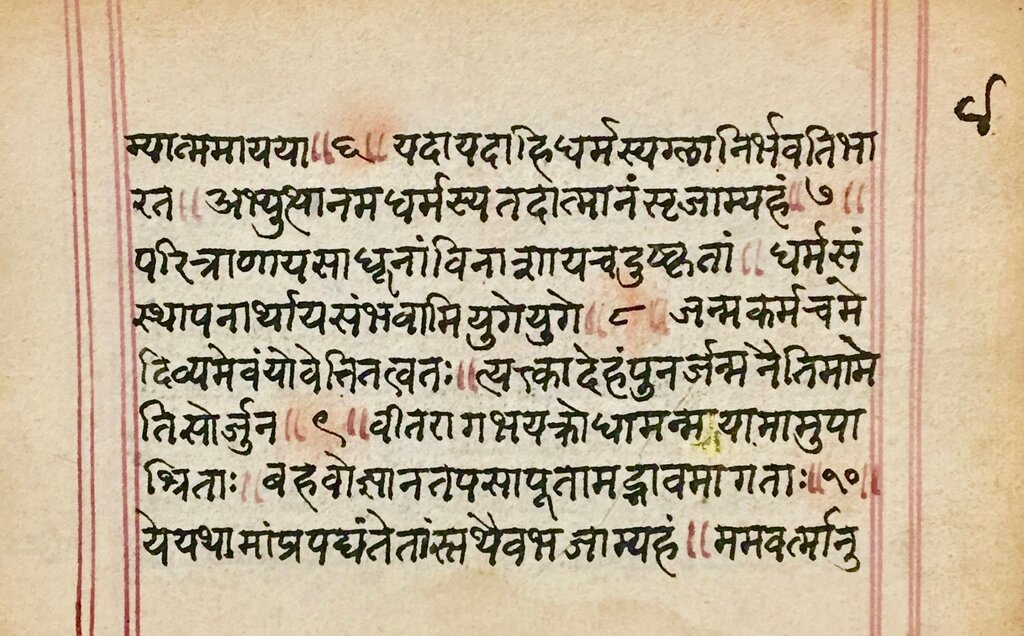
Devanagari is an abugida, which is a bit different from an alphabet like English. In an abugida, each consonant has an inherent vowel sound built into it, usually a short 'a' sound (like the 'u' in 'but'). Vowels are then added as extra marks that modify the consonant's sound. You'll notice that most characters hang from a horizontal line at the top. This line connects the letters in a word.
The key principle of Devanagari: What you see is what you say.
Vowels (स्वर)
Vowels, or svar (स्वर), are the foundation of Devanagari's sound system. They can appear in two forms: as independent letters, usually at the beginning of a word, or as marks called matras (मात्रा) that attach to consonants to change their sound.
Here are the independent vowels:
| Vowel | Transliteration | Pronunciation (like the vowel in...) |
|---|---|---|
| अ | a | 'u' in 'but' |
| आ | ā | 'a' in 'father' |
| इ | i | 'i' in 'pin' |
| ई | ī | 'ee' in 'see' |
| उ | u | 'u' in 'put' |
| ऊ | ū | 'oo' in 'food' |
| ऋ | ṛ | 'ri' in 'river' |
| ए | e | 'ay' in 'say' |
| ऐ | ai | 'ai' in 'aisle' |
| ओ | o | 'o' in 'go' |
| औ | au | 'ou' in 'ouch' |
When a vowel follows a consonant, it takes its matra form. For example, the consonant क (k) has an inherent 'a' sound. To change it to 'kee', we add the matra for ई, which is ी. The result is की.
Consonants (व्यंजन)
Consonants, or vyanjan (व्यंजन), form the backbone of words. As mentioned, each one has a built-in 'a' sound unless it's modified by a vowel matra or silenced by a special mark called a halant (्). The consonants are organized scientifically in the table below, based on where in the mouth the sound is made.
| Transliteration | (Example) | |
|---|---|---|
| क | ka | kite |
| ख | kha | back hand |
| ग | ga | go |
| घ | gha | doghouse |
| च | ca | chair |
| छ | cha | churchhill |
| ज | ja | jump |
| झ | jha | hedgehog |
| ट | ṭa | top (tongue curled back) |
| ठ | ṭha | lighthouse (tongue curled) |
| ड | ḍa | dog (tongue curled back) |
| ढ | ḍha | redhead (tongue curled) |
| त | ta | thanks (tongue on teeth) |
| थ | tha | thunder |
| द | da | that |
| ध | dha | adhere |
| न | na | name |
| प | pa | pin |
| फ | pha | uphill |
| ब | ba | bat |
| भ | bha | abhor |
| म | ma | man |
| य | ya | yes |
| र | ra | run (trilled 'r') |
| ल | la | love |
| व | va | van (or 'w' sound) |
| श | śa | shoe |
| स | sa | sun |
| ह | ha | hat |
Forming Words
Let's build a common word: namaste. This is a respectful greeting you'll hear all the time.
Hello (a respectful greeting)
Here's how it's formed:
- न (na): The consonant 'n' with its built-in 'a' sound.
- म (ma): The consonant 'm' with its built-in 'a' sound.
- स् (s): The consonant 's', but with a halant (the little tick underneath) to remove its 'a' sound. This makes it just 's'.
- ते (te): The consonant 't' (त) combined with the matra for the vowel 'e' (ए), which is े.
Put them together under the horizontal line: न + म + स् + ते = नमस्ते.
Ready to test your knowledge? Let's see how well you can identify these new characters.
What type of writing system is Devanagari?
What is the primary function of a matra (मात्रा) in Hindi?
Learning a new script takes practice, but the logical, phonetic nature of Devanagari makes it one of the easier systems to master. Keep practicing reading and writing these characters, and you'll be reading Hindi in no time.