Introduction to Guitar Playing
Guitar Basics
A Quick History
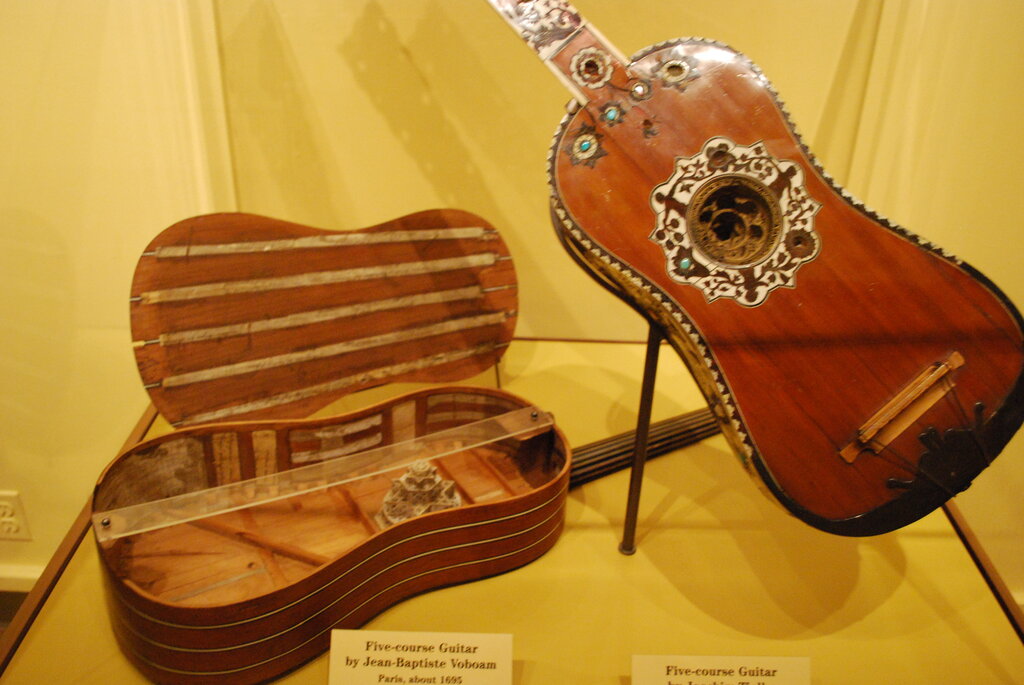
The guitar didn't just appear out of nowhere. Its roots trace back thousands of years to ancient stringed instruments in Mesopotamia and Egypt. Think of harps and lyres. These evolved over centuries, and by the Renaissance in Europe, instruments like the lute and the vihuela were popular. The vihuela, from Spain, is a key ancestor. It had a figure-eight shaped body, much like the guitars we see today.
Over time, luthiers (instrument makers) refined the design. They added a sixth string and standardized the tuning. By the 19th century, the six-string guitar we recognize had become the standard, paving the way for the different types we have now.
Types of Guitars
While there are many variations, most guitars fall into three main categories: acoustic, electric, and classical. Each has a unique sound and feels different to play.
Acoustic guitars create sound naturally. Their large, hollow bodies amplify the vibrations of the steel strings. This gives them a bright, full tone you'll often hear in folk, pop, and country music.

Electric guitars are a different beast. Most have solid bodies and produce very little sound on their own. They use magnetic pickups to convert string vibrations into electrical signals. These signals are sent to an amplifier, which makes the sound loud. This setup allows for a huge range of tones, from clean and mellow to heavily distorted, making electrics a staple in rock, blues, and jazz.

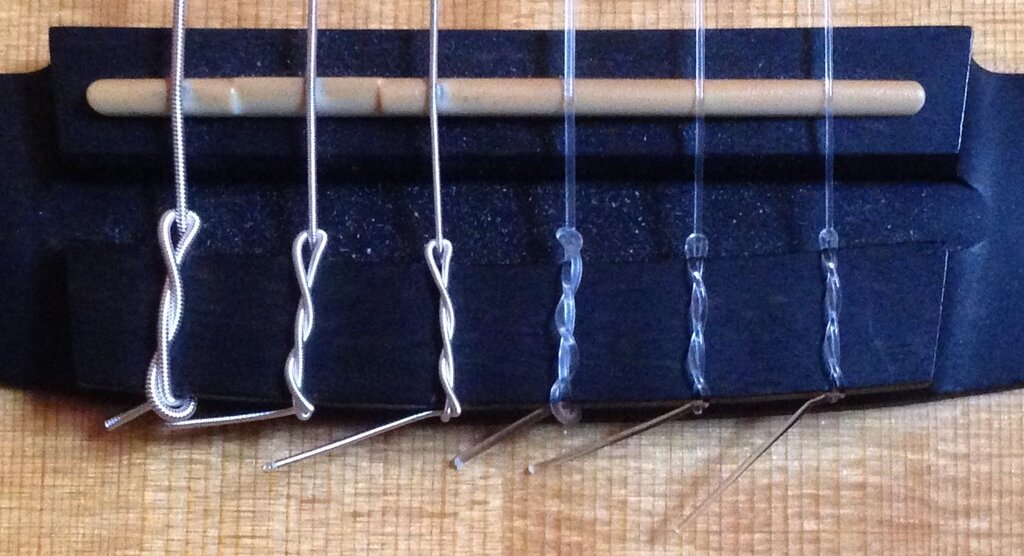
Finally, there's the classical guitar. It might look like a smaller acoustic, but the key difference is its strings. Classical guitars use nylon strings instead of steel, which produce a softer, warmer sound. They also have a wider neck, which gives your fingers more space. As the name suggests, they're the go-to for classical music, but also feature heavily in flamenco and folk styles.
Guitar Anatomy 101
All guitars share the same basic anatomy. Getting to know the main parts will help you understand how the instrument works and how to talk about it.
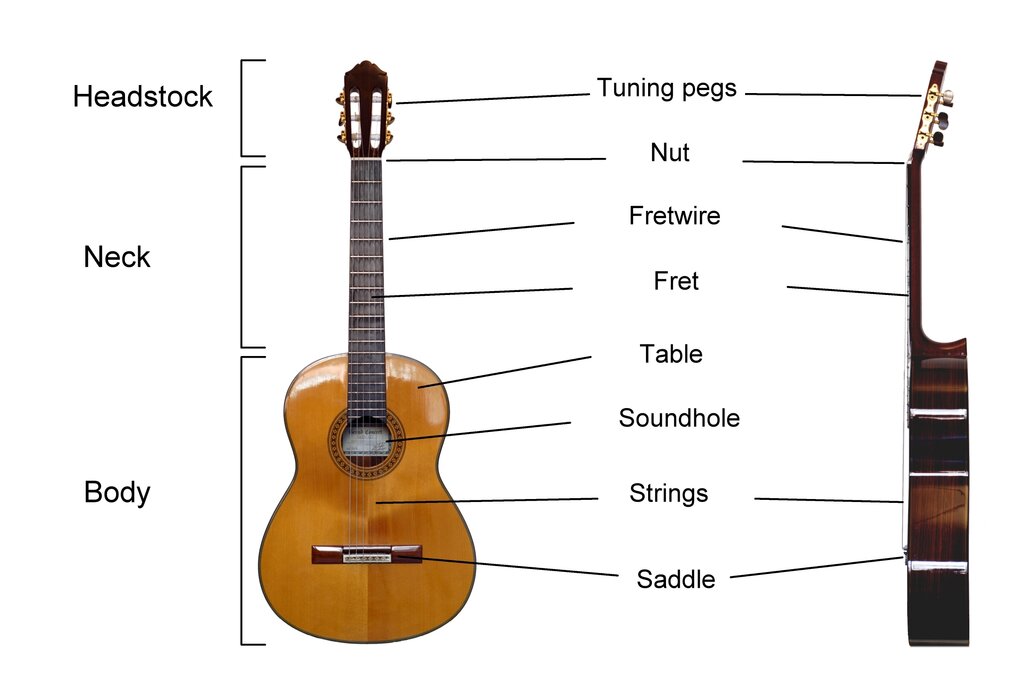
Let's break down the key components you see in the diagram.
Body: This is the main part of the guitar. On an acoustic, its hollow chamber amplifies the sound. On an electric, it's usually solid and holds the electronic components.
Neck: The long piece of wood that extends from the body. You press the strings against the neck to change the notes. At the very top is the headstock, which holds the tuning pegs used to tighten or loosen the strings.
Strings: These are what you pluck or strum to create vibrations. The number and material of the strings vary, but most guitars have six.
Frets: These are the metal strips embedded in the fretboard (the front surface of the neck). When you press a string down behind a fret, you change the length of the vibrating part of the string, which changes the musical pitch.
Fret
noun
A raised element on the neck of a stringed instrument. Frets divide the neck into fixed segments at intervals related to a musical scale.
Now that you've got the basics down, let's see what you've learned.
Which of these Renaissance instruments, popular in Spain, is considered a key ancestor of the modern guitar due to its figure-eight shaped body?
What is the primary function of the frets on a guitar?
Understanding the history, types, and parts of the guitar is the first step on your musical journey. With this foundation, you're ready to start exploring how to actually play.