Introduction to Graphic Design
Introduction to Graphic Design
What Is Graphic Design?
At its core, graphic design is about visual communication. It’s the art of using text, images, and other visual elements to share a message or solve a problem. Think about the logo on your coffee cup, the cover of your favorite book, or the interface of the app you just used. A designer made conscious choices about every element to make it look a certain way and, more importantly, to make you feel or do something.
It’s not just about making things look pretty. Effective graphic design organizes information, guides the viewer’s eye, and creates a clear, memorable experience. It combines art with purpose, aesthetics with function.
A Quick Look Back
While the term “graphic design” is relatively modern, the practice is ancient. Humans have been communicating visually for millennia, from cave paintings telling stories of the hunt to intricate illuminated manuscripts crafted by medieval monks.
A major turning point was the invention of the printing press in the 15th century. Suddenly, text and images could be reproduced and distributed widely, leading to the birth of posters, newspapers, and advertisements. This new ability to mass-produce visual media laid the groundwork for the design profession.
The 20th century saw movements like the Bauhaus school in Germany, which championed the idea that form should follow function. Designers began to think more systematically, creating clean, efficient visuals. With the arrival of computers and the digital age, the tools changed dramatically, but the fundamental goal remained the same: to communicate clearly and effectively.
The Building Blocks
Every visual composition, from a simple business card to a complex website, is built from the same basic elements. Understanding these five components is the first step to seeing the world like a designer.
Line
noun
A mark that connects two points. Lines can be thick or thin, straight or curved, solid or dashed. They guide the eye, create divisions, and form the outlines of shapes.
Lines are the most fundamental element. A thin, delicate line can suggest fragility, while a thick, jagged one might feel chaotic or energetic. They create pathways for our eyes to follow through a design.
Shape
noun
A two-dimensional area defined by an outline or a boundary. Shapes can be geometric (like squares and circles) or organic (free-form and natural).
Shapes provide form and structure. Geometric shapes often feel orderly and stable, while organic shapes can seem more spontaneous and natural. All objects are ultimately composed of shapes.
Color
noun
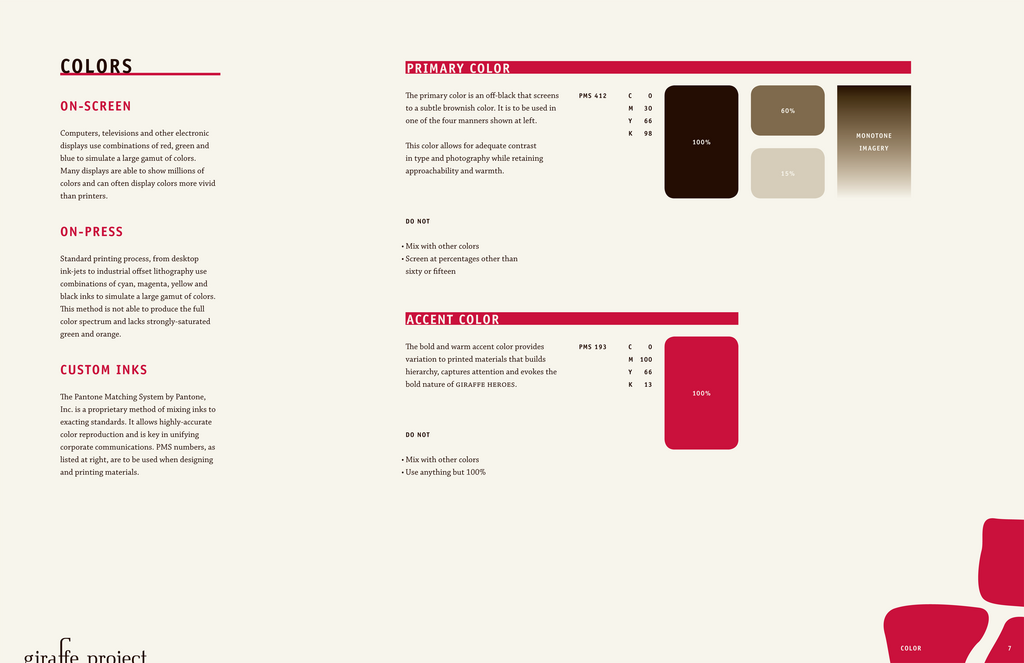
The property possessed by an object of producing different sensations on the eye as a result of the way it reflects or emits light. Color is used to evoke emotion, create contrast, and establish visual hierarchy.
Color is one of the most powerful tools in a designer's toolkit. It can instantly set a mood—red for passion or danger, blue for calm and trustworthiness. It also helps organize information by drawing attention to important elements, like a bright 'Sign Up' button.
Texture
noun
The perceived surface quality of a design. Texture can be physical (like the feel of rough paper) or purely visual, creating an illusion of a particular surface.
Texture adds depth and sensory detail to a flat design. A gritty, rough texture might be used for an outdoor brand's advertisement, while a smooth, glossy texture could suit a luxury tech product. It makes the visual experience more tangible.
Space
noun
The area around, between, or within elements. This includes both the positive space (where objects are) and the negative space (the empty area around them).
What isn't there is just as important as what is. Space, often called white space, gives elements room to breathe. It reduces clutter, improves readability, and can be used to create focus and a sense of sophistication. A crowded design feels chaotic; a spacious one feels calm and intentional.
These principles of design help set a universal structure for creating visuals that don’t just look good but actually work as intended, too.
Ready to test your knowledge of these foundational concepts?
What is the primary goal of graphic design?
The design principle "form should follow function" was famously championed by the Bauhaus school.
Mastering these five elements is the first step on your journey in graphic design. By learning to see and use them effectively, you can start creating visuals that communicate with clarity and impact.