Introduction to Graph Theory
Introduction to Graph Theory
The World as a Network
Look around. The world is full of connections. Friends in a social circle, cities linked by highways, or computers communicating over the internet. Graph theory is the language we use to describe and analyze these networks.
At its heart, a graph is just a collection of dots and the lines connecting them.
Graph
noun
A mathematical structure used to model pairwise relations between objects. It consists of vertices (nodes) and edges.
This simple idea is incredibly powerful. By turning complex systems into simple dots and lines, we can uncover hidden patterns, find the best routes, and understand how information spreads. Let's break down the basic parts.
Nodes and Edges
Every graph is made of two things: nodes and edges.
Nodes, also called vertices, are the dots. They represent the individual objects in our network. A node could be a person, a city, a website, or an airport.
Edges are the lines connecting the nodes. They represent the relationship or connection between two nodes. An edge might show a friendship, a direct flight, or a hyperlink.
In the graph above, 'A', 'B', 'C', 'D', and 'E' are the nodes. The lines connecting them are the edges. This graph shows that 'A' is connected to 'B', 'E', and 'C', but not directly to 'D'.
Adding More Detail
Not all connections are the same. Sometimes the relationship goes both ways, and sometimes it only goes one way. Think of a friendship on Facebook versus following someone on Twitter. On Facebook, the connection is mutual (undirected). On Twitter, you can follow someone without them following you back (directed).
An undirected graph has edges without a specific direction, like a two-way street. A directed graph has edges with a direction, shown by arrows, like a one-way street.
We can also add more information to the edges. Imagine a map of airline routes. Knowing there's a flight between two cities is useful, but knowing the cost of the flight is even better. This is the difference between unweighted and weighted graphs.
An unweighted graph just shows connections. A weighted graph assigns a value, or "weight," to each edge. This weight could represent distance, cost, time, or anything else that measures the strength or cost of a connection.
Why Graphs Matter
Graph theory isn't just an abstract mathematical game. It's a practical tool used to model and solve some of the world's most complex problems.
- Social Networks: Facebook, LinkedIn, and X are all massive graphs. Nodes are users, and edges are friendships or follows. Analyzing this graph helps recommend new friends and shows how information spreads.
- Transportation: GPS navigation services like Google Maps use graphs to find the fastest route from your home to a destination. Cities are nodes, roads are edges, and weights can be distance or current travel time.
- Biology: Scientists model interactions between proteins in a cell as a graph. This helps them understand diseases and develop new drugs.
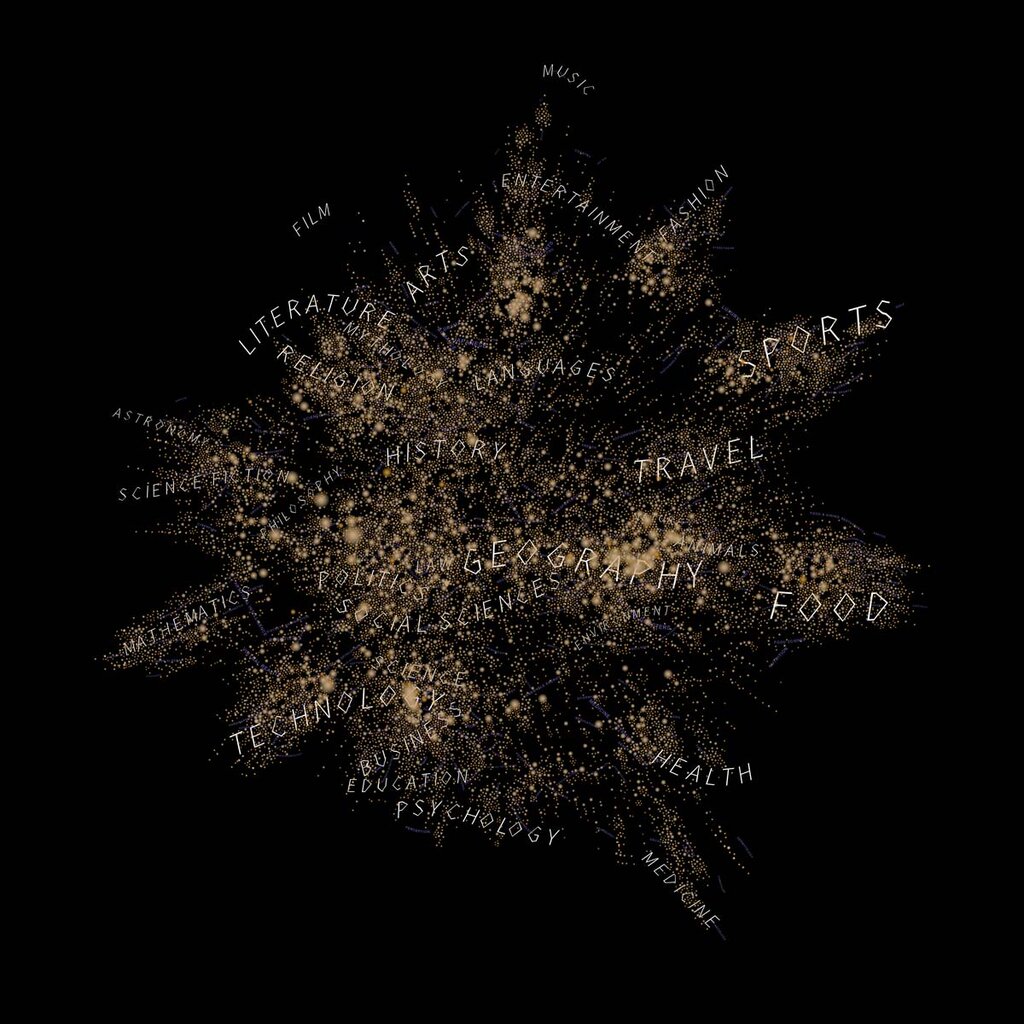
By representing a problem as a graph, we can use a wide array of powerful algorithms to find optimal solutions, detect communities, and predict future behavior. It's a fundamental concept in computer science and data analysis.
Ready to test your knowledge? Let's see what you've learned about the basics of graphs.
What are the two fundamental components that make up any graph?
A social network like X (formerly Twitter), where you can follow someone without them following you back, is best modeled using which type of graph?
Understanding these core ideas—nodes, edges, direction, and weight—is the first step into the fascinating world of graph theory. You now have the vocabulary to describe almost any network you can imagine.