Introduction to Go Programming
Introduction to Go
What is Go?
Go, often called Golang, is a programming language created at Google in 2007. Its designers were three legendary figures in computer science: Robert Griesemer, Rob Pike, and Ken Thompson. These weren't just any programmers; they were instrumental in creating foundational technologies like the C programming language, Unix, and the UTF-8 character encoding that powers the web.
They developed Go to solve the problems they were facing at Google. The company was working with massive codebases written in languages like C++ and Java. Compiling this code took a very long time, slowing down developers. The languages themselves were also complex, making it hard for large teams to work together efficiently.
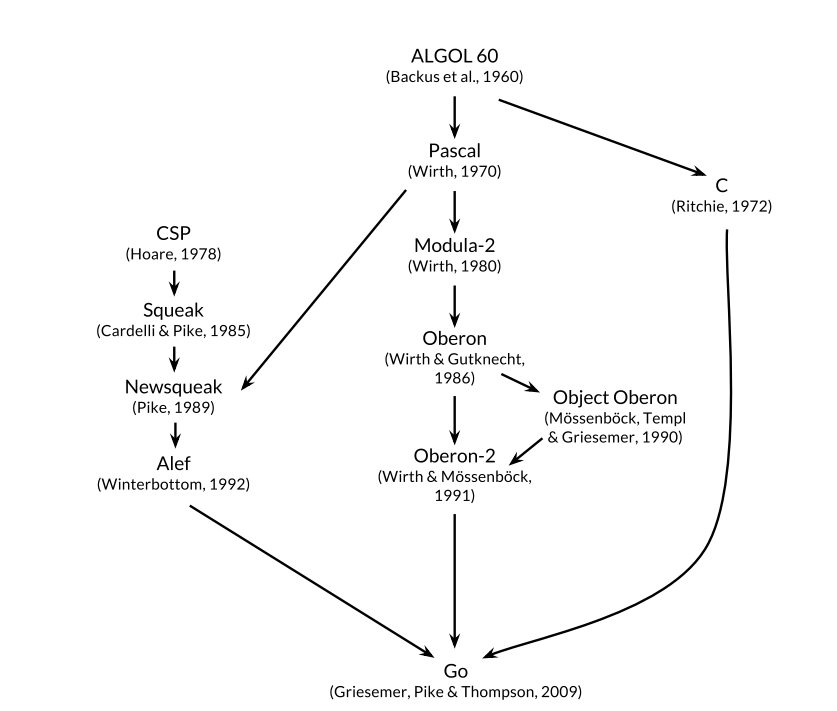
Go was designed to be a modern language for a modern world. It aimed to combine the best of other languages: the performance of a compiled language like C++, the readability of a dynamic language like Python, and a new way to handle many tasks at once.
Designed for Simplicity
One of Go's core philosophies is simplicity. The syntax is small, clean, and easy to learn. The creators deliberately left out many features found in other modern languages. This wasn't an oversight; it was a choice to keep the language straightforward and readable.
A simple language means that code is often more predictable and easier to maintain. When a team of developers works on a project, they can read and understand each other's code without needing to be experts in obscure language features. This focus on readability makes it faster to build and scale large software systems.
Go's simplicity is a feature, not a limitation. It leads to clearer, more maintainable code.
This simplicity also leads to one of Go's most celebrated features: fast compile times. Go programs compile very quickly, which means developers can test their changes almost instantly. This rapid feedback loop makes the development process feel more interactive and productive.
Built for Today's Hardware
Modern computers have processors with multiple cores, allowing them to do many things at the same time. This is called concurrency. However, writing concurrent programs in older languages can be incredibly difficult and prone to errors. Go was built from the ground up to make concurrency easy and safe.
It does this through two powerful features: goroutines and channels.
goroutine
noun
A lightweight thread of execution. You can think of a goroutine as a function that is running concurrently with other parts of your program.
Goroutines are incredibly cheap to create. A Go program can run thousands, or even hundreds of thousands, of them at once without breaking a sweat. This is very different from traditional threads, which are much heavier and more resource-intensive.
But having many tasks running at once can create chaos if they need to share information. This is where channels come in. Channels provide a way for goroutines to communicate with each other safely, passing data back and forth without corrupting it.
This model of concurrency is a significant advantage. It makes Go an excellent choice for building network services, web servers, and other systems that need to handle many operations at once.
Go's Place in the World
So, where does Go fit in compared to other languages?
It's often seen as a modern successor to languages like C and C++. It provides similar performance for systems-level tasks but with a much simpler syntax, memory safety, and built-in concurrency. This makes it a strong choice for infrastructure tools, like the popular container platform Docker, which is written in Go.
Compared to a language like Python, Go is typically faster because it's compiled ahead of time, rather than interpreted. While Python might be quicker for scripting or data analysis, Go excels at building high-performance, concurrent applications.
Ultimately, Go occupies a sweet spot. It offers speed, simplicity, and powerful features for modern computing challenges. It's a pragmatic language built to solve real-world problems efficiently.
Who were the primary designers of the Go programming language at Google?
What was a core design philosophy that guided the creation of Go?
Go's history and design philosophy give it a unique position among programming languages. It prioritizes clarity and efficiency, making it a powerful tool for modern software development.