Introduction to German Language
German Alphabet and Pronunciation
The German Alphabet
The German alphabet looks very familiar. It uses the same 26 letters as English. This is a huge head start. The pronunciation is also very consistent. Once you learn the rules, you can confidently pronounce words you've never seen before.
The pronunciation of German sounds is predictable.
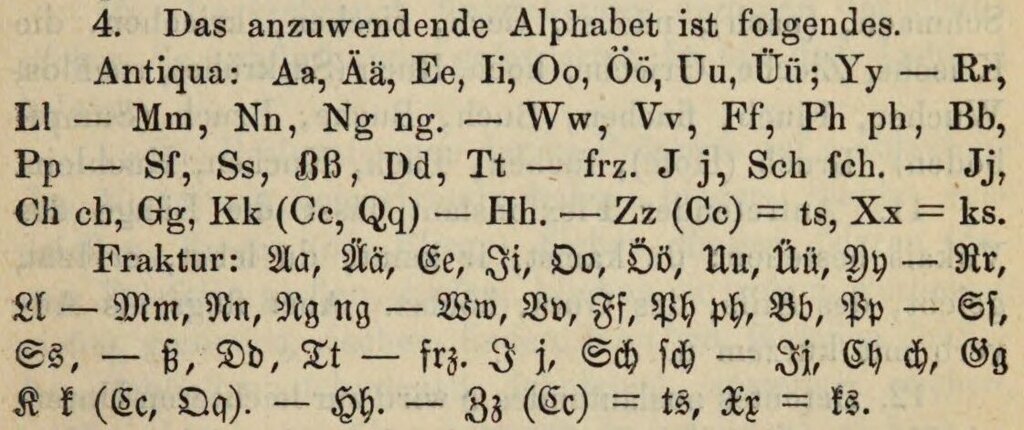
Besides the standard 26 letters, German has four special characters you'll need to know. Three of these are vowels with a pair of dots on top, and one is a unique type of 's'.
The Special Characters
Let's meet the four characters that make the German alphabet unique. The dots you see on the vowels are called an Umlaut.
Umlaut
noun
A mark (¨) placed over a vowel in German to indicate a change in sound.
Ä/ä: The 'a' with an umlaut sounds like the 'e' in "bed" or the 'a' in "care."
girl
Ö/ö: To make this sound, form your lips like you're about to say "oh," but instead say "eeh." It’s similar to the 'u' in the English word "burn" or the 'i' in "bird."
beautiful
Ü/ü: This is another tricky one. Prepare to say "ooo" (as in "food"), but say "eee" instead. There isn't a direct English equivalent, but it's a sound you can master with practice.
five
ß: This letter is called the Eszett or "sharp S." It simply makes a sharp "ss" sound, like in the word "hiss." You'll never see it at the beginning of a word. It's often found after long vowels or diphthongs.
street
Sounds That Stick Together
Certain letter combinations in German always make the same sound. Learning these pairs will make reading and speaking much easier.
| Combination | Sound | Example |
|---|---|---|
ei | sounds like "eye" | nein (no) |
ie | sounds like "ee" in "see" | sie (she/they) |
eu, äu | sounds like "oy" in "boy" | neu (new), Häuser (houses) |
ch | a throaty sound like in Scottish "loch" after a, o, u; a softer hissing sound after other letters | Buch (book), ich (I) |
sch | sounds like "sh" in "shoe" | Schule (school) |
sp, st | at the start of a word, sounds like "shp" and "sht" | sprechen (to speak), Stein (stone) |
Key Pronunciation Differences
Some German letters look the same as in English but have a different sound. These are common mix-ups for new learners.
The German 'W' sounds like the English 'V'. The German 'V' often sounds like the English 'F'.
Let's look at a few of the most important ones.
- J: In German, this letter is pronounced like the English 'Y' in "yes." The name Jan sounds like "yawn."
- V: This usually sounds like an 'F'. The word Vater (father) is pronounced "Fah-ter."
- W: This is pronounced like the English 'V'. The word Wasser (water) sounds like "Vah-ser."
- Z: Always sounds like "ts," as in the word "cats." Zeit (time) is pronounced "tsite."
Finally, the German 'R' can be a challenge. It's often pronounced in the back of the throat, a bit like a soft gargle. This is different from the English 'R', which is pronounced with the tip of the tongue. Don't worry about perfecting this right away; you'll be understood even with an English 'R'.
Time to check your understanding of these new sounds.
What are the two dots placed over the German vowels Ä, Ö, and Ü called?
The German letter 'ß', or Eszett, makes a sharp 'ss' sound.
Learning these foundational rules will help you sound out new words and build a strong base for speaking German.