Introduction to German Language
German Alphabet
The German Alphabet
Getting started with German is easier than you might think, especially when it comes to the alphabet. The good news is that it uses the same 26 letters as English. Most of them even sound the same. You already have a huge head start.
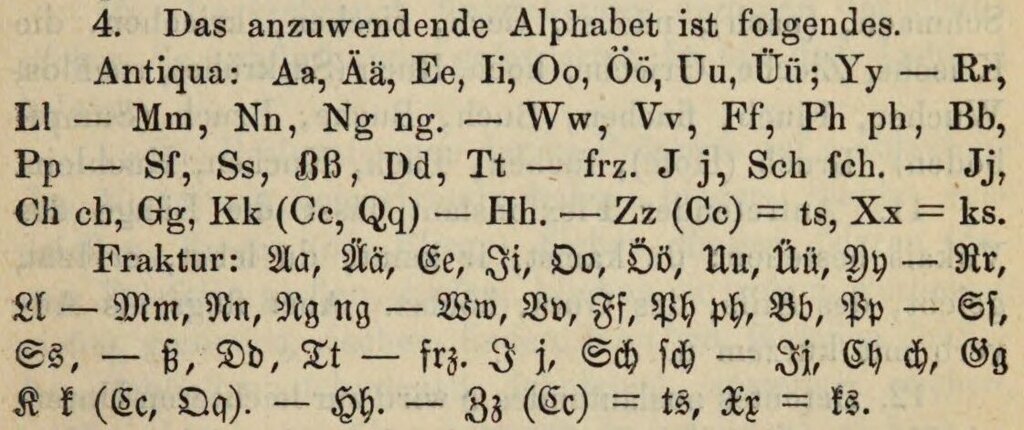
While most letters are familiar, a few have their own distinct German pronunciation. Think of letters like C, G, J, V, W, and Z. Let's break down the ones that might trip you up.
| Letter | German Name | Pronunciation Guide |
|---|---|---|
| C | tseh | Sounds like 'ts' before front vowels (e, i), like 'k' otherwise. |
| G | geh | A hard 'g' sound, like in "go." |
| J | yot | Sounds like the 'y' in "yes." |
| V | fau | Usually sounds like an 'f', as in "fan." |
| W | veh | Sounds like the English 'v', as in "van." |
| Z | tsett | A sharp 'ts' sound, like in "cats." |
Notice that the German V sounds like an English F, and the German W sounds like an English V. This is a common mix-up for beginners, but you'll get the hang of it quickly.
The Special Characters
Beyond the standard 26 letters, German has four special characters you'll need to know. Three of these are called Umlaute (umlauts), and one is the Eszett.
An umlaut is just a vowel with two dots on top. These dots change the sound of the vowel.
Let's look at the three umlauts:
-
Ä/ä (A-Umlaut): This sounds like the short 'e' in "bed" or the 'a' in "sad."
-
Ö/ö (O-Umlaut): This one has no direct English equivalent. To make the sound, say "ay" as in "say," but round your lips as if you were about to say "ooh."
-
Ü/ü (U-Umlaut): This is another sound not found in English. Try saying "ee" as in "see," but keep your lips puckered as if you're whistling.
If you ever can't type an umlaut, you can write the vowel followed by an 'e'. So, ä becomes ae, ö becomes oe, and ü becomes ue. You'll often see this in web addresses or email addresses.
Eszett
noun
A German letter, ß, that represents a sharp, unvoiced "ss" sound.
The final special character is the ß, called the Eszett or scharfes S (sharp S). It simply represents a sharp "ss" sound. You'll never see it at the start of a word, and it only exists as a lowercase letter (though a capital version was officially introduced in 2017, it's very rare).
Interestingly, in Switzerland and Liechtenstein, they don't use the ß at all. They just write "ss" instead.
Now let's review these new sounds.
Ready to test your knowledge?
In German, the letter 'W' is pronounced most similarly to which English letter?
Which of the following characters is known as an Eszett or scharfes S?
Mastering these sounds is the first big step toward speaking German clearly and confidently. With a little practice, they'll become second nature.