Introduction to German Language
German Alphabet and Pronunciation
The German Alphabet
Getting started with German pronunciation is easier than you might think. The German alphabet uses the same 26 letters as English. The main difference is how some of them are named and pronounced.
German is pronounced as it’s written.
This is a key advantage. Unlike English, where letters can have many different sounds (think of 'o' in 'go', 'to', and 'women'), German sounds are very consistent. Once you learn the rules, you can reliably pronounce words you've never seen before.
Most consonants sound very similar to their English counterparts. For example, 'F', 'H', 'K', 'L', 'M', 'N', 'P', and 'T' are nearly identical. A few are a little different:
| Letter | Pronunciation Tip |
|---|---|
| J | Sounds like the 'y' in 'yes'. Never like the 'j' in 'jet'. |
| V | Sounds like an 'f'. The word Vater (father) is pronounced 'Fah-ter'. |
| W | Sounds like an English 'v'. The word Wasser (water) is pronounced 'Vah-sser'. |
| Z | Sounds like 'ts', as in the end of 'cats'. The word Zeit (time) is 'Tsait'. |
German vowels are also quite straightforward. They each have a long sound and a short sound, much like in English. A long vowel is held for a moment longer. A short vowel is quick and clipped.
The Special Characters
Beyond the standard alphabet, German has four special characters you need to know: three vowels with dots above them, called umlauts, and a unique consonant.
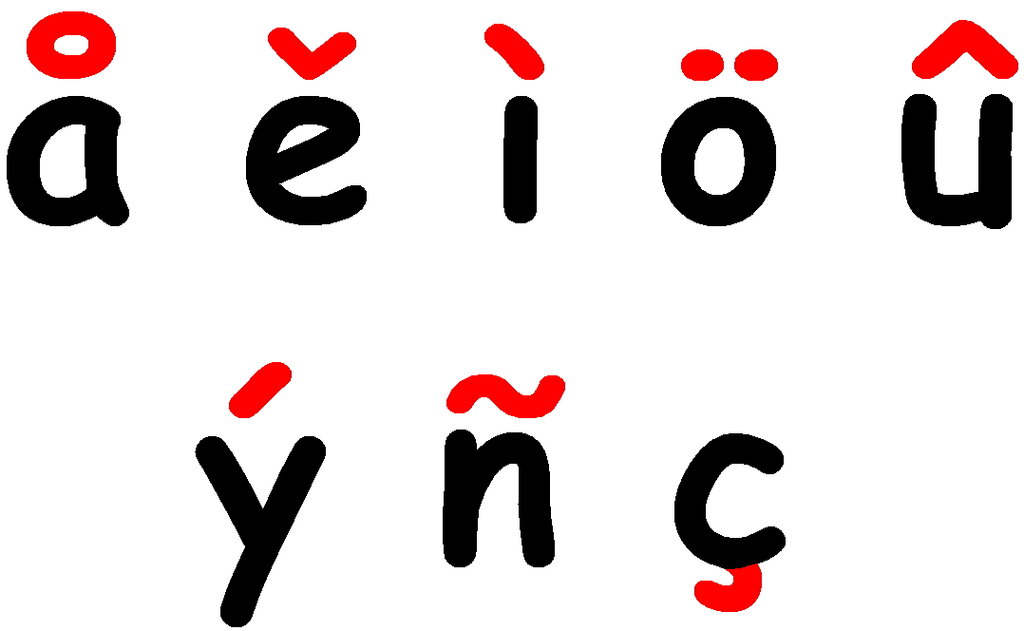
These aren't just for decoration; they represent distinct sounds. Let's break them down.
Umlaut
noun
A mark (¨) placed over a vowel in German (ä, ö, ü) to indicate a change in sound.
Ä (a-umlaut): This sounds like the 'e' in "bed." It's a short, open sound.
men
Ö (o-umlaut): This sound doesn't exist in English. To make it, say the 'ur' sound in "burn" but round your lips as if you were about to say "oh."
beautiful
Ü (u-umlaut): This is another new sound. Say the long 'ee' sound from "see," but keep your lips tightly rounded, like you're drinking from a straw.
for
The final special character is the ß, called an Eszett or "sharp S." It simply represents a double 's' sound ('ss'). You'll find it after long vowels or diphthongs. If you can't type it, you can always write 'ss' instead.
street
Common Letter Blends
Just like in English, certain letter combinations in German create new, consistent sounds. Learning these patterns is a huge shortcut to fluent pronunciation.
| Combination | Sound | Example Word (Meaning) |
|---|---|---|
ei | Like the 'i' in 'ice' | nein (no) |
ie | Like the 'ee' in 'see' | sie (she/they) |
eu, äu | Like the 'oy' in 'toy' | neu (new), Häuser (houses) |
ch | A soft, breathy sound from the back of your throat, like a quiet hiss. | ich (I) |
sch | Like the 'sh' in 'shoe' | Schule (school) |
st | At the start of a word, it sounds like 'sht' | Stein (stone) |
sp | At the start of a word, it sounds like 'shp' | sprechen (to speak) |
Mastering these sounds takes practice, but their consistency is your best friend. Listen to native speakers and try to imitate the sounds. With a little effort, you'll build a strong foundation for speaking German clearly and confidently.
What is a key advantage of German pronunciation compared to English?
The German letter 'Ä' (a-umlaut) is pronounced like the 'e' in which English word?