Introduction to German Language
German Alphabet
The German Alphabet
Getting started with German is simpler than you might think. The German alphabet uses the same 26 letters as English, but it adds four special characters: Ä, Ö, Ü, and ß. While most letters sound familiar, a few have distinct pronunciations that are key to sounding like a native speaker.
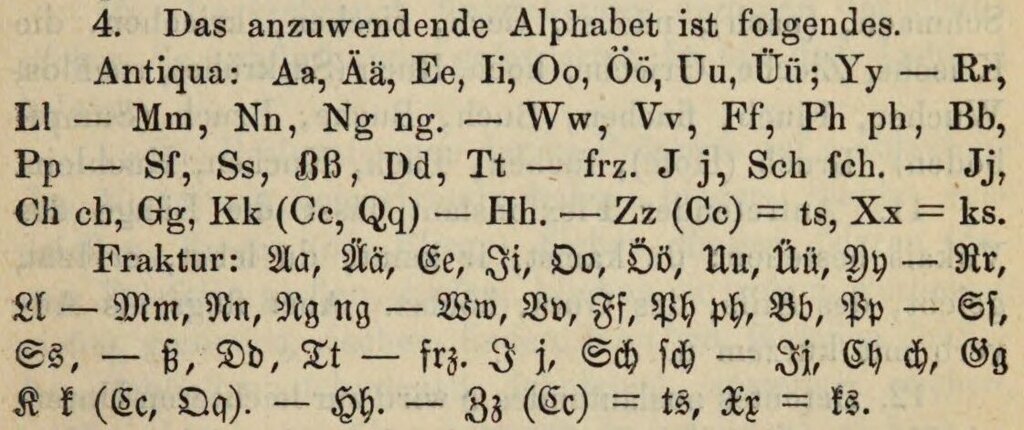
Let's look at the full alphabet and how to pronounce the name of each letter. Pay close attention to the ones that differ from English.
| Letter | Pronunciation (like the sound in...) |
|---|---|
| A a | ah (father) |
| B b | beh (bay) |
| C c | tseh (say) |
| D d | deh (day) |
| E e | eh (egg) |
| F f | eff |
| G g | geh (gay) |
| H h | hah |
| I i | ee (see) |
| J j | yot (yacht) |
| K k | kah |
| L l | ell |
| M m | emm |
| N n | enn |
| O o | oh (boat) |
| P p | peh (pay) |
| Q q | koo |
| R r | err (roll the R lightly) |
| S s | ess |
| T t | teh (tay) |
| U u | oo (boot) |
| V v | fow (rhymes with cow) |
| W w | veh (vay) |
| X x | iks |
| Y y | üpsilon |
| Z z | tsett |
The Special Characters
Beyond the standard alphabet, German has four unique characters. Three of these are vowels with an umlaut, which looks like two dots above the letter. The umlaut changes the vowel's sound completely.
An umlaut signals a shift in pronunciation, often making the vowel sound sharper and more front-of-the-mouth.
Ä ä: This sounds like the 'e' in "bed." Think of the word Mädchen (girl).
Ö ö: This one is tricky for English speakers as there's no direct equivalent. To make the sound, shape your lips as if you're about to say "oh," but instead say "ee." It's similar to the 'i' sound in "bird." Try it with the word schön (beautiful).
Ü ü: This is another sound without a perfect English match. Form your lips into a tight circle like you're whistling, then try to say the English "ee" sound. You can hear it in the word für (for).
ß: This character is called an Eszett or scharfes S (sharp S). It simply represents a double 'ss' sound and typically follows a long vowel or diphthong. You'll never see it at the beginning of a word. A good example is Straße (street).
Key Pronunciation Differences
A few German consonants are pronounced very differently from their English counterparts. Mastering these will make a huge difference in your accent.
V
other
In German, the letter V is almost always pronounced like the English F.
Here are a few more to watch out for:
- W is pronounced like the English V. The word Wasser (water) sounds like "Vah-sser."
- J is pronounced like the English Y. So, ja (yes) sounds like "yah."
- Z has a sharp "ts" sound, like at the end of "cats." The word Zeit (time) is pronounced "tsite."
- S at the beginning of a word followed by a vowel is pronounced like the English Z. The word Sonne (sun) sounds like "Zon-neh."
Let's review these new letters and sounds.
Now, see if you can recognize the sounds.
How is the German letter 'W' typically pronounced in English terms?
The German character 'ß', known as an Eszett, represents which sound?
Getting these basic sounds right is the first major step toward speaking German clearly and confidently.