Introduction to Geophysics
Introduction to Geophysics
The Physics of Our Planet
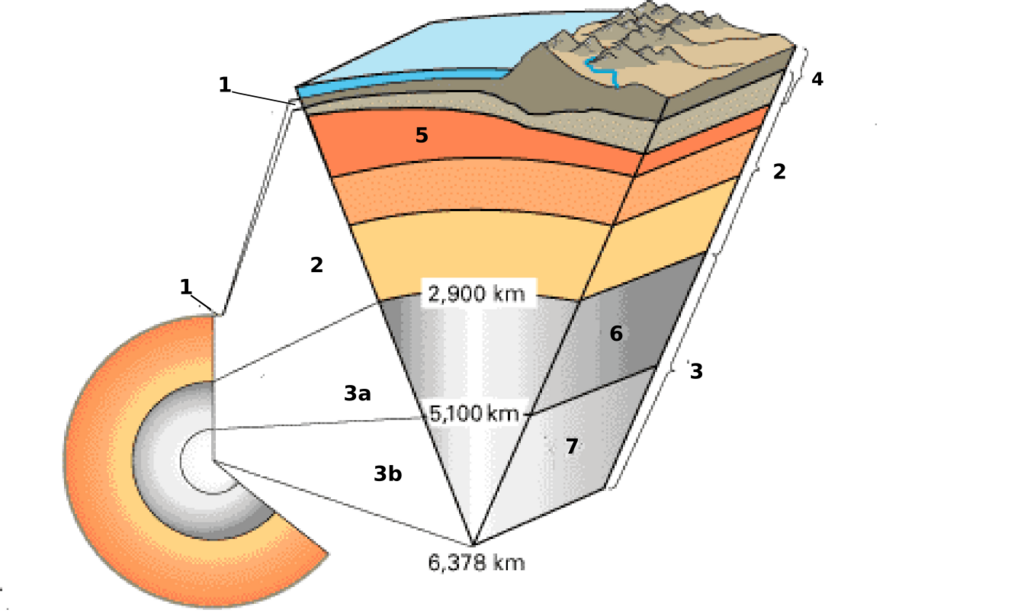
Geophysics is the science of understanding the Earth through the lens of physics. Instead of just looking at rocks on the surface, geophysicists use principles like gravity, magnetism, and wave mechanics to probe everything from the planet's molten core to the atmosphere. It’s like giving the Earth a full medical check-up, using physics as the tools.
Why is this important? Geophysics helps us answer fundamental questions. What causes earthquakes and volcanoes? Where can we find essential resources like water, minerals, and energy? How is our planet's climate changing? By applying physical laws to the Earth system, we can create models and make predictions that are vital for safety, resource management, and environmental protection.
A Field of Many Specialties
Geophysics isn't just one subject; it's a broad field with many specialized branches. Each focuses on a different physical property or process of the Earth. Here are a few key areas:
| Sub-discipline | Area of Focus |
|---|---|
| Seismology | Earthquakes and the propagation of elastic waves through the Earth. |
| Geomagnetism | Earth's magnetic field, its origin, and its changes over time. |
| Geodesy | The shape, orientation, and gravitational field of the Earth. |
| Tectonophysics | The physical processes behind plate tectonics and crustal deformation. |
| Hydrology | The movement, distribution, and quality of water on and below Earth's surface. |
These fields often overlap. For instance, a seismologist studying earthquake waves might work with a geodesist measuring ground movement to get a complete picture of tectonic activity.
A Blend of Sciences
At its heart, geophysics is an interdisciplinary science. It wouldn't exist without a strong foundation in three core areas: physics, geology, and mathematics.
Geophysics uses the language of mathematics to apply the principles of physics to the observations of geology.
Physicists provide the fundamental laws and theories. Geologists offer the context, describing the materials and structures that make up the Earth. Mathematicians supply the tools to model complex systems and analyze data. A geophysicist must be comfortable moving between these different ways of thinking to solve problems about our planet.
This combination of skills allows geophysicists to build a coherent and quantitative understanding of the Earth. By looking at the planet through the combined lens of these sciences, we can uncover the secrets hidden deep beneath our feet.
What is the primary goal of geophysics?
Which three disciplines form the core foundation of geophysics?