Introduction to Geography
Introduction to Geography
More Than Just Maps
Geography is often mistaken for knowing capitals and memorizing locations on a map. While that’s a part of it, the field is much broader and more exciting. At its core, geography is the study of places and the relationships between people and their environments.
Geography is the study of Earth’s landscapes, climates, populations, and the interactions between people and their environments.
Geographers ask a fundamental question: “Why of where?” Why are cities built in certain spots? Why do different climates exist? Why do people move from one region to another? This question helps us understand the spatial patterns we see in the world, from the distribution of rainforests to the layout of our own neighborhoods.
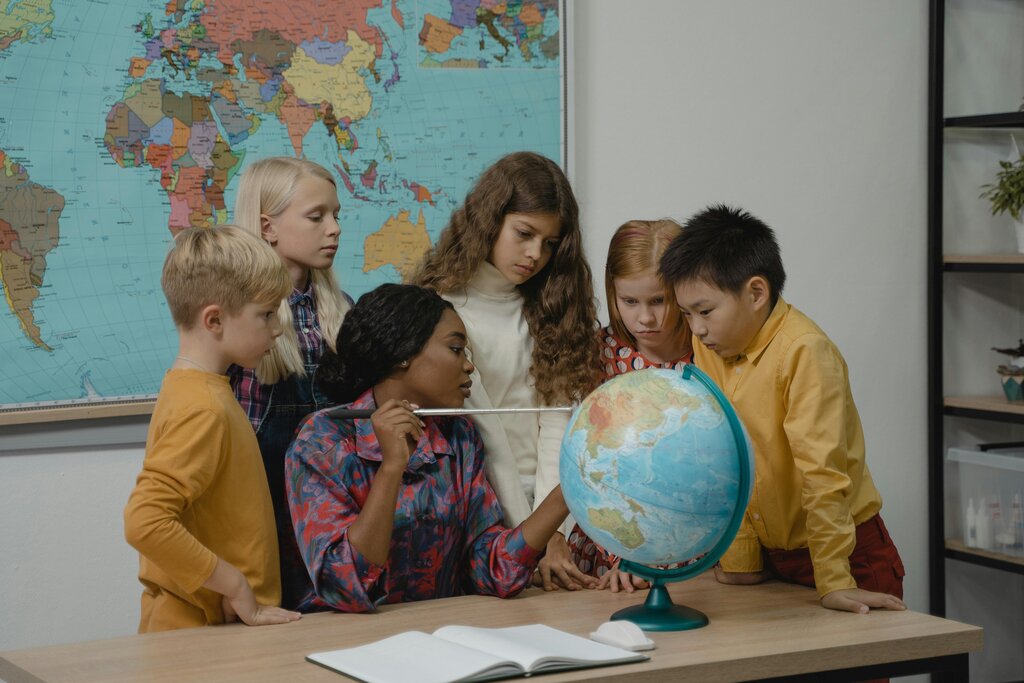
The study of geography has a long history. Ancient Greek scholars like Eratosthenes were among the first to map the known world and even calculate the circumference of the Earth. Over centuries, geography evolved from simple map-making and exploration to a complex science that analyzes the intricate connections shaping our planet.
Two Sides of the Same Coin
Geography is typically divided into two main branches: physical geography and human geography. Think of them as two different lenses to view the same world.
Physical geography focuses on the natural world. It examines Earth’s physical features and processes, like mountains, rivers, weather patterns, and ecosystems.
If you're studying how glaciers carve out valleys or how ocean currents affect climate, you're diving into physical geography. It’s the science of our planet’s natural systems.
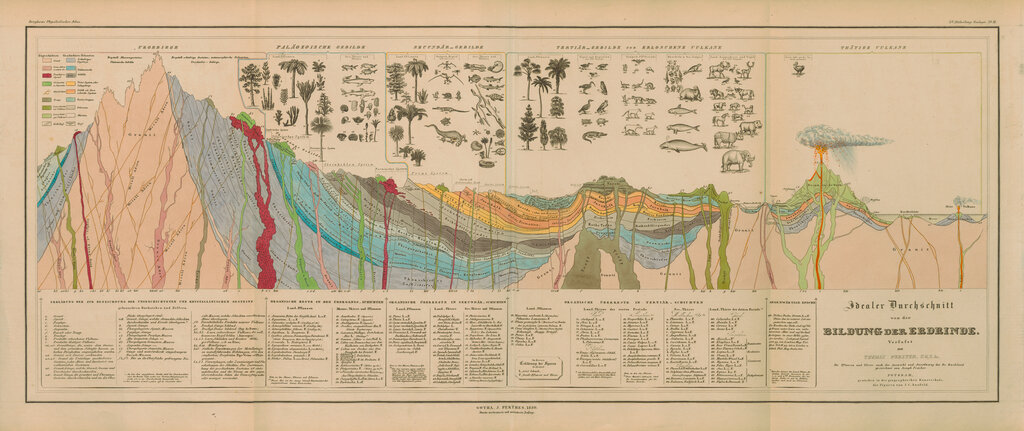
Human geography, on the other hand, is about us. It explores how human societies are arranged across the Earth and how we interact with our surroundings.
Human Geography is the study of people, places, and spatial patterns.
This branch looks at topics like population growth, urbanization, economic activities, and the spread of cultural traditions. It helps explain why languages, religions, and political systems differ from one place to another.
A Bridge Between Sciences
The real power of geography comes from its ability to connect the physical and human worlds. It’s an interdisciplinary field that acts as a bridge between the natural sciences (like geology and biology) and the social sciences (like sociology and economics).
Consider the challenge of climate change. A geographer would study both the physical aspects, such as rising sea levels and melting ice caps, and the human aspects, like which communities are most vulnerable and how economic policies can reduce emissions. This holistic view is crucial for solving complex global problems.
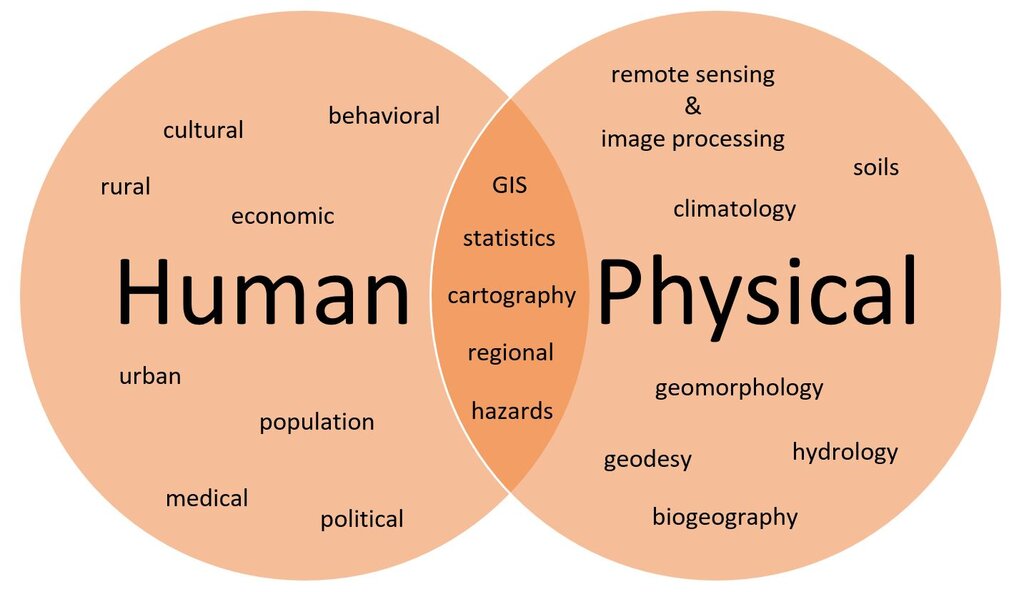
By understanding both the planet we live on and the ways we live on it, geography gives us a unique and comprehensive perspective. It provides the tools to understand everything from local land use debates to international trade patterns.
Understanding geography is essential to understanding how societies have interacted with one another over time through trade, exploration, and conquest.
Let's check your understanding of these core concepts.
What is the fundamental question that geographers seek to answer, helping them understand spatial patterns?
A researcher studying the impact of migration patterns on the growth of cities is most likely working within which branch of geography?