Introduction to Generative AI
Introduction to Generative AI
What Is Generative AI?
Artificial intelligence comes in many forms. Some types are designed to analyze and classify information. Think of an AI that tells you if an email is spam or not. It sorts data into categories.
Generative AI is different. Its main job is to create something new. Instead of just sorting photos, it can generate a brand-new image from a text description. Instead of just identifying a song, it can compose a new piece of music. It creates text, images, audio, and even video that didn't exist before.
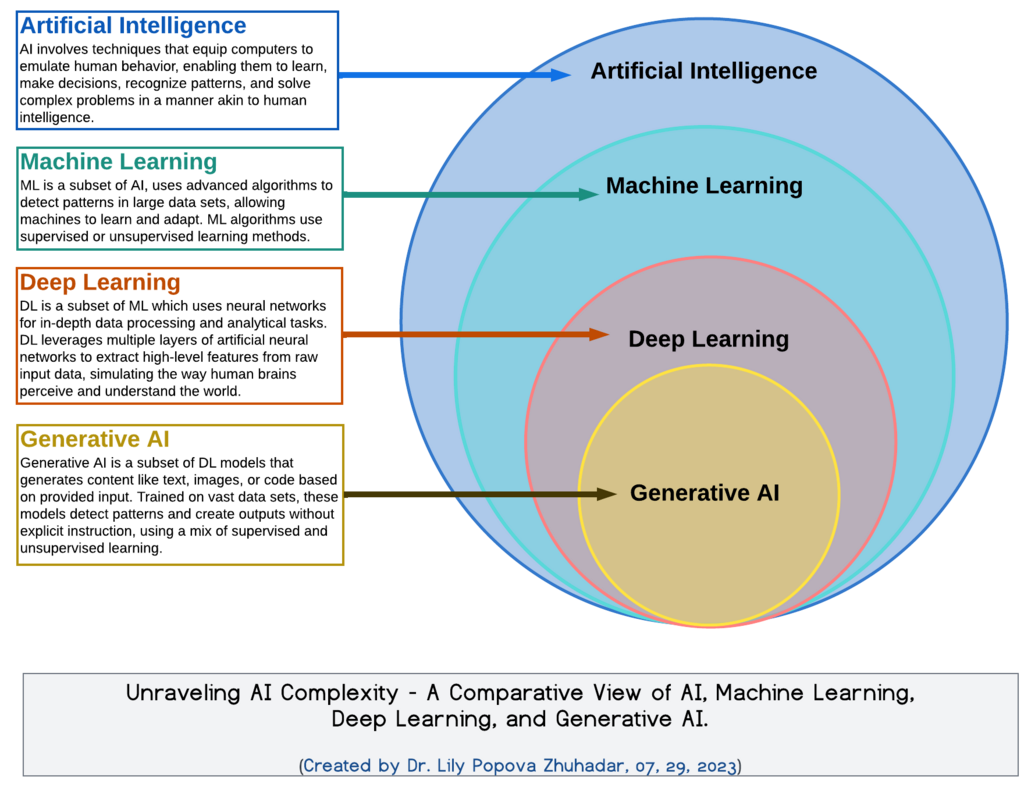
Generative AI refers to a type of artificial intelligence whose core function is to create new content—text, audio, images, video, or data—based on patterns it has learned from existing data.
At its heart, generative AI works by learning from enormous amounts of existing data. It studies the patterns, structures, and relationships within that data. For example, a model trained on countless books learns grammar, style, and facts. A model trained on millions of paintings learns about color, composition, and artistic styles.
After this training, the AI can use what it has learned to generate novel content that follows the same patterns. It's not copying and pasting; it's producing a unique output based on its understanding of the training data.
A Quick History
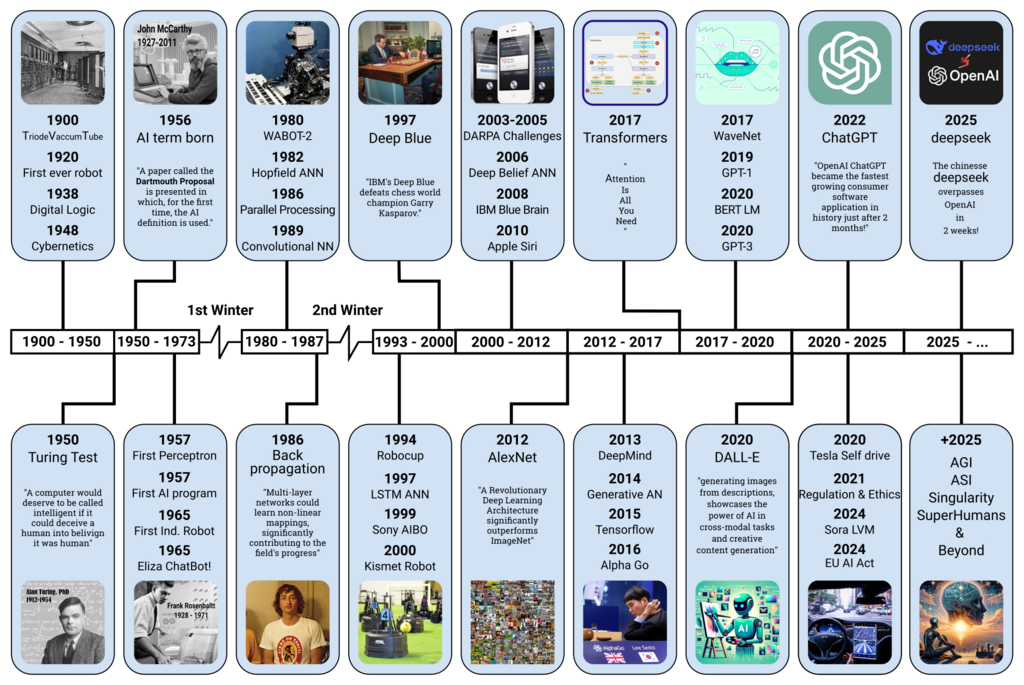
The idea of machines that can create isn't new, but the technology has evolved dramatically. Early attempts in the mid-20th century relied on rigid, rule-based systems. These could generate simple text or music, but they lacked flexibility and creativity because they could only do exactly what they were programmed to do.
The first major shift came with statistical models, like Markov chains, which could generate text by predicting the next word based on the previous ones. This was an improvement, but the results often felt random and incoherent over longer passages.
The real breakthrough came with the rise of deep learning and neural networks. Two key milestones accelerated progress:
-
Generative Adversarial Networks (GANs): Introduced in 2014, GANs use two competing neural networks—a generator and a discriminator—to create increasingly realistic outputs, especially images.
-
Transformers: This architecture, developed in 2017, revolutionized how AI processes sequential data like language. It allowed models to understand context over long passages, leading to the powerful language models we see today.
How Generative Models Learn
Think of a generative model as an apprentice artist. To learn to paint like a master, the apprentice wouldn't just look at one painting. They would study thousands of works, absorbing the master's techniques for brushstrokes, color mixing, and composition. Over time, the apprentice develops an intuitive understanding of the master's style. Eventually, they can create a new painting that is not a copy, but is clearly in the style of the master.
Generative models learn in a similar way. They are trained on vast datasets—for example, all of Wikipedia, a library of books, or a database of images. During this process, the model isn't memorizing the data. Instead, it's building a complex, internal representation of the patterns and structures within it.
This learning process allows the model to generalize. It can generate sentences it has never seen before or combine concepts in novel ways, all while following the rules and patterns it learned from the training data.
This ability to create is what makes generative AI so powerful. It's not just repeating what it has been shown; it's using its learned knowledge to produce something entirely new, whether that's a helpful email, a stunning piece of art, or a useful piece of code.