Introduction to Generative AI
Introduction to Generative AI
Creator vs. Critic
Most artificial intelligence you encounter is like a critic. It's designed to analyze, classify, and predict based on existing information. An AI that spots spam in your email is a critic. It looks at an incoming message and asks, "Does this fit the pattern of spam I've seen before?" An AI that recognizes your face to unlock your phone is also a critic, comparing your face to a stored pattern.
These systems are incredibly useful, but they work with what's already there. They are discriminative, meaning their job is to discriminate, or differentiate, between different types of input.
Generative AI is different. It’s a creator. Instead of just analyzing data, it generates something entirely new. It learns the underlying patterns and structures from a vast dataset—like text, images, or music—and then uses that knowledge to produce original content that mimics the data it was trained on.
Think of it this way: a discriminative AI can tell you if a painting is a Picasso. A generative AI can create a new painting in the style of Picasso.
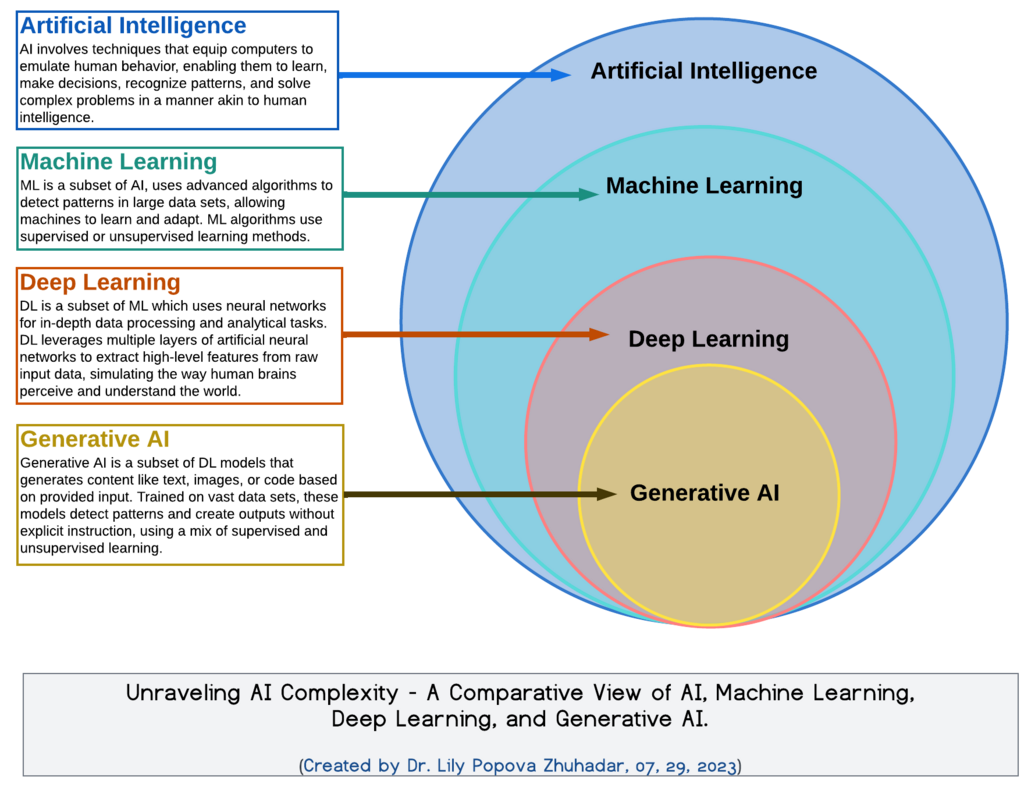
This ability to create is a major leap. Generative AI is a subfield of machine learning, which itself is a part of the broader field of artificial intelligence. It represents a shift from systems that understand the world to systems that can add to it.
A Brief History
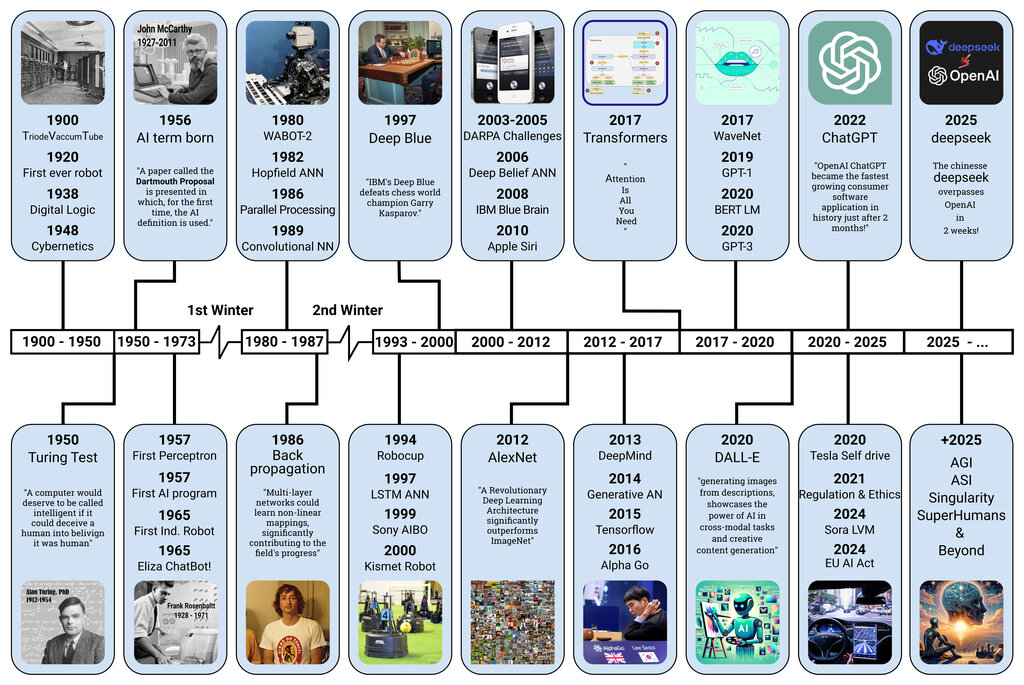
The idea of machines that create isn't new. Early concepts of AI in the 1950s imagined intelligent machines, but the technology was limited. The first steps toward generative models were simpler. In the 1980s, models like Markov chains could generate plausible-sounding, but often nonsensical, text by predicting the next word based on the previous one.
The real breakthrough came with the rise of deep learning and neural networks in the 2010s. These complex systems, inspired by the human brain, allowed models to learn much more intricate patterns. A major milestone was the invention of Generative Adversarial Networks (GANs) in 2014, which dramatically improved the quality of AI-generated images.
More recently, the development of a model architecture called the Transformer has supercharged generative AI, especially for text. This led to the large language models (LLMs) we see today, like ChatGPT, which can write essays, code, and carry on conversations.
Why It Matters
The significance of generative AI is its potential to act as a powerful tool for human creativity and productivity. It's not just about creating art or writing poems. The impact is being felt across many industries.
In software development, it can write and debug code, speeding up the creation of new applications. Marketers use it to generate ad copy and campaign ideas. Scientists are exploring its use for designing new molecules for drugs or materials. In entertainment, it's used for creating special effects and even entire virtual worlds.
By automating the creation of initial drafts or complex data, generative AI allows professionals to focus on higher-level strategy, refinement, and innovation. It's a collaborator that can handle the heavy lifting of content generation, fundamentally changing how we work and create.
Generative AI is changing workflows from a blank page to an iterative process of refining an AI-generated starting point.
Now that you have a grasp of what generative AI is and where it came from, let's test your knowledge.
What is the primary difference between a discriminative AI (a "critic") and a generative AI (a "creator")?
Which of the following is an example of generative AI in action?