Introduction to Generative AI
Introduction to Generative AI
What Is Generative AI?
Generative AI is a type of artificial intelligence that can create new, original content. Instead of just analyzing or classifying data, it generates things like text, images, music, and code that have never existed before.
Generative AI refers to a type of artificial intelligence whose core function is to create new content—text, audio, images, video, or data—based on patterns it has learned from existing data.
Think of it as a creative partner. You give it a prompt, and it produces a unique output. This technology is a subset of broader fields like machine learning and deep learning, representing a significant leap from older AI systems that were limited to performing pre-programmed tasks.
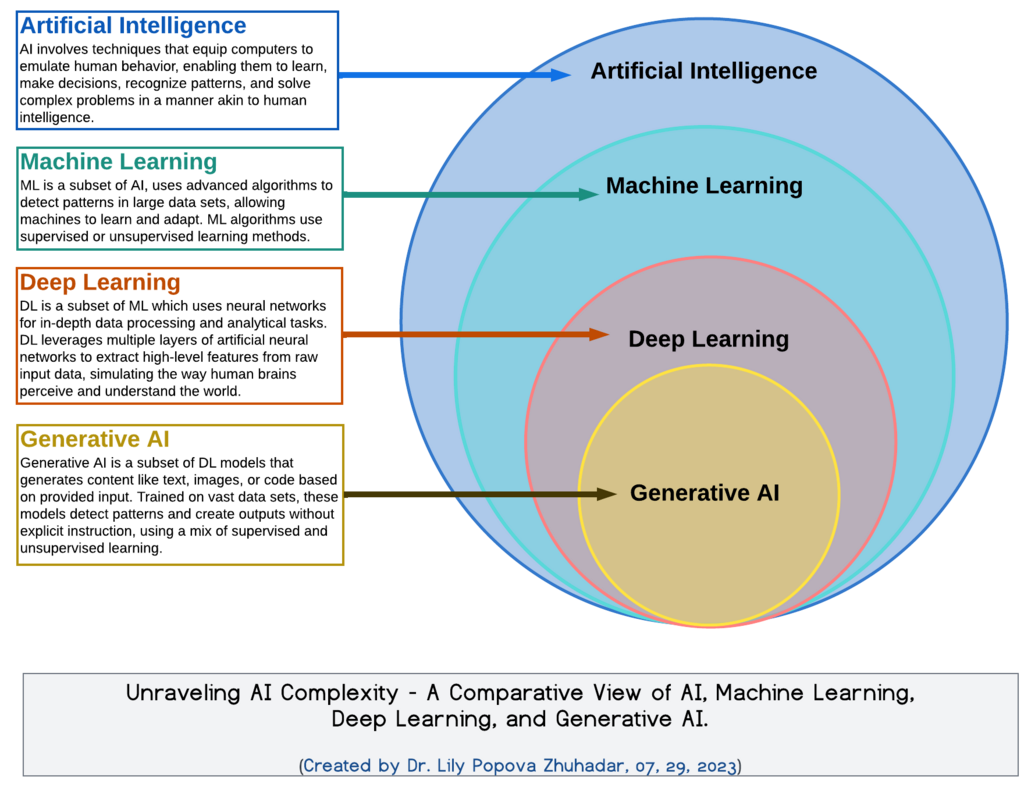
Artificial intelligence itself isn't new. The journey began decades ago with simple rule-based systems. Over time, AI evolved to learn from data (machine learning) and then to learn from vast datasets using complex neural networks (deep learning). Generative AI is one of the latest milestones on this path, moving from understanding content to creating it.
Two Kinds of AI Models
To understand what makes generative models special, it helps to compare them to another type: discriminative models. Most of the AI you might have encountered in the past falls into this second category.
A discriminative model is trained to discriminate between different types of data. It learns to classify or categorize inputs. Think of an email spam filter. Its job is to look at an incoming email and decide: is this spam, or not spam? It's making a judgment based on what it has learned from past examples.
A generative model works differently. Instead of just labeling data, it learns the underlying patterns of a dataset so it can generate new data that fits those same patterns. It doesn't just identify spam; it could learn to write new spam emails (or, more usefully, new non-spam emails).
| Feature | Discriminative AI | Generative AI |
|---|---|---|
| Main Goal | Classify or predict a label for an input. | Create new data samples. |
| Example | Image recognition (Is this a cat or a dog?) | Image generation (Create a picture of a cat). |
| Question it Answers | "What is this?" | "What would this look like?" |
Key Generative Techniques
Generative AI isn't a single technology; it's a family of different techniques and architectures. These models are trained on enormous amounts of data—like text from the internet or millions of images—to learn the probability of which word, pixel, or sound should come next.
Here are a few of the core approaches:
GANs
noun
Short for Generative Adversarial Networks. This technique involves two neural networks, a "generator" and a "discriminator," competing against each other. The generator creates new data (like an image), and the discriminator tries to tell if it's real or fake. This competition forces the generator to get better and better at creating realistic outputs.
Transformers: This is the architecture that powers many of the large language models (LLMs) you see today, like ChatGPT. Transformer models are exceptionally good at understanding context and relationships in sequential data, like the words in a sentence. This allows them to write coherent essays, translate languages, and write computer code.
Diffusion Models: This technique works by starting with a pattern of random noise and gradually refining it into a coherent image based on a text prompt. It's like a sculptor starting with a shapeless block of clay and slowly molding it into a detailed figure. This is how many popular AI image generators create their stunningly detailed pictures.
These different approaches allow generative AI to tackle a wide variety of creative tasks. While the technology is complex, the core idea is simple: learning from what exists to create something entirely new.
What is the primary function of Generative AI?
An AI model designed to identify whether an email is 'spam' or 'not spam' is an example of a __________ model.