Introduction to Generative AI
Introduction to Generative AI
What is Generative AI?
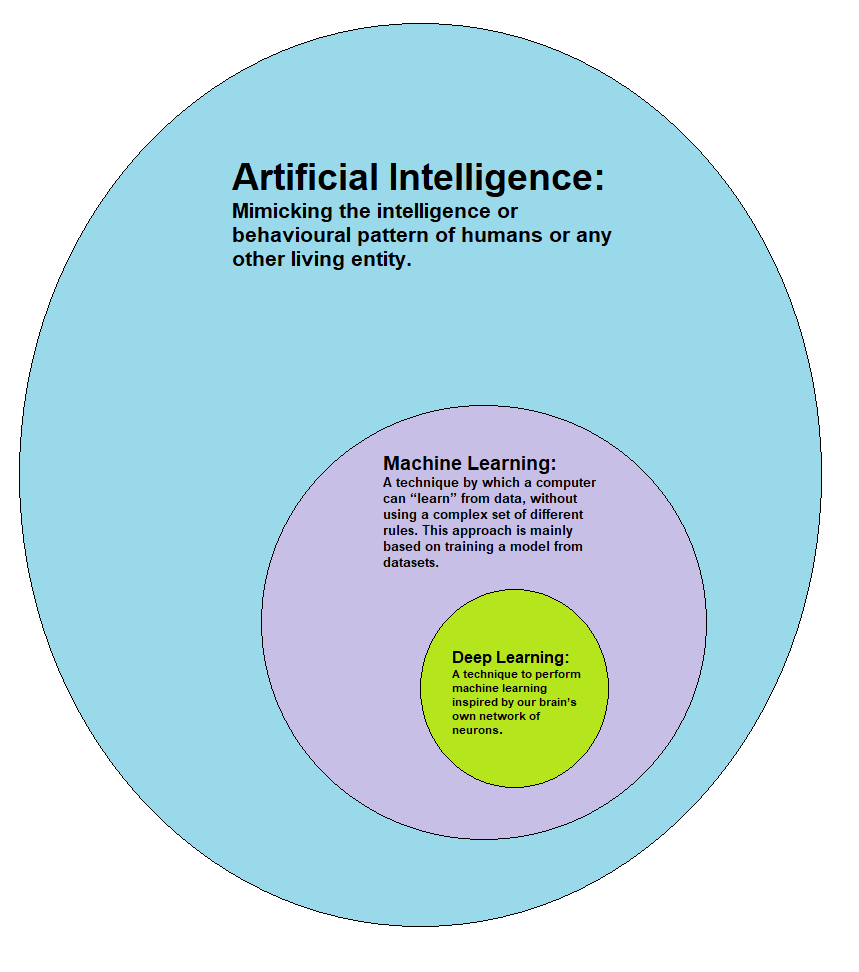
Artificial intelligence can feel like a broad, complex topic. It covers everything from the software that filters your email to the systems that guide self-driving cars. Generative AI is a specific and powerful branch of this field. Instead of just analyzing or categorizing existing information, it creates something entirely new.
Generative AI models learn the patterns and structures from a vast amount of data—like text, images, or music—and then use that knowledge to produce original content.
Think of it this way: some AI can look at a photo and tell you if it's a cat or a dog. Generative AI can create a brand new, unique picture of a cat that has never existed before. This ability to generate novel content is what makes it so significant. It’s transforming creative work, software development, scientific research, and countless other areas by acting as a powerful tool for creation and ideation.
Creating vs. Classifying
To really understand what makes generative AI special, it helps to compare it with the other main type of AI: discriminative AI. Most AI applications you encounter daily are discriminative.
-
Discriminative AI is a classifier. It learns to distinguish between different categories of data. Its goal is to find the boundary that separates one group from another. A spam filter is a classic example. It learns the difference between spam and legitimate emails to sort your inbox. It discriminates between the two.
-
Generative AI, on the other hand, is a creator. It learns the underlying distribution of a dataset to generate new examples that fit within that distribution. Instead of just learning to tell cats and dogs apart, it learns what makes a cat a cat, and then it can generate a new cat picture.
| Feature | Generative AI | Discriminative AI |
|---|---|---|
| Primary Goal | Create new data | Classify or predict from existing data |
| Example | Generating a new image | Identifying a face in a photo |
| Question it Answers | "What does this look like?" | "Is this A or B?" |
| Output | New content (image, text, sound) | A label or a probability score |
A Look at the Models
Generative AI isn't a single technology but a family of different models, each with a unique way of creating. We don't need to dive deep into the math, but it's useful to know the names of the key players and what they're good at.
Variational Autoencoder
noun
A type of generative model that learns a simplified, compressed representation of data, which it then uses to generate new, similar data points.
Variational Autoencoders (VAEs) are great at learning the essential features of data in a compressed format. Imagine reading a long book and summarizing it in one paragraph. A VAE does something similar with data, capturing the core essence. It can then use that summary to generate new variations that are faithful to the original style.
Generative Adversarial Network
noun
A model architecture where two neural networks—a generator and a discriminator—compete against each other to produce highly realistic synthetic data.
Generative Adversarial Networks (GANs) use a clever competitive dynamic. Think of an art forger (the generator) trying to create a fake painting, and an art detective (the discriminator) trying to spot it. The forger keeps trying to fool the detective, and the detective keeps getting better at identifying fakes. Through this competition, the generator becomes incredibly skilled at producing realistic outputs. GANs are often used for creating hyper-realistic images.
Transformer
noun
A neural network architecture that excels at handling sequential data, like natural language, by using a mechanism called self-attention to weigh the importance of different parts of the input.
Transformers are the architecture behind most of the text-based AI you see today, including large language models like GPT. Their superpower is understanding context in sequential data, like words in a sentence. They use a mechanism called "attention" to weigh the importance of different words when processing and generating text, allowing them to create coherent and contextually relevant paragraphs, stories, and conversations.
These models are the building blocks that allow generative AI to create, innovate, and assist us in new and exciting ways.
Ready to check your understanding?
What is the primary function of generative AI?
An AI system that analyzes medical images to identify whether a tumor is malignant or benign is an example of what type of AI?
Understanding these core concepts is the first step. By distinguishing between creating and classifying, you can begin to see where generative AI fits into the broader world of artificial intelligence.