Introduction to Fusion Energy
Atomic Structure
The Building Blocks of Matter
Everything around you, from the air you breathe to the screen you're reading this on, is made of tiny particles called atoms. Think of them as the fundamental LEGO bricks of the universe. While they are incredibly small, they have an internal structure that dictates how they behave and interact.
At the heart of every atom is a dense core called the nucleus. Whizzing around this nucleus are even smaller particles. The three key players that make up an atom are protons, neutrons, and electrons.
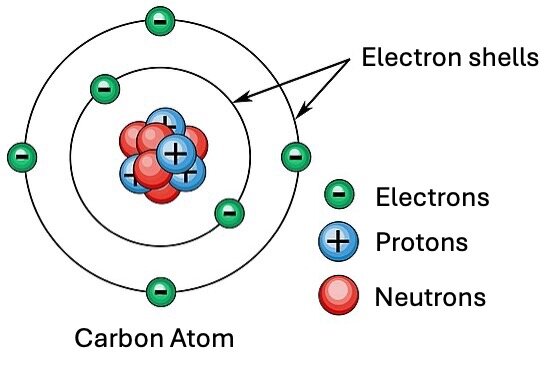
The Atomic Core
The nucleus is the atom's command center. It's packed with two types of particles: protons and neutrons. Protons carry a positive electrical charge, while neutrons have no charge at all—they are neutral. Because protons are all packed together in the nucleus, the nucleus itself has an overall positive charge.
The strong nuclear force, one of the four fundamental forces of nature, is what overcomes the electrical repulsion between protons and holds the nucleus together.
Protons and neutrons are roughly the same size and mass. They are much heavier than electrons, meaning they account for almost all of an atom's total mass.
| Particle | Charge | Relative Mass |
|---|---|---|
| Proton | +1 | ~1 |
| Neutron | 0 | ~1 |
| Electron | -1 | ~1/1836 |
Electrons in Orbit
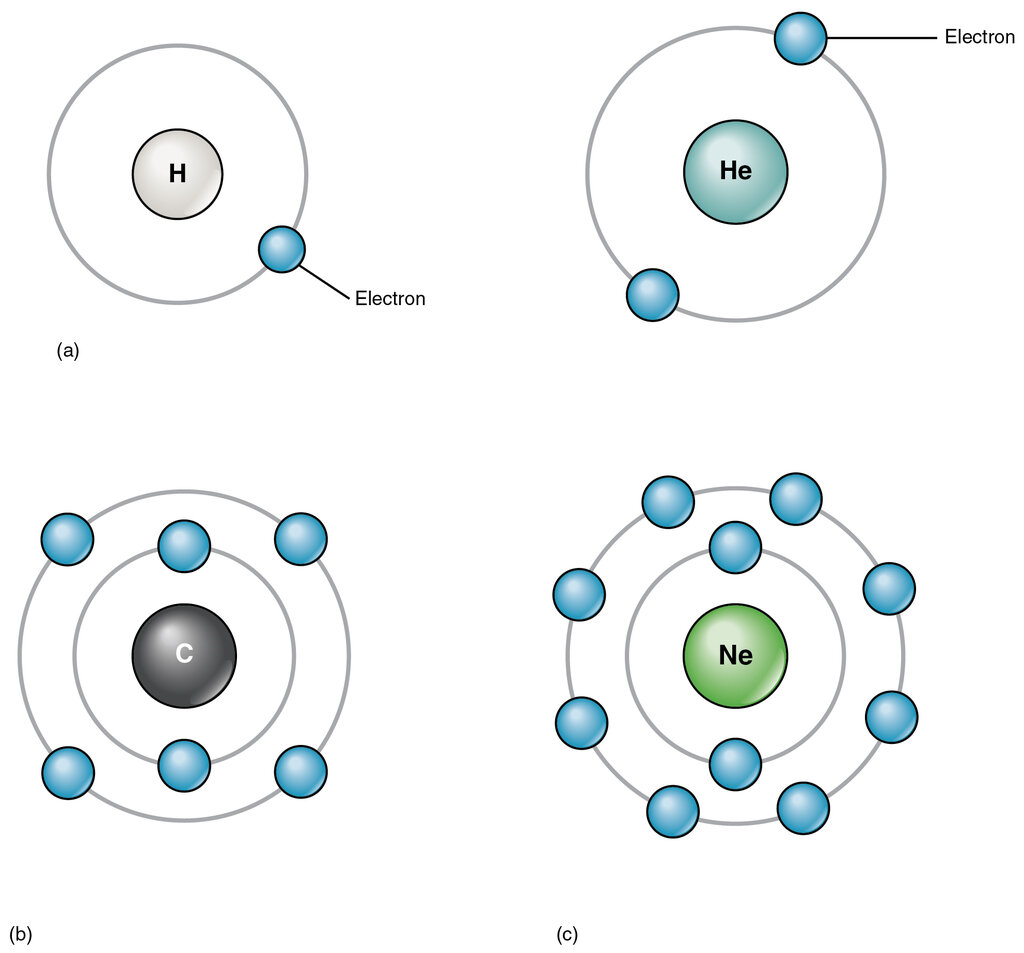
Electrons are the third type of subatomic particle. They are incredibly lightweight and carry a negative electrical charge, exactly opposite to the positive charge of a proton. These particles don't sit still; they zoom around the nucleus in specific energy levels, often visualized as shells.
The attraction between the positive nucleus and the negative electrons keeps the electrons in orbit, much like how gravity keeps planets orbiting the sun. In a neutral atom, the number of electrons is exactly equal to the number of protons. Their opposite charges cancel each other out, resulting in an atom with no overall electrical charge.
How Atoms Differ
What makes an atom of gold different from an atom of oxygen? It's the number of protons in the nucleus. This count is so fundamental that it gets its own name: the atomic number, represented by the symbol Z.
Atomic Number
noun
The number of protons in the nucleus of an atom, which uniquely identifies a chemical element.
If you add up the number of protons and neutrons in an atom, you get its mass number, represented by the symbol A. The number of neutrons can be found by simply subtracting the atomic number from the mass number.
For example, a typical carbon atom has 6 protons and 6 neutrons. Its atomic number (Z) is 6, and its mass number (A) is 12.
Atomic Variations
While the number of protons for an element is fixed, the number of neutrons can vary. Atoms of the same element that have different numbers of neutrons are called isotopes. Since they have the same number of protons, isotopes of an element have the same chemical properties.
The key difference between isotopes is their mass number. A famous example is hydrogen. Most hydrogen atoms consist of just one proton and no neutrons. But some have one neutron (Deuterium) or even two (Tritium).
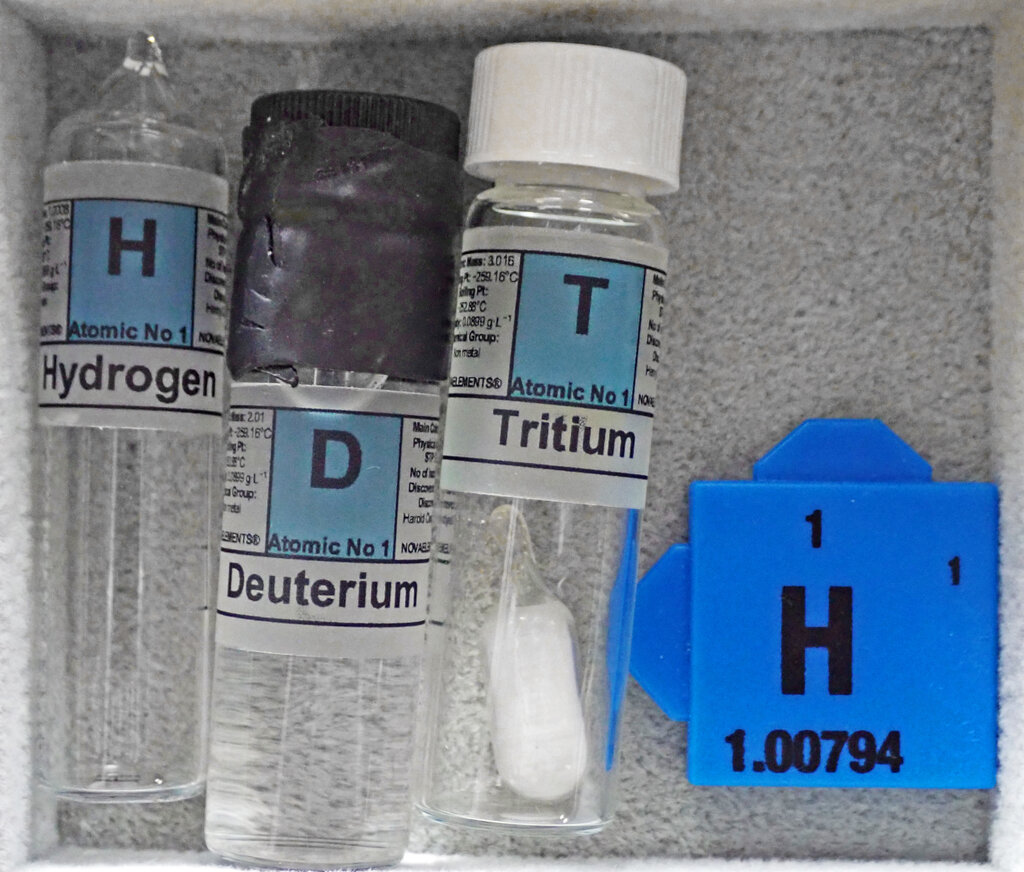
| Isotope | Protons (Z) | Neutrons (N) | Mass Number (A) |
|---|---|---|---|
| Protium (Hydrogen-1) | 1 | 0 | 1 |
| Deuterium (Hydrogen-2) | 1 | 1 | 2 |
| Tritium (Hydrogen-3) | 1 | 2 | 3 |
Understanding this basic structure—protons, neutrons, and electrons, and how their numbers define elements and isotopes—is the first step toward exploring the powerful forces locked within the atomic nucleus.