Introduction to French Language
French Alphabet and Pronunciation
The French Alphabet
The French alphabet uses the same 26 letters as English, but how you name them and sound them out can be quite different. Getting the hang of these letters is the first real step to reading and speaking French with confidence.
| Letter | Name (Pronunciation) |
|---|---|
| A a | a (ah) |
| B b | bé (bay) |
| C c | cé (say) |
| D d | dé (day) |
| E e | e (euh) |
| F f | effe (eff) |
| G g | gé (zhay) |
| H h | hache (ash) |
| I i | i (ee) |
| J j | ji (zhee) |
| K k | ka (kah) |
| L l | elle (ell) |
| M m | emme (emm) |
| N n | enne (enn) |
| O o | o (oh) |
| P p | pé (pay) |
| Q q | qu (koo) |
| R r | erre (err) |
| S s | esse (ess) |
| T t | té (tay) |
| U u | u (ew) |
| V v | vé (vay) |
| W w | double vé (DOO-bluh vay) |
| X x | ixe (eeks) |
| Y y | i grec (ee grek) |
| Z z | zède (zed) |
While many letters sound similar to their English counterparts, a few are famously different. The French 'r' is not rolled or flipped like in Spanish or Italian. It’s a sound made in the back of the throat, almost like a light gargle. Think of the sound in the middle of the word "Bordeaux".
Another tricky one is the 'u'. To make this sound, shape your lips as if you're about to say "oo," but instead, try to say the sound "ee." It's a tight, precise sound that doesn't exist in most English dialects.
The Role of Accent Marks
You’ll quickly notice little marks on top of French vowels. These are called accents, or diacritics, and they are not just for decoration. They are a crucial part of the spelling and can change a letter's pronunciation or a word's meaning entirely.
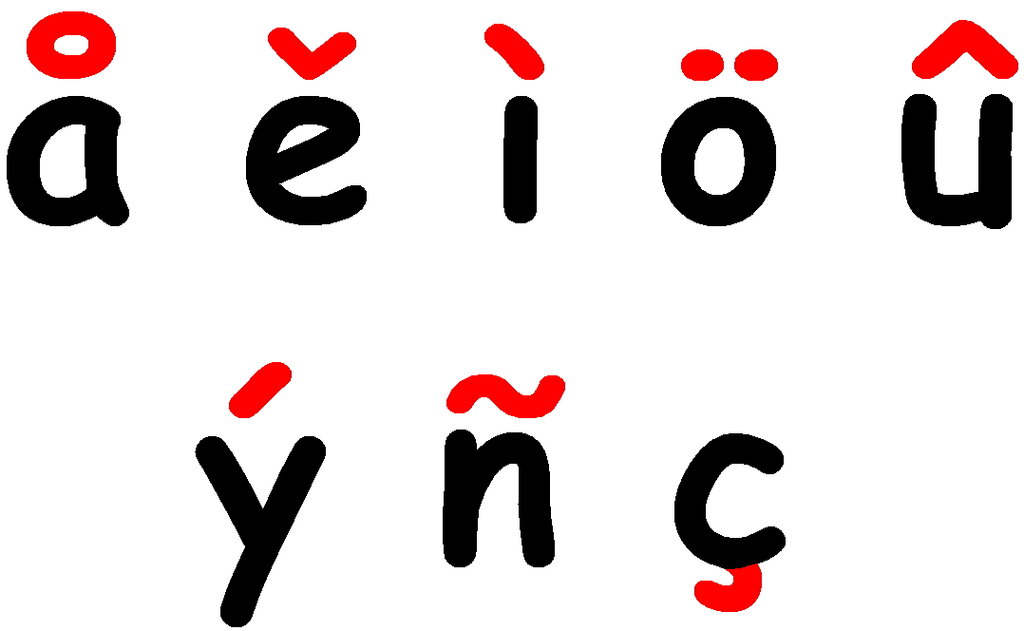
Let’s look at the three most common ones.
The acute accent (´), or accent aigu, only appears on the letter 'e'. When you see an é, it's pronounced like the 'ay' in "say" or "hay." For example, in the word café.
The grave accent (`), or accent grave, can appear on 'a', 'e', or 'u'. On an 'e', it creates an "eh" sound, like in the word "get." You'll hear it in mère (mother). On 'a' and 'u', it doesn't change the sound but distinguishes between words, like ou (or) and où (where).
The circumflex (^), or accent circonflexe, looks like a little hat. It can appear over any vowel. It often indicates that a letter 's' used to follow the vowel in Old French. For example, hôpital (hospital). It can also change the sound of 'a', 'e', and 'o', making them longer.
| Accent | Name | Example | Effect |
|---|---|---|---|
| ´ | Acute (aigu) | école (school) | Makes an "ay" sound on 'é' |
| ` | Grave (grave) | père (father) | Makes an "eh" sound on 'è' |
| ^ | Circumflex (circonflexe) | forêt (forest) | Can lengthen a vowel's sound |
Common Pronunciation Hurdles
One of the biggest adjustments for English speakers is learning which letters not to pronounce. French has many silent letters, especially at the end of words. As a general rule, most final consonants are silent.
If a word ends in -c, -r, -f, or -l, you usually pronounce the final consonant. Think of the word "CaReFuL" to help you remember. For most other consonants like -s, -t, -d, -x, and -z, they're typically silent at the end of a word.
For example, the final 's' in les chats (the cats) is silent, and the 't' in petit (small) is also silent. This takes practice, but you’ll start to recognize the patterns as you learn more words.
Ready to test what you've learned? Let's try a few questions.
Which of the following accents is called the accent aigu?
How is the letter 'é' typically pronounced in French?
Mastering these fundamentals of the alphabet, accents, and pronunciation rules will give you a solid base for everything else you learn in French.