Introduction to French Language
French Alphabet and Pronunciation
The French Alphabet
The French alphabet uses the same 26 letters as English. That's the easy part. The challenge comes from pronunciation, as the letters often sound quite different. Once you get the hang of a few key rules, you'll find French is more consistent in its pronunciation than English.
Start with the French alphabet and core pronunciation rules to build a rock-solid foundation.
Let's start with the names of the letters themselves. Knowing these will help you spell words out loud.
| Letter | Pronunciation (Approx.) |
|---|---|
| A | ah |
| B | bay |
| C | say |
| D | day |
| E | euh |
| F | eff |
| G | zhay |
| H | ash |
| I | ee |
| J | zhee |
| K | kah |
| L | ell |
| M | emm |
| N | enn |
| O | oh |
| P | pay |
| Q | koo |
| R | air |
| S | ess |
| T | tay |
| U | ew (like 'eww, gross' but shorter) |
| V | vay |
| W | doo-bluh-vay |
| X | eeks |
| Y | ee-grek |
| Z | zed |
Vowels The Heart of French
French vowels are pure and crisp. Unlike in English, they don't typically glide into another sound. For example, the English letter 'o' in 'go' is actually two sounds combined (a diphthong). In French, an 'o' is just one clean sound.
The most common vowel sounds are:
- a as in chat (cat) sounds like the 'a' in "father."
- e is tricky. It can be pronounced like the 'e' in "the" (le), or like the 'ay' in "say" when it has an accent (é).
- i as in lit (bed) sounds like the 'ee' in "see."
- o as in gros (fat) sounds like the 'o' in "boat."
- u as in tu (you) has no English equivalent. To make this sound, form your lips like you're about to whistle and try to say 'ee.'
French also uses accents (diacritics) on vowels to change their sound. The most common are the acute accent (´), grave accent (`), and circumflex (^).
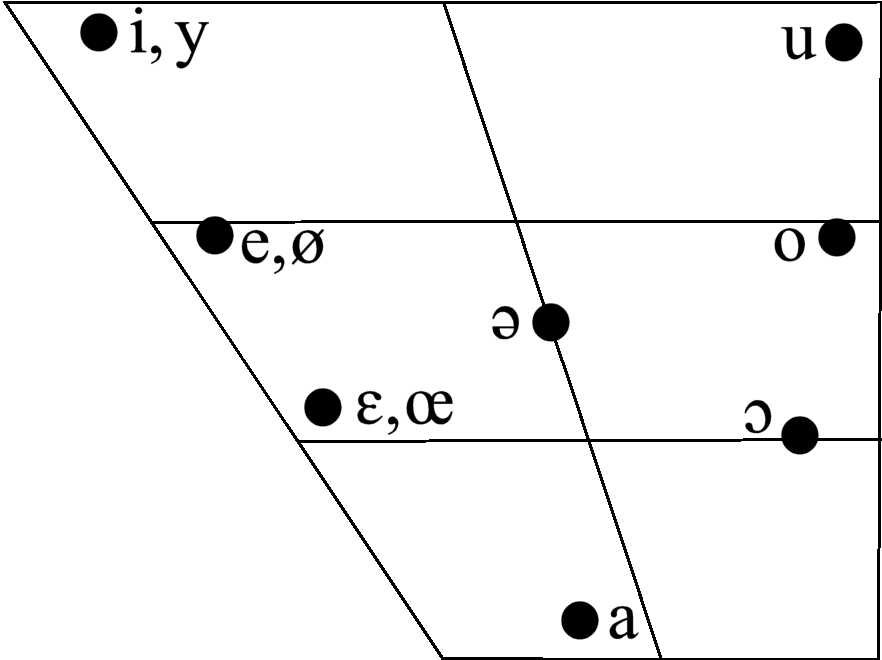
One of the most distinctive features of French pronunciation is its nasal sounds. These occur when a vowel is followed by an 'n' or 'm' in the same syllable, and that 'n' or 'm' isn't followed by another vowel. When this happens, the vowel sound resonates through your nose.
Think of the difference between 'beau' (handsome) and 'bon' (good). For 'beau', all the air comes out of your mouth. For 'bon', you let the 'on' sound vibrate in your nasal passages. The 'n' itself isn't pronounced. The main nasal vowels are:
- an/en as in vent (wind)
- in/ain/ein as in vin (wine)
- on as in bon (good)
- un as in brun (brown)
Consonants and Combinations
Good news: most French consonants sound just like they do in English. B, D, K, L, M, P, T, V, and Z are nearly identical. Here are the main exceptions:
- c is like 'k' before a, o, or u (café), and like 's' before e, i, or y (merci). With a cedilla (ç), it's always an 's' sound (français).
- g is a hard 'g' (like 'go') before a, o, or u (gare), and a soft 'g' (like the 's' in 'pleasure') before e, i, or y (manger).
- h is always silent. You just pretend it's not there. Hôtel is pronounced 'ôtel'.
- j is always a soft sound, like the 's' in 'measure' (jardin).
- r is pronounced in the back of the throat, not by rolling the tongue at the front of the mouth like in Spanish. It's similar to the sound you make when gargling.
- s sounds like 's' at the beginning of a word (soleil), but like 'z' when it's between two vowels (maison).
One of the biggest hurdles for beginners is silent letters. As a general rule, you do not pronounce the final consonant of a word. For example, petit (small) is pronounced 'pet-ee' and grands (big) is pronounced 'grahn'.
Of course, there are exceptions. The letters C, R, F, and L are often pronounced at the end of a word. A good mnemonic is CaReFuL. So, you pronounce the last letter in words like sac (bag), cher (dear), neuf (nine), and avril (April).
Finally, some letter combinations create unique sounds:
- ch sounds like 'sh' in English (chat).
- ou sounds like the 'oo' in 'food' (vous).
- oi sounds like 'wa' (moi).
- gn sounds like the 'ni' in 'onion' (mignon).
- ill can sound like a 'y' sound, as in fille (fee-yuh).
Ready to test your knowledge? This quiz will help you check your understanding of the basic sounds and rules we've just covered.
The sound of the French letter 'u', as in the word tu, is often tricky for English speakers. Which of the following is the best description of how to make this sound?
In the French word hôtel, how is the letter 'h' pronounced?
Learning pronunciation is all about listening and repeating. The more you expose yourself to spoken French, the more these rules will become second nature.