Introduction to French Language
French Alphabet and Pronunciation
The French Alphabet
The French alphabet uses the same 26 letters as English, which is great news. The main difference is how they're pronounced. Getting the sounds right from the start will make learning to speak much easier down the road.
Although all those silent letters can seem confusing at first, once you learn the rules and patterns, you’ll realise that French pronunciation is actually a lot more logical and regular than English pronunciation.
Let's go through the letters and their names in French. Notice how many of the vowel sounds are different from English.
| Letter | French Name | Pronunciation Guide |
|---|---|---|
| A | ah | Like the 'a' in "father" |
| B | bé | Like 'bay' |
| C | cé | Like 'say' |
| D | dé | Like 'day' |
| E | euh | A short sound, like the 'u' in "uh-oh" |
| F | effe | 'eff' with a soft 'uh' at the end |
| G | gé | Like 'zhay' (the 'zh' is the sound in "measure") |
| H | ache | 'ash' |
| I | ee | Like the 'ee' in "see" |
| J | ji | Like 'zhee' (again, 'zh' as in "measure") |
| K | ka | Like 'kah' |
| L | elle | 'ell' |
| M | emme | 'em' |
| N | enne | 'en' |
| O | oh | Like the 'o' in "go" |
| P | pé | Like 'pay' |
| Q | qu | 'koo' |
| R | erre | A guttural sound from the back of the throat |
| S | esse | 'ess' |
| T | té | Like 'tay' |
| U | u | Purse your lips like you're whistling and say 'ee' |
| V | vé | Like 'vay' |
| W | double vé | 'DOO-bluh vay' |
| X | ixe | 'eeks' |
| Y | i grec | 'ee-GREK', meaning "Greek i" |
| Z | zède | 'zed' |
Vowels and Accents
French vowels are the heart of its sound. They are crisp and pure, without the gliding quality (diphthongs) we often have in English. For example, the French "o" is just "oh," not "oh-wuh" like we might say in "go."
You'll also notice little marks on some letters. These are accents, and they're not just for decoration. They can change the sound of a letter or distinguish between two words that are otherwise spelled the same.
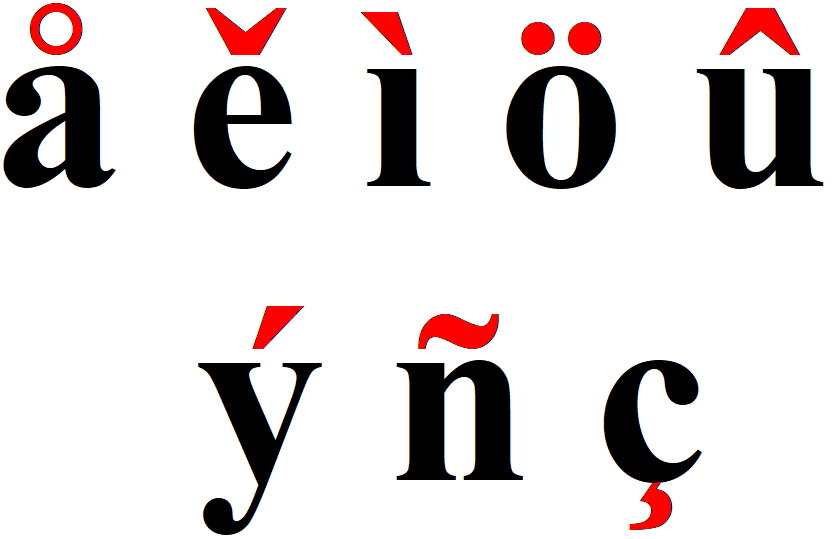
Here are the most common accents and what they do to the letter 'e':
- é (accent aigu): Makes an "ay" sound, like in café. It's called a closed 'e'.
- è (accent grave): Makes an "eh" sound, like in père (father). This is an open 'e'.
- ê (accent circonflexe): Also makes an "eh" sound, like the accent grave. Think of forêt (forest).
A good way to remember the difference between é and è is to think of the direction of the accent. The accent on é goes up, like your voice does in "ay." The accent on è goes down, like your jaw does for "eh."
Common Letter Groups
In French, letters often team up to create a single, new sound. Learning these combinations will help you decode new words much faster. French is very consistent with these rules, which is helpful for learners.
| Combination | Sound | Example |
|---|---|---|
| OI | "wa" | moi (me), soir (evening) |
| OU | "oo" as in "soup" | vous (you), jour (day) |
| AU / EAU | "oh" as in "boat" | chaud (hot), beau (beautiful) |
| CH | "sh" as in "shoe" | chat (cat), chaud (hot) |
| GN | "ny" as in "canyon" | montagne (mountain) |
| EU / OEU | "uh" | deux (two), coeur (heart) |
One of the most characteristic features of French is its nasal sounds. When a vowel is followed by an 'n' or 'm' at the end of a syllable, the sound resonates through your nose. The 'n' or 'm' itself isn't pronounced.
- an / en: Sounds like the "on" in "song" but more nasal. Ex: maman (mom), vent (wind).
- in / un: A bright nasal sound with no English equivalent. Try saying "ah" while smiling and letting air pass through your nose. Ex: vin (wine), brun (brown).
- on: Sounds like the "own" in "flown" but, again, more nasal. Ex: bon (good), maison (house).
Ready to test your knowledge of these new sounds?