Introduction to French
French Alphabet and Pronunciation
The Alphabet
The French alphabet uses the same 26 letters as English, which is a nice head start. However, the names of the letters are different, and knowing them is helpful for spelling things out loud. Learning these names also gives you your first taste of French sounds.
| Letter | French Name | Pronunciation (approx.) |
|---|---|---|
| A | a | ah |
| B | bé | bay |
| C | cé | say |
| D | dé | day |
| E | e | euh (like 'uh') |
| F | effe | eff |
| G | gé | zhay |
| H | hache | ash |
| I | i | ee |
| J | ji | zhee |
| K | ka | kah |
| L | elle | ell |
| M | emme | emm |
| N | enne | enn |
| O | o | oh |
| P | pé | pay |
| Q | qu | koo |
| R | erre | airr (with a guttural R) |
| S | esse | ess |
| T | té | tay |
| U | u | No English equivalent |
| V | vé | vay |
| W | double vé | DOO-bluh vay |
| X | ixe | eeks |
| Y | i grec | ee greck |
| Z | zède | zed |
Don't worry about perfecting the pronunciation of each letter name right away. The goal is to get familiar. The real work is in learning the sounds these letters make within words.
Vowel Sounds
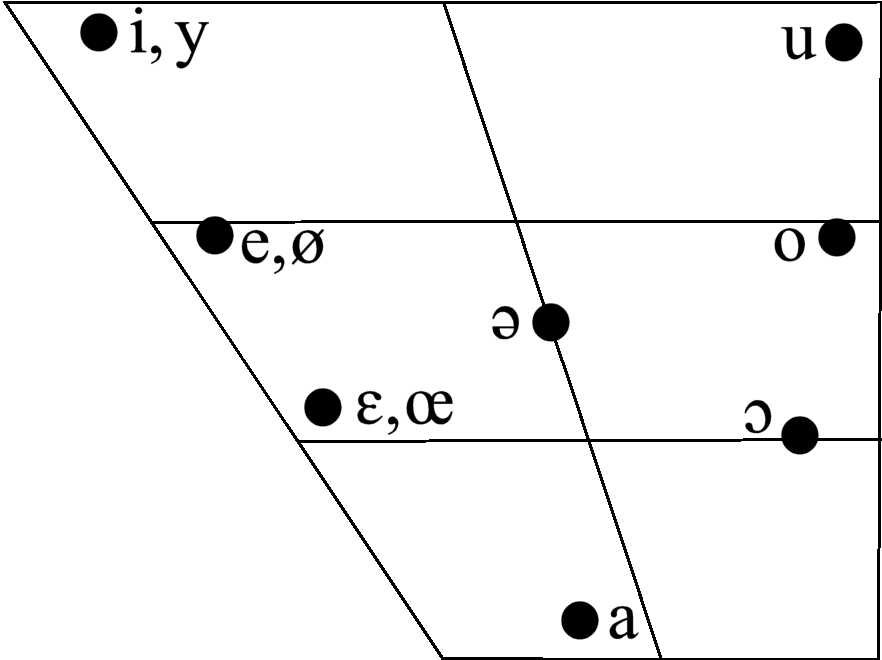
Vowels are the heart of French pronunciation. Unlike English, where a vowel's sound can change dramatically (think of the 'a' in 'cat,' 'car,' and 'cake'), French vowels are generally pure and consistent. They don't glide into other sounds. When you say a French vowel, you hold your mouth in one position.
The letter 'u' is a classic example of a sound that's new for English speakers. To make this sound, try saying 'ee' and then, without moving your tongue, round your lips tightly as if you were going to whistle.
Say 'eeeee'. Now, hold that tongue position and round your lips into a small 'o'. The sound that comes out is the French 'u'.
Another key feature is nasal vowels. These occur when a vowel is followed by an 'n' or 'm' in the same syllable. Instead of pronouncing the 'n' or 'm', the sound is pushed through your nose. Think of the sound at the end of the English word 'song'—that's a nasal sound.
Here are the main nasal sounds:
- an, en sound like the 'on' in 'encore'.
- in, ain, ein sound like the 'an' in 'sang'.
- on sounds like the 'own' in 'sown'.
- un sounds like the 'un' in the French word 'brun' (brown), which is a bit like 'uh' but nasal.
Consonants
Many French consonants sound just like their English counterparts, which is great news. But a few have their own personalities.
First, the letter 'h' is always silent. Always. You treat it as if it isn't there. So, hôtel is pronounced 'ôtel'.
The letter 'j' is consistently pronounced like the 's' in 'pleasure' or 'measure'. This sound is represented by the phonetic symbol /ʒ/.
The French 'r' is famous. It's not rolled with the tip of the tongue like in Spanish. Instead, it's produced in the back of the throat. It's a bit like a light gargling sound or the sound of clearing your throat very gently. To practice, try saying 'k' or 'g' and notice where your tongue hits the back of your mouth. The French 'r' is made in that same area.
A big difference from English is the prevalence of silent final consonants. Most of the time, if a word ends in a consonant, you don't pronounce it. For example, trop (too much) is pronounced 'tro', and petit (small) is pronounced 'peti'.
There's a handy mnemonic for the consonants that are often pronounced at the end of a word: C-R-F-L. You can remember this with the word "CaReFuL". So, in words like sac (bag), cher (expensive), neuf (nine), and avril (April), the final consonant is usually heard.
Common Combinations
French also combines letters to create specific sounds. Once you learn these patterns, reading becomes much more predictable.
| Combination | Sound | Example |
|---|---|---|
| ou | like 'oo' in 'soup' | vous (you) |
| oi | like 'wa' in 'water' | moi (me) |
| au / eau | like 'o' in 'boat' | chaud (hot), bateau (boat) |
| ch | like 'sh' in 'shoe' | chat (cat) |
| gn | like 'ny' in 'canyon' | montagne (mountain) |
These combinations are very reliable. When you see 'eau' in a French word, you can be confident it will make an 'oh' sound. This regularity is one of the helpful aspects of French pronunciation.
Now let's review these new concepts.
Ready to test your knowledge?
What is the most accurate description of how the French letter 'r' is pronounced?
In French, the letter 'h' is always silent.
Mastering these sounds takes practice. Listen to native speakers as much as you can, and don't be afraid to try making the sounds yourself, even if they feel strange at first. It's the first and most important step to speaking with confidence.