Introduction to Financial Analysis
Introduction to Financial Statements
The Three Core Financial Statements
Every business tells a story with its numbers. To understand that story, you need to read its three main financial reports: the balance sheet, the income statement, and the cash flow statement. Think of them as a snapshot, a movie, and a bank statement. Each one gives you a different, crucial perspective on a company's financial health.
These are the key steps to understanding a company’s financial health—starting with reading the balance sheet, income statement, and cash flow statement, then linking them to key financial ratios such as liquidity, solvency, profitability, and efficiency.
The Balance Sheet: A Snapshot
The balance sheet shows a company's financial position at a single point in time. It's like taking a photo of what the company owns and what it owes on a specific day, such as December 31st.
It’s built on a fundamental rule known as the accounting equation. This equation must always, as its name suggests, balance.
Let's break down each part.
Asset
noun
An economic resource owned by the company that has future economic value.
Assets are everything the company owns that has value. This includes cash in the bank, inventory waiting to be sold, equipment, and buildings.
Liability
noun
A company's financial debts or obligations that arise during the course of its business operations.
Liabilities are what the company owes to others. Think of loans from banks, bills from suppliers (called accounts payable), and employee wages that haven't been paid yet.
Equity
noun
The value of the assets remaining in a company after all liabilities have been subtracted. It represents the owners' stake.
Equity is what’s left over for the owners after you subtract the liabilities from the assets. It’s the company's net worth.
Here’s a simple way to look at it:
| Assets | Liabilities + Equity |
|---|---|
| What you own | What you owe to others |
| Cash | Bank Loan |
| Inventory | Bills to Suppliers |
| Equipment | Your Stake (Equity) |
The Income Statement: A Period of Time
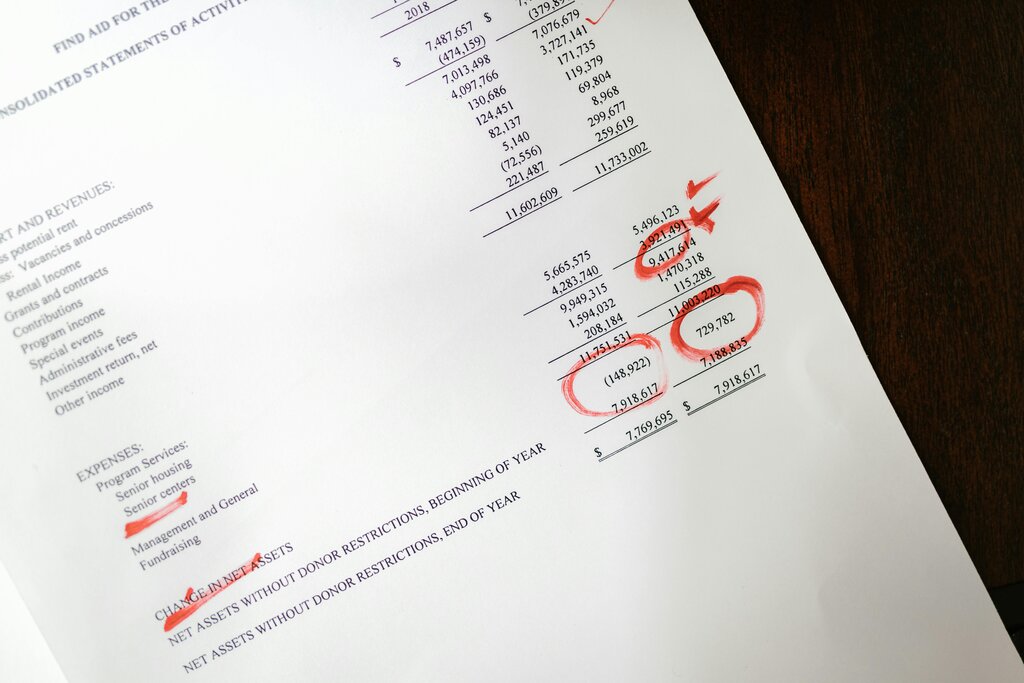
If the balance sheet is a snapshot, the income statement is a movie. It shows how profitable a company was over a specific period, like a quarter or a full year. It’s also called a Profit and Loss (P&L) statement.
Its structure is straightforward. It starts with total sales and subtracts all the costs and expenses incurred to generate those sales.
The main components are:
Revenue
noun
The total amount of income generated by the sale of goods or services related to the company's primary operations.
Revenue, or sales, is the money the company earns from its customers. It's the 'top line' of the income statement.
Expenses are the costs of doing business. This includes everything from the cost of raw materials and employee salaries to rent and advertising.
The result is Net Income, often called the 'bottom line.' It tells you if the company made a profit or a loss during that period.
The Cash Flow Statement: The Cash Trail
A company can be profitable on paper but still run out of money. The income statement includes non-cash items, like depreciation, and doesn't always reflect when customers actually pay their bills. The cash flow statement fixes this by tracking the actual cash moving in and out of the company.
It breaks down a company's cash activities into three categories.
1. Operating Activities: Cash generated from the company's main business operations, like selling products or services.
2. Investing Activities: Cash used for or received from investments. This includes buying or selling long-term assets like machinery or property.
3. Financing Activities: Cash from investors or lenders. This includes money from issuing stock, borrowing from a bank, or paying back a loan.
How They Connect
These three statements are not independent; they are deeply interconnected and tell a cohesive story.
Net income from the income statement links to both the balance sheet and the cash flow statement. It increases the equity on the balance sheet (as retained earnings) and is the starting point for the operating activities section of the cash flow statement.
The cash flow statement explains the change in the cash balance on the balance sheet from one period to the next. The final cash balance on the cash flow statement must match the cash amount shown on the balance sheet.
By reading all three together, you get a full picture. The income statement shows performance, the balance sheet shows stability, and the cash flow statement shows liquidity.
Which of the following represents the fundamental accounting equation for the balance sheet?
Which financial statement is best described as a 'snapshot' of a company's financial position at a single point in time?
Understanding these statements is the first step toward analyzing a company's financial health. Each one provides a unique piece of the puzzle.