Introduction to Film Production
Film Production Stages
The Five Stages of Film Production
Making a movie is a massive undertaking that goes far beyond just pointing a camera and shouting "Action!" It's a structured journey broken down into distinct phases. Each stage has its own unique goals, challenges, and team of specialists. Understanding this lifecycle reveals how a simple idea transforms into the final film you see on screen. The entire process is generally split into five key stages.
Development
Every film begins as a spark, an idea. The development stage is all about fanning that spark into a flame. This is where the core concept of the film is born and fleshed out. The story might come from a best-selling novel, a historical event, a comic book, or a completely original idea from a screenwriter.
During this phase, screenwriters work on creating a compelling script. Producers explore the idea's viability and try to secure the rights to the story if it's based on existing material. They'll also create a pitch package—a collection of documents that might include a script, a summary of the plot, and ideas for potential cast members—to secure the initial funding needed to move forward.
This stage is foundational. It answers the most important question: Is this a story worth telling, and can we get the resources to tell it?
Pre-Production
Once the script is greenlit and funding is in place, the project moves into pre-production. This is the planning and preparation phase, where the entire film is mapped out in detail before a single frame is shot. Meticulous planning here prevents costly delays and mistakes later on.
Pre-production is the most important part of any production as all of the production stages after it are based on the goings on within this area.
Key activities in this stage involve hiring the director and key crew members like the cinematographer and production designer. Actors are cast, locations are scouted, and sets are designed and built. The team creates detailed storyboards, which are like a comic book version of the film, to visualize shots. A final shooting schedule and a detailed budget are also locked in.
| Task | Description |
|---|---|
| Finalize Script | Lock the screenplay to guide all departments. |
| Hire Crew | Assemble the core team (director, cinematographer, etc.). |
| Cast Actors | Audition and select the talent for each role. |
| Location Scouting | Find and secure all filming locations. |
| Storyboarding | Create visual outlines for sequences and shots. |
| Scheduling & Budgeting | Create a detailed plan for filming and expenses. |
Production
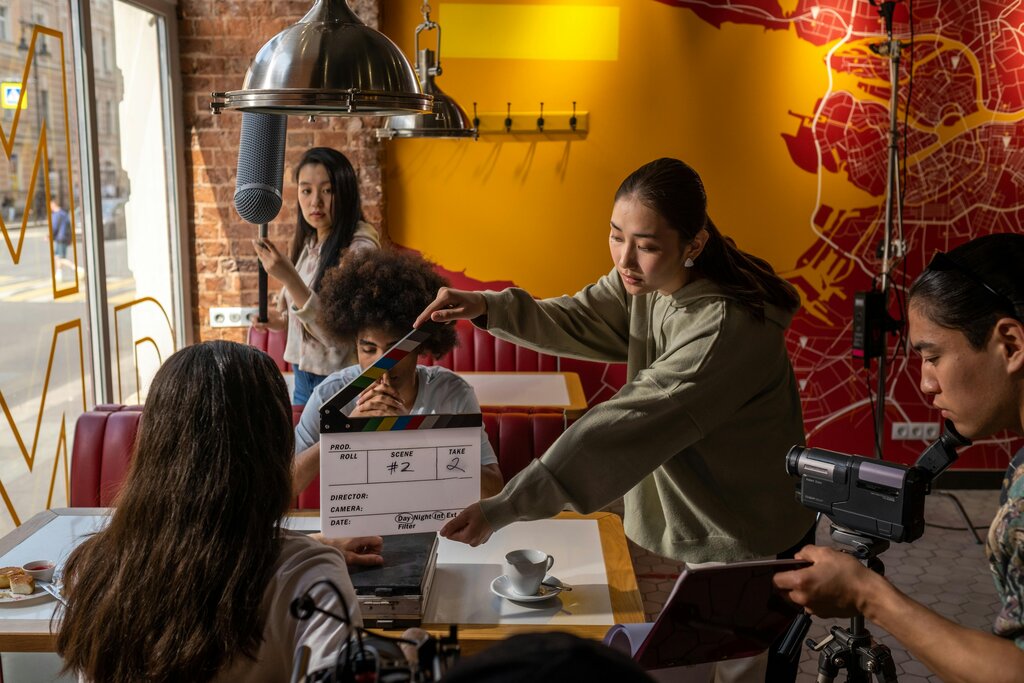
This is the phase most people imagine when they think of filmmaking. Production, also known as principal photography, is when the actual shooting happens. The crew and cast come together on set or location, and the director's vision starts to come to life.
Each day is highly scheduled. The director works with the actors on their performances while the cinematographer and their team manage the cameras, lighting, and shot composition. The sound department captures dialogue and ambient noise. It's a collaborative and often high-pressure environment where everyone must work together to stick to the schedule and budget.
Post-Production
After the last "cut!" is called, the project enters post-production. This is where all the raw footage, sound recordings, and other assets are assembled to create the final film. It's a complex and creative process that can take even longer than the actual filming.
The picture editor pieces together the best takes to build the narrative. Sound editors clean up dialogue, add sound effects, and mix the audio. A composer writes the musical score. Visual effects (VFX) artists create any computer-generated imagery required, from subtle enhancements to entire fantasy worlds. Finally, a colorist grades the film, adjusting colors and tones to create a specific mood and consistent look.
Post-production is often called the "final rewrite" of the film, where pacing, tone, and emotional impact are carefully crafted.
Distribution
A film isn't complete until it reaches an audience. Distribution is the final stage, where the finished movie is delivered to viewers. This phase involves marketing, promotion, and sales.
Distributors create trailers, posters, and other marketing materials to build excitement. They secure deals for theatrical releases in movie theaters, home video (like Blu-ray), and digital streaming platforms. The distribution strategy determines how, when, and where the world gets to see the film. It's the critical final step in turning a creative project into a shared cultural experience.
Now that you've seen all the stages, let's test your knowledge.
During which stage of filmmaking is the initial idea fleshed out, the script written, and a pitch package created to secure funding?
Arrange the five stages of filmmaking in the correct chronological order.
From the initial idea to the final screening, each of these five stages is essential to the art and business of filmmaking.