Introduction to Farsi
Persian Alphabet
The Persian Script
The Persian alphabet, used for writing the Farsi language, is a beautiful script that flows from right to left across the page. It's based on the Arabic script, but with a few extra letters to represent sounds unique to Persian. In total, it has 32 letters.
Most of these letters are connectors. Think of them like social butterflies at a party, always ready to hold hands with the letter that comes next. A few, however, are non-connectors. They stand next to the following letter but don't link up, creating a small visual break within a word.
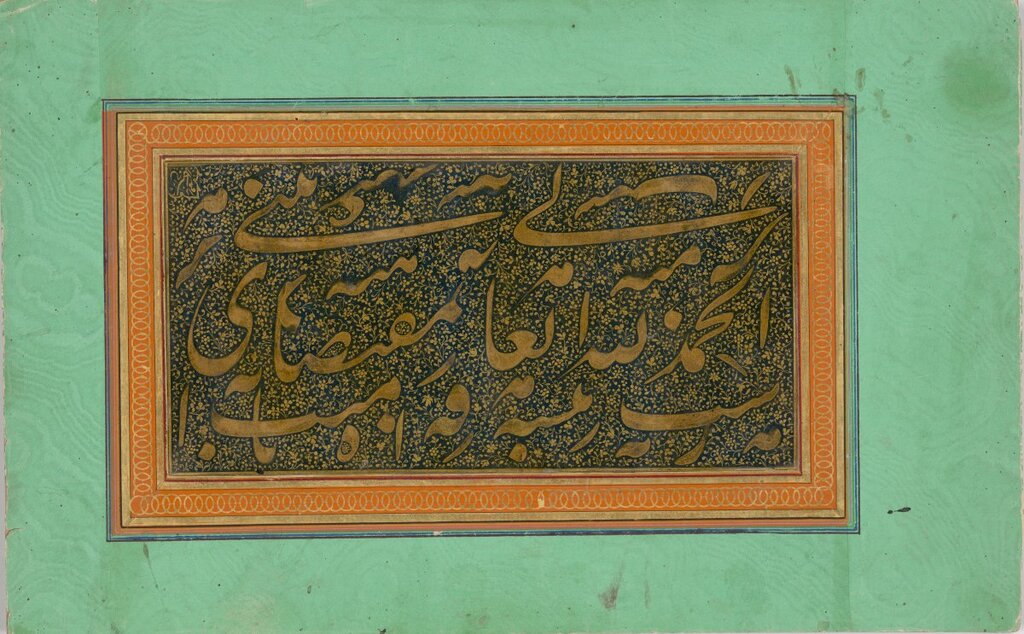
The 32 Letters
Let's meet the letters. Each one has a name and a distinct sound. Here is a full list of the letters in their isolated, standalone form. Don't worry about memorizing them all at once. Just get familiar with their shapes and sounds.
| Letter | Name | Sound (Approximate) |
|---|---|---|
| ا | alef | 'a' as in 'apple' or 'ah' |
| ب | be | 'b' as in 'book' |
| پ | pe | 'p' as in 'pen' |
| ت | te | 't' as in 'tea' |
| ث | se | 's' as in 'see' |
| ج | jim | 'j' as in 'jump' |
| چ | che | 'ch' as in 'chair' |
| ح | he | 'h' as in 'hat' (a breathy h) |
| خ | khe | 'kh' like the 'ch' in 'loch' |
| د | dāl | 'd' as in 'dog' |
| ذ | zāl | 'z' as in 'zoo' |
| ر | re | 'r' (a rolled r, like in Spanish) |
| ز | ze | 'z' as in 'zoo' |
| ژ | zhe | 'zh' like the 's' in 'pleasure' |
| س | sin | 's' as in 'sun' |
| ش | shin | 'sh' as in 'shoe' |
| ص | sād | 's' as in 'see' |
| ض | zād | 'z' as in 'zoo' |
| ط | tā | 't' as in 'top' |
| ظ | zā | 'z' as in 'zoo' |
| ع | 'eyn | a guttural sound from the throat |
| غ | 'qeyn | 'gh' like a French 'r' |
| ف | fe | 'f' as in 'fish' |
| ق | qāf | 'q' (a guttural 'k' sound) |
| ک | kāf | 'k' as in 'key' |
| گ | gāf | 'g' as in 'go' |
| ل | lām | 'l' as in 'love' |
| م | mim | 'm' as in 'moon' |
| ن | nun | 'n' as in 'name' |
| و | vāv | 'v' as in 'voice' or 'oo' as in 'moon' |
| ه | he | 'h' as in 'hello' |
| ی | ye | 'y' as in 'yes' or 'ee' as in 'see' |
You might have noticed that several letters seem to make the same sound (like 's' or 'z'). This is a holdover from Arabic. In modern Persian pronunciation, letters like ث, س, and ص all just sound like 's'.
Shape-Shifting Letters
The biggest challenge for new learners is that most letters change their shape depending on their position in a word. It's not as complex as it sounds. A letter has up to four forms:
- Isolated: When it stands alone.
- Initial: When it's the first letter of a word.
- Medial: When it's in the middle of a word.
- Final: When it's the last letter of a word.
Think of it like cursive handwriting. The initial form has a tail to connect to the next letter, the medial form connects on both sides, and the final form connects to the letter before it and then finishes the word with a flourish. The isolated form is what you see in the alphabet chart above.
| Letter | Isolated | Initial | Medial | Final |
|---|---|---|---|---|
| ج (jim) | ج | ج | ج | ج |
| س (sin) | س | س | س | س |
| م (mim) | م | م | م | م |
| ه (he) | ه | ه | ه | ه |
The word for book is کتاب. It's made of four letters: ک (k), ت (t), ا (a), ب (b). Let's see how they connect.
Notice the letter 'alef' (ا) in the middle of کتاب. It connects to the letter before it (ت), but not to the one after it (ب). Alef is one of seven non-connecting letters. They only have an isolated and a final form because they never link to the letter that follows.
The seven non-connectors are:
ا (alef), د (dāl), ذ (zāl), ر (re), ز (ze), ژ (zhe), و (vāv)
When one of these appears in a word, it creates a break. The next letter must start in its 'initial' form, even though it's in the middle of the word.
Persian vs Arabic
While the scripts look similar, there are key differences. Persian added four letters to represent sounds that don't exist in Arabic.
The four Persian-specific letters are: پ (p), چ (ch), ژ (zh), and گ (g).
Additionally, the pronunciation of some shared letters is different. For example, the letter ق is a deep, throaty sound in Arabic, but in Persian, it often sounds just like غ. The letter 'vāv' (و) is pronounced as 'w' in Arabic but as 'v' in Persian.
Understanding these basic rules is the first step. The best way to learn is by seeing and writing the letters yourself.
How many letters are in the Persian alphabet?
True or False: Most letters in the Persian alphabet change their shape depending on their position within a word.
Now that you've been introduced to the building blocks of written Persian, you're ready to start forming words and sentences.