Introduction to Face Reading
Introduction to Physiognomy
The Face as a Story
Have you ever looked at a person and made a snap judgment about them based on their face? Maybe you thought someone with a soft, round face looked kind, or someone with sharp, angular features seemed stern. This impulse to read personality from facial features is the core of an ancient practice called physiognomy.
Physiognomy
noun
The practice of assessing a person's character or personality from their outer appearance, especially the face.
Physiognomy suggests that just as the face reveals emotions through smiles and frowns, it also holds permanent clues to a person’s underlying temperament and character. It’s an idea that has captivated people for thousands of years, long before the advent of modern psychology. While it is not a science, exploring its history tells us a lot about how people have tried to understand one another over the centuries.
Ancient Roots
The practice first appears in the ancient world. In China, face reading (known as Mian Xiang) became a sophisticated diagnostic tool, intertwining with traditional medicine. In the West, the ancient Greeks were the first to systematize it. Philosophers believed that the soul shaped the body, and therefore, one’s inner character could be seen on the outside.
Aristotle, for example, wrote on the topic, systematically cataloging how certain facial features, like the shape of a nose or the size of ears, supposedly corresponded to specific personality traits. He often drew comparisons to animals, suggesting that a person with a nose like a lion’s might be brave.

Physiognomy was also common in ancient Rome, where it was used for everything from choosing friends to sizing up political rivals. The belief was simple: the face was a map of the inner self, available for anyone to read if they knew the language.
Evolution and Decline
Physiognomy’s popularity waxed and waned through the Middle Ages, but it saw a massive resurgence during the Renaissance. Artists like Leonardo da Vinci filled notebooks with sketches of faces, exploring how physical features conveyed character and emotion. However, it was an 18th-century Swiss pastor named Johann Kaspar Lavater who brought physiognomy to its peak of popularity.
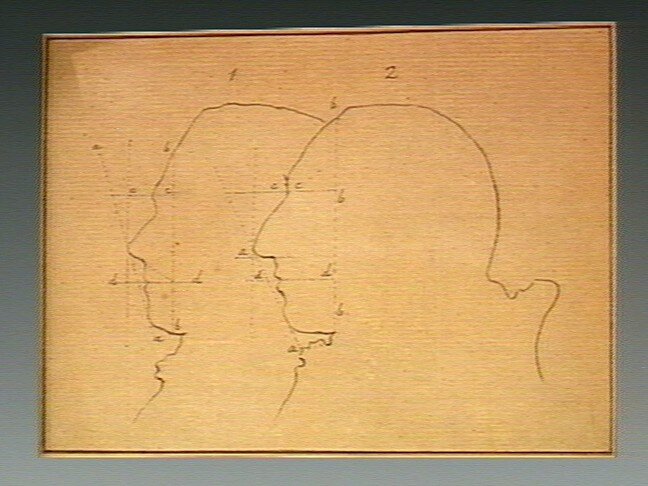
Lavater’s lavishly illustrated book, Essays on Physiognomy, became a bestseller across Europe. He argued that physiognomy was a science that could reveal a person's moral and intellectual worth. His work was so influential that it shaped everything from art to literature, with authors like Charles Dickens and Jane Austen using physical descriptions to signal the inner nature of their characters.
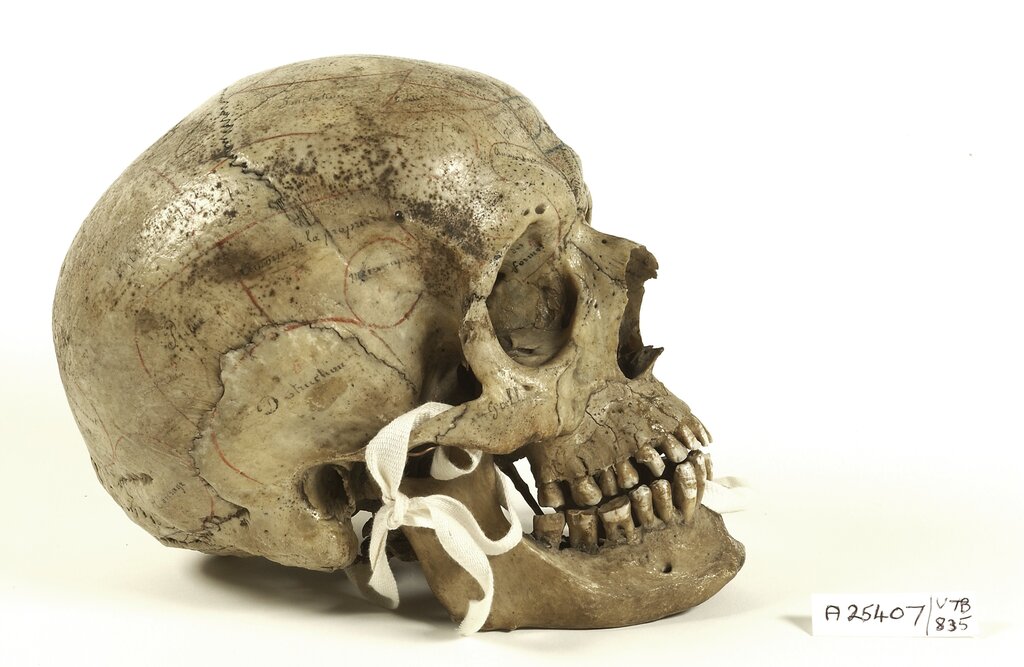
By the 19th century, however, the rise of the scientific method began to cast doubt on these claims. A related practice called phrenology, which focused on reading bumps on the skull, briefly became popular but was also eventually debunked.
Physiognomy Today
Today, physiognomy is considered a pseudoscience. There is no reliable scientific evidence to support the idea that you can determine personality traits from facial features. Modern psychology understands that personality is a complex mix of genetics, environment, and personal experience—not something etched into the shape of your chin or the width of your forehead.
While we may still have an intuitive tendency to judge a book by its cover, the history of physiognomy serves as a useful reminder. It shows a long-standing human desire to understand others quickly, but also highlights the dangers of relying on superficial traits to make judgments about character. The real story of who a person is can't be found in the lines of their face.
What is the central idea of physiognomy?
Who was the 18th-century Swiss pastor whose lavishly illustrated book brought physiognomy to its peak of popularity in Europe?