Introduction to Everyday Arabic
Arabic Alphabet
Writing from Right to Left
The first thing to know about the Arabic script is that it’s written and read from right to left. This might feel unusual at first, but you'll get used to it quickly. Unlike printed English letters, which mostly stand alone, Arabic letters are typically joined together in a flowing, cursive style.
Think of it like cursive handwriting, where each letter in a word connects to the next, but in the opposite direction.
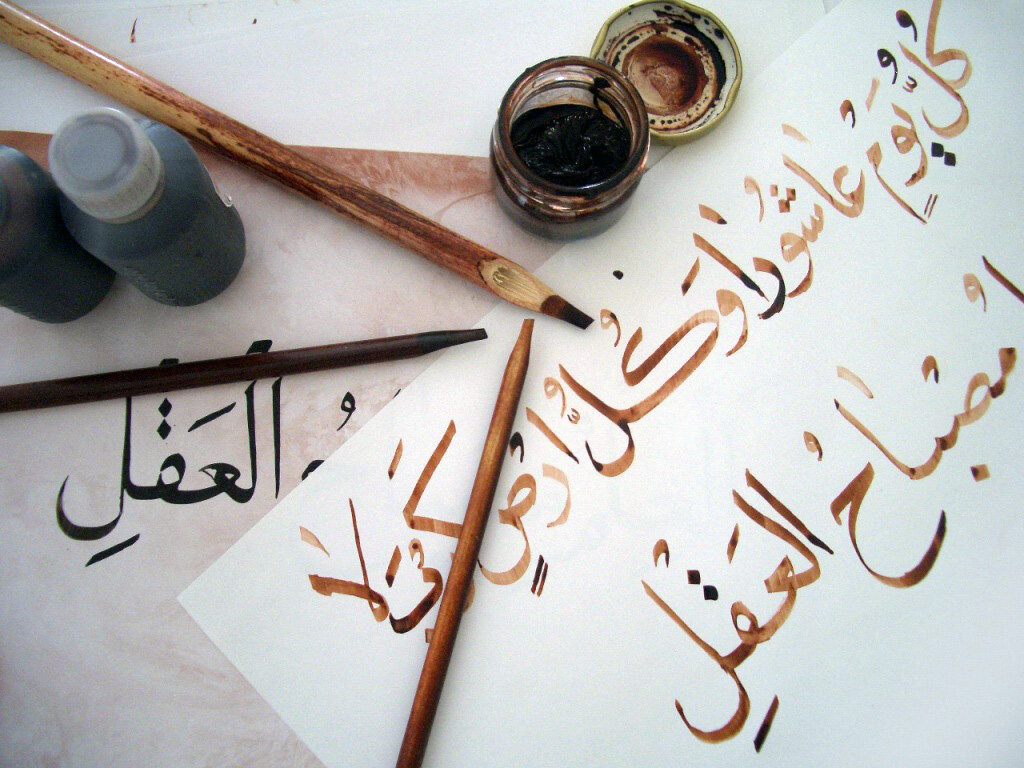
The 28 Letters
The Arabic alphabet has 28 letters. Most of these represent consonants. Short vowel sounds aren't typically written as full letters; instead, they are often marked with small symbols called diacritics above or below the letters. We'll focus on the main letters for now.
Many Arabic sounds have a close equivalent in English, but some are unique. For example, there are sounds made deeper in the throat that don't exist in English. Listening to native speakers is the best way to get the pronunciation just right.
Abjad
noun
A type of writing system where each symbol primarily stands for a consonant, leaving the reader to infer the appropriate vowel. The Arabic script is an abjad.
Here are the 28 letters of the alphabet, their names, and their approximate sounds.
| Letter | Name | Sound |
|---|---|---|
| ا | Alif | 'a' as in 'car' |
| ب | Bā' | 'b' as in 'bed' |
| ت | Tā' | 't' as in 'top' |
| ث | Thā' | 'th' as in 'three' |
| ج | Jīm | 'j' as in 'jam' |
| ح | Ḥā' | A breathy 'h' from the throat |
| خ | Khā' | 'ch' as in 'Bach' |
| د | Dāl | 'd' as in 'door' |
| ذ | Dhāl | 'th' as in 'this' |
| ر | Rā' | A rolled 'r' like in Spanish |
| ز | Zāy | 'z' as in 'zoo' |
| س | Sīn | 's' as in 'sun' |
| ش | Shīn | 'sh' as in 'shoe' |
| ص | Ṣād | A heavy 's' sound |
| ض | Ḍād | A heavy 'd' sound |
| ط | Ṭā' | A heavy 't' sound |
| ظ | Ẓā' | A heavy 'th' sound |
| ع | 'Ayn | A deep sound from the throat |
| غ | Ghayn | A 'g' sound like a French 'r' |
| ف | Fā' | 'f' as in 'fish' |
| ق | Qāf | A 'q' sound from the back of the throat |
| ك | Kāf | 'k' as in 'king' |
| ل | Lām | 'l' as in 'light' |
| م | Mīm | 'm' as in 'moon' |
| ن | Nūn | 'n' as in 'nose' |
| ه | Hā' | 'h' as in 'hello' |
| و | Wāw | 'w' as in 'water', or 'oo' |
| ي | Yā' | 'y' as in 'yes', or 'ee' |
Letters Change Shape
Here's one of the most important concepts: Arabic letters change their shape depending on their position in a word. A letter can have up to four forms: isolated (when it stands alone), initial (at the beginning of a word), medial (in the middle), and final (at the end).
Let’s look at the letter Bā’ (ب) to see how this works. Notice how it always keeps its single dot below, which helps you identify it.
| Form | Shape |
|---|---|
| Isolated | ب |
| Initial | بـ |
| Medial | ـبـ |
| Final | ـب |
Most letters follow this pattern of connecting from both sides. However, there are six letters that only connect to the letter before them (to their right). They never connect to the letter that follows them.
These are sometimes called the "non-connecting" letters. After one of these letters appears, the next letter in the word will start in its initial form, creating a small gap in the middle of the word.
The six non-connecting letters are: ا (Alif), د (Dāl), ذ (Dhāl), ر (Rā'), ز (Zāy), and و (Wāw).
Connecting Letters into Words
Let's build a simple word to see how these rules work in practice. We'll use the word for "book," which is made of four letters:
- Kāf (ك)
- Tā' (ت)
- Alif (ا)
- Bā' (ب)
First, Kāf is at the beginning, so it takes its initial form: كـ Next, Tā' is in the middle, so it takes its medial form. It connects to the Kāf: كتـ Then comes Alif. It connects to the Tā' before it, but because Alif is a non-connecting letter, it doesn't connect to what comes next: كتا Finally, Bā' is at the end. Since the Alif before it didn't connect, the Bā' uses its final form after a non-connector (which looks like its isolated form): كتاب
book
See how it all comes together? Recognizing the letters and knowing how they connect is the foundation for reading and writing Arabic.
In which direction is the Arabic script written and read?
What is the primary reason an Arabic letter changes its shape?
With these basics, you're ready to start recognizing and sounding out letters. Practice is the key to making it all feel natural.