Introduction to Epigenetics
Introduction to Epigenetics
Above the Genome
Think of your DNA as a massive cookbook. It contains all the recipes—your genes—for building and running your body. Every cell, from a neuron in your brain to a skin cell on your arm, has a copy of this same cookbook. But a neuron doesn't need the recipe for making skin pigment, and a skin cell has no use for the recipe for sending nerve signals. So how does each cell know which recipes to use and which to ignore?
This is where epigenetics comes in. It's like a set of sticky notes and paper clips that a chef adds to the cookbook. These markers don't change the recipes themselves, but they highlight which ones to cook, which to skip, and how often to make a certain dish. They control how the genes are expressed.
Epigenetics
noun
The study of changes in organisms caused by modification of gene expression rather than alteration of the genetic code itself.
The key difference is that genetic changes alter the DNA sequence itself—the letters in the recipe. An epigenetic change, however, leaves the DNA sequence untouched. It’s a layer of instructions on top of the DNA.
Genetics is the cookbook. Epigenetics is the chef who decides what to make.
This regulation is crucial. It guides the process of a single fertilized egg developing into a complex being with hundreds of different cell types. It allows our bodies to adapt to the environment, responding to factors like diet, stress, and toxins. Without these epigenetic markers, our cells would be in chaos, trying to follow every recipe at once.
The Tools of the Trade
Two main mechanisms act as the chef's primary tools for marking up the genetic cookbook: DNA methylation and histone modification.
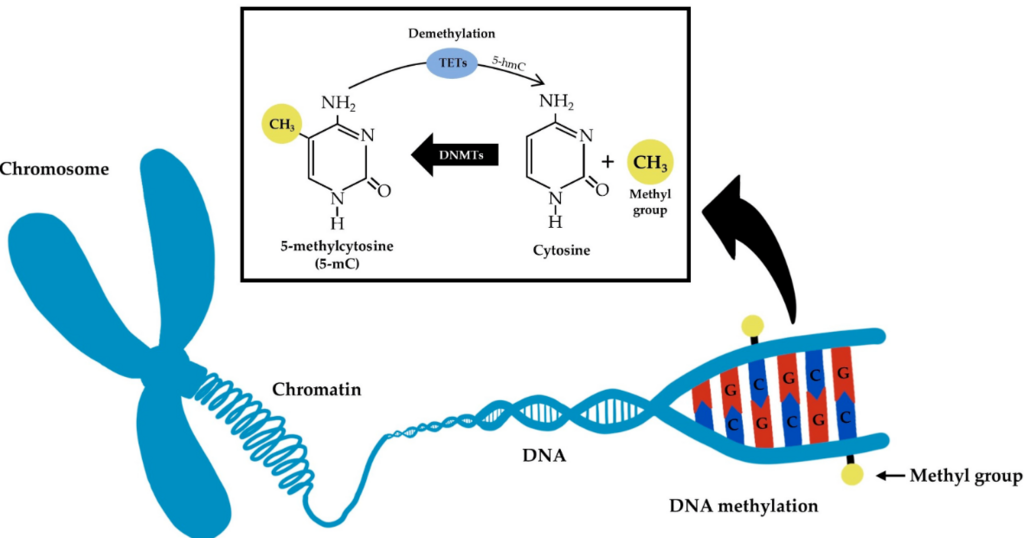
First, there's DNA methylation. Imagine a tiny chemical cap, called a methyl group, that can be attached directly to a part of the DNA sequence. When this cap is present, it often acts like a "Do Not Read" sign, effectively silencing the gene. It’s a simple but powerful way to turn a gene off.
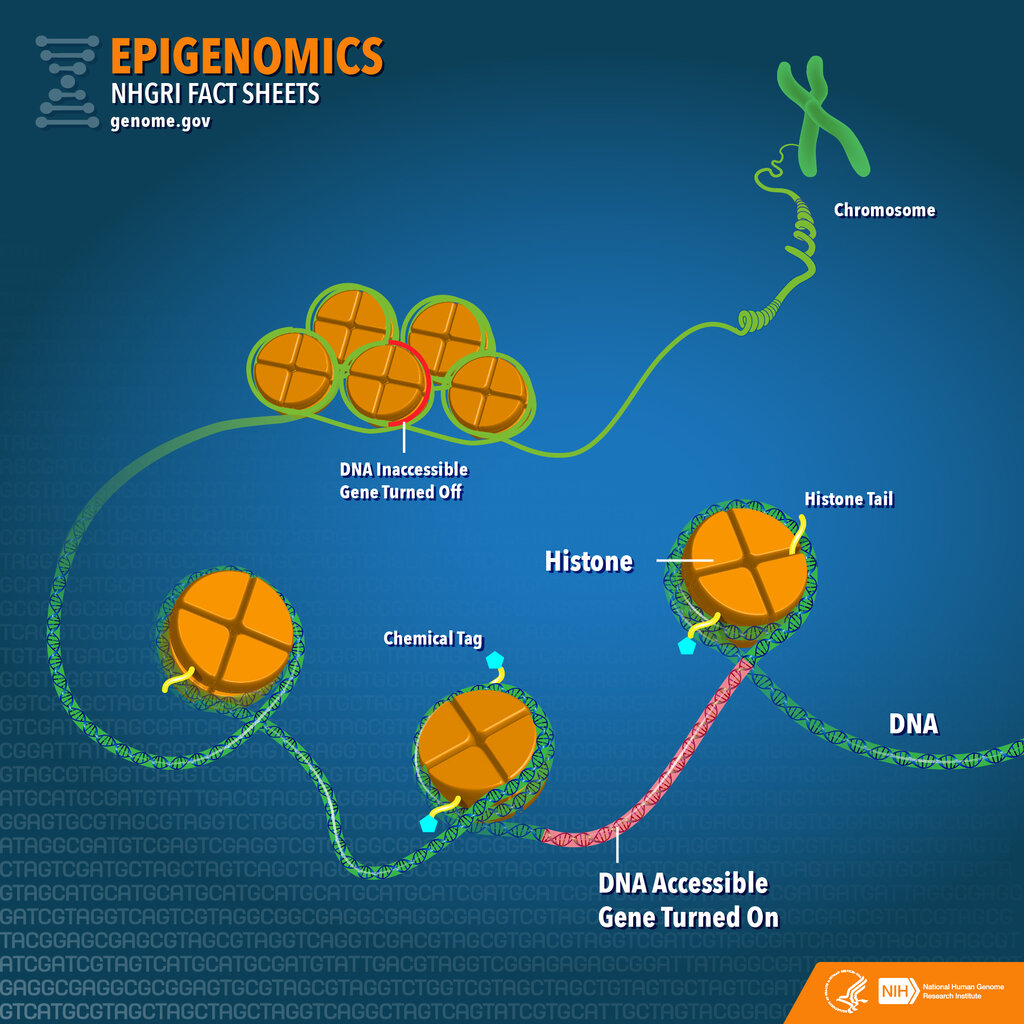
The second mechanism is histone modification. Your DNA isn't just floating around in the cell nucleus; it's neatly wrapped around proteins called histones, like thread around a spool. These histones can be chemically modified.
Some modifications cause the histones to pack the DNA very tightly, making it impossible for the cell to read the genes in that section. It's like winding the thread so tightly on the spool that you can't access it. Other modifications cause the histones to loosen their grip, unwinding the DNA and making the genes available for expression.
These two processes, DNA methylation and histone modification, work together to create a complex and dynamic system of gene regulation. They are the reason a brain cell acts like a brain cell and a liver cell acts like a liver cell, even though they share the very same DNA.
Ready to check your understanding?
What is the primary difference between a genetic change and an epigenetic change?
According to the 'cookbook' analogy, what role do epigenetic markers like DNA methylation and histone modification play?
Now that you understand the basics of what epigenetics is and the main ways it works, we can dive deeper into the specific chemical processes that control your genes.