Introduction to Engineering Materials
Material Classification
The Four Families of Materials
Everything you see and touch is made of some kind of material. In engineering, choosing the right material is crucial for a product's success. To make sense of the millions of options, we group them into four main families: metals, polymers, ceramics, and composites. Each family has a distinct personality, defined by how its atoms are arranged and bonded together.
Metals
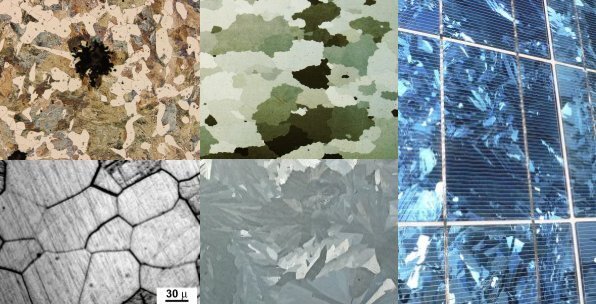
Metals are materials like iron, copper, and aluminum. Their atoms are packed tightly in an orderly, crystalline structure. What makes them unique is their bonding. The outer electrons of each atom are not tied to any single atom; instead, they form a shared "sea" of electrons that flows freely throughout the entire structure.
This electron sea is responsible for the classic properties of metals. It allows them to conduct electricity and heat with ease. It also allows the atoms to slide past one another without breaking apart, which makes metals ductile—they can be drawn into wires or bent into shape without shattering.
Ductility
noun
A material's ability to be stretched or drawn into a wire under tensile stress without fracturing.
Because of their strength, conductivity, and formability, metals are the backbone of modern infrastructure. You'll find them in building frames, car bodies, airplane engines, and the tiny wires inside your phone.
Polymers
Polymers are long, chain-like molecules made of smaller, repeating units called monomers. Think of a polymer as a necklace, and each bead on the string is a monomer. These chains are held together by strong covalent bonds, where atoms share electrons. The chains themselves can be tangled up or neatly aligned, which influences the material's properties.
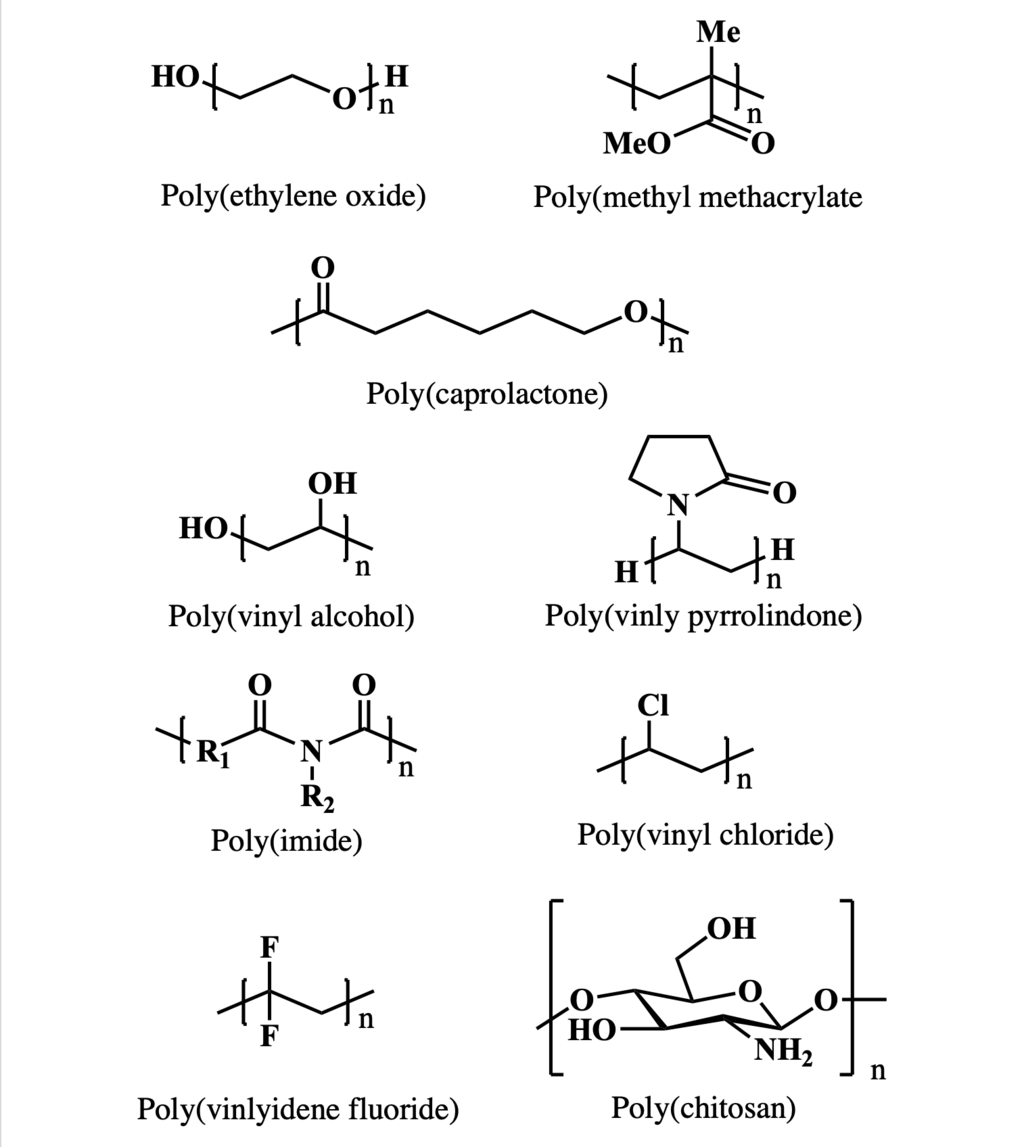
This molecular structure makes polymers very different from metals. They are typically lightweight, flexible, and poor conductors of electricity and heat, which makes them excellent insulators. While generally not as strong or heat-resistant as metals, their versatility is unmatched.
Common examples include plastics like polyethylene (shopping bags, bottles), PVC (pipes, window frames), and nylon (clothing, gears). From food packaging to medical implants, polymers are everywhere.
Ceramics
Ceramics are compounds made from metallic and non-metallic elements, such as oxides, nitrides, and carbides. You might think of pottery or glass, but this category also includes high-tech materials like silicon carbide and zirconia. Their atoms are joined by very strong ionic or covalent bonds. This creates a rigid and stable structure that firmly locks electrons in place.
Because their electrons are not free to move, ceramics are excellent electrical and thermal insulators. Their strong atomic bonds also make them hard, strong in compression, and resistant to high temperatures and harsh chemicals. The trade-off is that they are brittle—they tend to fracture suddenly rather than bend.
Applications range from dinner plates and bathroom tiles to spacecraft heat shields, cutting tools, and bone implants.
Composites
Composites are engineered materials made from two or more different materials that remain distinct at the macroscopic level. The goal is to combine the best properties of each component to create a new material with superior performance.
A typical composite consists of a "matrix" material that holds everything together and a "reinforcement" material that provides strength and stiffness. The reinforcement is usually in the form of fibers.
A classic example is fiberglass, which combines a plastic (polymer) matrix with reinforcing glass fibers (a ceramic). The result is a material that is both lightweight and strong.
Another well-known composite is carbon fiber reinforced polymer (CFRP), used in high-performance race cars, aircraft, and sports equipment like tennis rackets and bicycles. By carefully designing the combination and orientation of materials, engineers can tailor composites for specific, demanding applications that no single material could handle.
| Material Class | Atomic Bonding | General Properties | Example Applications |
|---|---|---|---|
| Metals | Metallic | Strong, ductile, conductive | Structures, vehicles, electronics |
| Polymers | Covalent | Lightweight, flexible, insulating | Packaging, textiles, consumer goods |
| Ceramics | Ionic / Covalent | Hard, brittle, high-temp resistant | Cookware, insulators, cutting tools |
| Composites | Varied | High strength-to-weight ratio | Aerospace, sporting goods, boats |
Understanding these four fundamental families is the first step in selecting the right material for any engineering challenge.
What is the primary reason for the high electrical and thermal conductivity of metals?
Polymers are typically excellent electrical insulators. This property is a direct result of their molecular structure, which consists of...