Introduction to Embedded Systems
Introduction to Embedded Systems
The Computer Inside Everything
Think about your laptop or smartphone. They're amazing tools that can do almost anything you want. You can browse the web, write an email, play a game, or edit a photo. They are general-purpose computers.
But what about the computer inside your microwave? It has one job: to manage cooking times and power levels. It doesn't need to run a web browser or play videos. This is an embedded system, a specialized computer designed to perform a dedicated function within a larger device.
Embedded systems are specialized computing systems that are designed to perform specific tasks within a larger mechanical or electrical system.
Unlike your PC, you don't really interact with an embedded system as a computer. You interact with the device it controls, whether that's a coffee maker, a car's braking system, or a digital watch. They are the hidden brains that make our modern world work.
Special Jobs, Special Rules
Because embedded systems are built for specific tasks, they have unique characteristics that set them apart from general-purpose computers.
Dedicated Function An embedded system is a specialist. The software in a TV remote is only there to change channels and volume. The system in a digital thermostat only manages temperature. This focus makes them highly efficient and reliable for their specific job.
Resource Constraints Your laptop has gigabytes of memory and a powerful processor. An embedded system in a toy, however, might have only a few kilobytes of memory and a much slower chip. They are designed with just enough power, memory, and energy to do their job, which keeps the cost and size of the final product down.
Real-Time Operation Many embedded systems must react to the world instantly. Consider a car's anti-lock braking system. It needs to sense a wheel locking up and release the brake in milliseconds. There's no room for delay. This is called a real-time constraint, where completing a task on time is just as important as completing it correctly.
Embedded Systems in Your Daily Life
Once you know what to look for, you'll see embedded systems everywhere. They are a fundamental part of modern technology, operating quietly in countless devices we use every day.
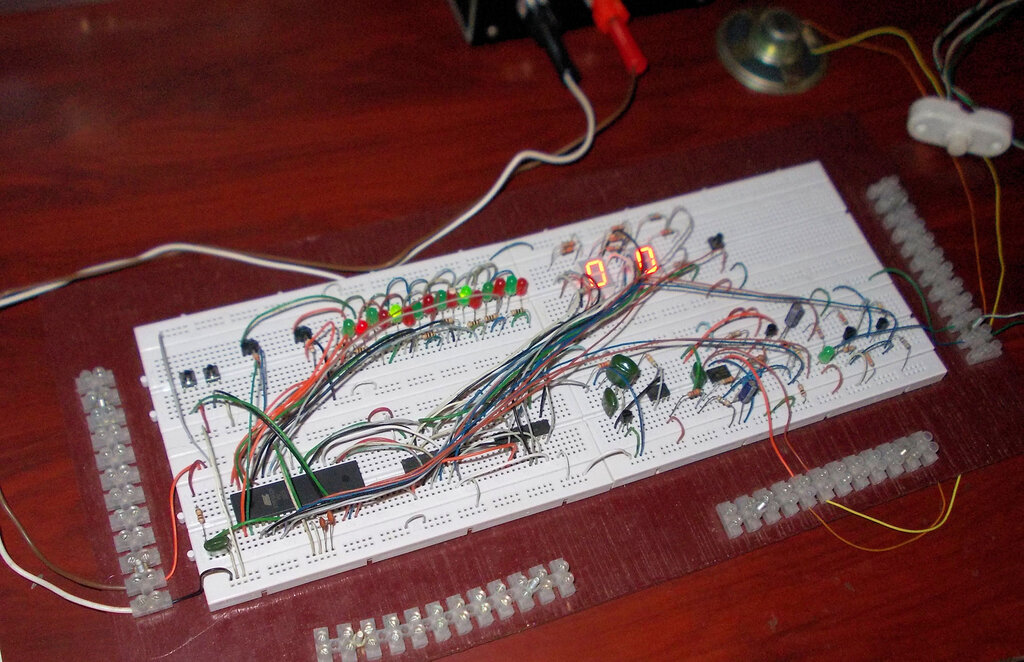
Here are just a few examples:
- Household Appliances: Your washing machine, dishwasher, refrigerator, and smart thermostat all rely on embedded systems to run their cycles and manage their settings.
- Automotive Systems: Beyond the brakes, embedded systems control everything from the fuel injection in your engine to the GPS in your dashboard.
- Medical Devices: Life-saving devices like pacemakers, insulin pumps, and defibrillators are sophisticated embedded systems that must operate with perfect reliability.
- Consumer Electronics: Think of digital cameras, MP3 players, and fitness trackers. Each is a product built around a specialized embedded computer.
What is the primary characteristic that distinguishes an embedded system from a general-purpose computer like a laptop?
Why are embedded systems often designed with significant resource constraints (e.g., limited memory and processing power)?
Understanding what embedded systems are and where they're used is the first step in exploring this fascinating field of technology.