Introduction to Electronics
Electricity Basics
The Invisible Force
Everything around you is made of atoms. At the heart of every atom are protons and neutrons, with tiny electrons orbiting them. Protons have a positive electric charge, and electrons have a negative one. Usually, an atom has an equal number of protons and electrons, making it electrically neutral.
But electrons aren't always stuck in one place. They can move from one atom to another. When an atom loses an electron, it has more protons, so it becomes positively charged. When it gains one, it becomes negatively charged. This property, charge, is the foundation of electricity.
Electric charge is a fundamental property of matter that causes it to experience a force when placed in an electromagnetic field.
Charges interact in a simple, predictable way: opposites attract, and likes repel. Two positive charges will push each other away, as will two negative charges. But a positive and a negative charge will pull toward each other. Think of it like magnets. The same poles push apart, while opposite poles snap together.
Making Charges Move
When electric charges are guided to move in a single direction, we get an electric current. Imagine a river. The flowing water is like the electric current. Instead of water molecules, the current is a flow of charged particles, usually electrons.
This flow doesn't happen on its own. It needs a path to follow, like a copper wire. We measure the rate of this flow in units called amperes, or amps for short. A higher amperage means more charge is flowing past a point each second. In equations, current is represented by the letter .
The Push Behind the Flow
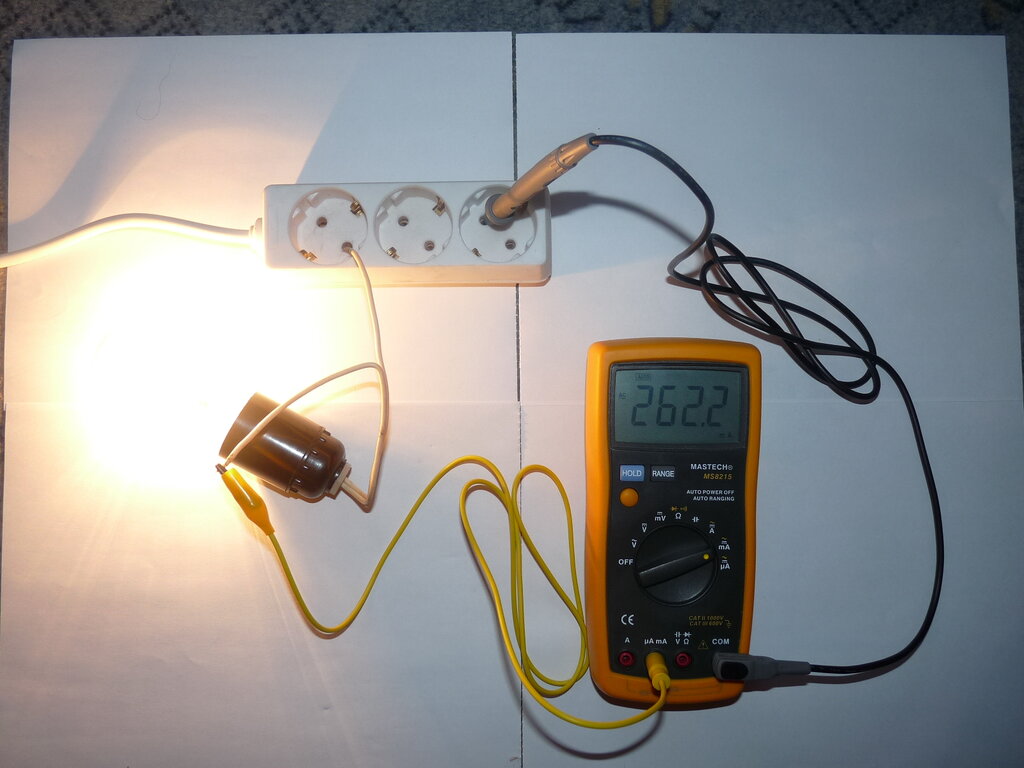
What makes the current flow in the first place? That's where voltage comes in. Voltage is the 'push' or 'pressure' that drives the electric charges through a circuit. Without this pressure, the charges wouldn't move.
Voltage is the difference in electric potential between two points.
Let's go back to the river analogy. The water flows from a higher elevation to a lower one because of gravity. Voltage is like that difference in height. It's an electrical potential difference that gives charges the energy to move from one point to another. We measure voltage in volts, represented by the letter . A battery, for example, creates a voltage that pushes current through a device like a flashlight.
The Squeeze on the Flow
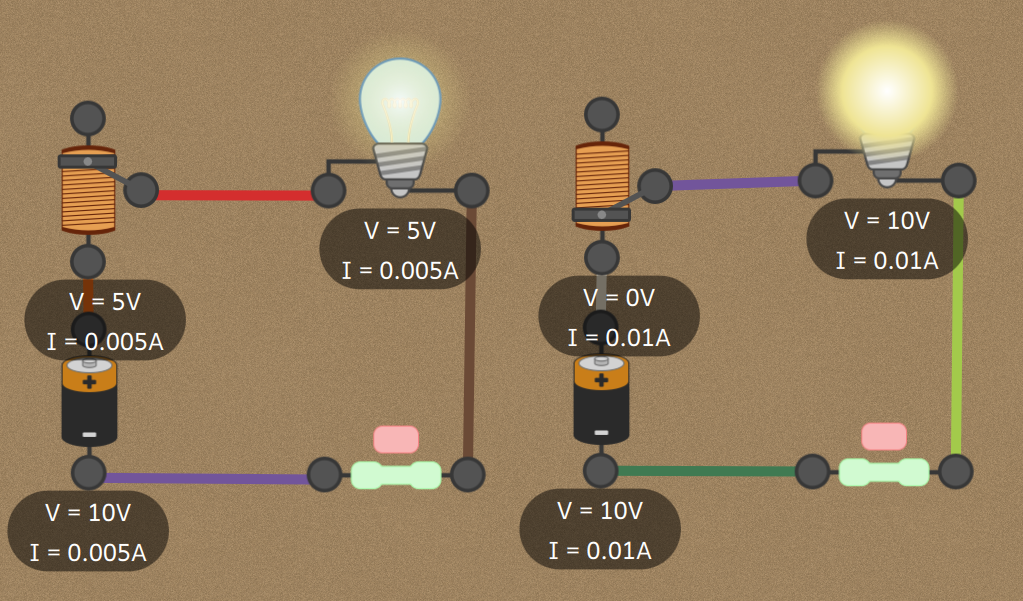
So, voltage pushes current. But the path itself can make it harder for the current to flow. This opposition is called resistance. In our river, resistance would be like a narrow, rocky section that slows the water down. A wider, clearer channel would have less resistance.
Every material has some electrical resistance. Materials like copper have very low resistance, which is why we use them for wires. They are good conductors. Materials like rubber have very high resistance, so they're used as insulators to stop the flow of current. We measure resistance in ohms ().
These three concepts—voltage, current, and resistance—are linked. A higher voltage will push more current, while a higher resistance will reduce it. Understanding this relationship is the key to understanding how any electrical circuit works.
Time to check your understanding.
If a normally neutral atom gains an electron, what is its resulting electrical charge?
Two particles, both with a positive charge, are brought near each other. What will happen?
With these fundamentals, you're ready to explore how these concepts are applied to build circuits.