Introduction to Economics
Introduction to Economics
What Is Economics Anyway?
At its heart, economics is the study of choices. We all have to make them every day. Should you buy a coffee or save the money? Should a company hire more workers or invest in new machines? Should a government spend more on healthcare or on roads?
None of us can have everything we want, all the time. Resources like time, money, and materials are limited. Economics is the story of how people—individuals, families, businesses, and governments—make decisions to manage these resources as best they can.
It’s not just about money. It’s about how we use what we have to get what we need and want.
The Big and Small Picture
To make sense of all these choices, economists look at them from two different perspectives: microeconomics and macroeconomics.
Think of it like looking at a forest. You could zoom in to study a single tree, noticing the details of its leaves and bark. Or, you could zoom out to see the entire forest, observing its overall health, how it's affected by the seasons, and its relationship with the surrounding environment.
Both views are important, and they tell different parts of the same story.
Microeconomics
noun
The study of economic behavior of individuals, households, and firms. It focuses on how they make decisions and how those decisions affect specific markets.
Microeconomics is the zoomed-in view. It looks at the individual trees. It asks questions about single economic actors or markets. For example, why did the price of eggs go up at your local grocery store? How does a company decide how many t-shirts to produce? How does a student decide how to spend their weekend?
Macroeconomics
noun
The study of the economy as a whole. It examines economy-wide phenomena such as inflation, unemployment, and economic growth.
Macroeconomics is the zoomed-out, big-picture view. It looks at the whole forest. It tackles the huge questions that affect entire countries and even the global economy. What causes recessions? Why do some countries grow richer while others stay poor? What is the overall inflation rate, and why does it matter?
| Category | Microeconomics | Macroeconomics |
|---|---|---|
| Focus | Individual economic agents (households, firms) | The economy as a whole |
| Questions | How are prices determined in a single market? | What determines the overall price level? |
| What wages will a company pay its workers? | What is the national unemployment rate? | |
| Examples | A family's budget, a firm's hiring decisions | Gross Domestic Product (GDP), inflation, national debt |
Models as Maps
The economy is incredibly complex, with billions of people making choices every second. To understand it, economists use models.
An economic model is a simplified version of reality that helps us see how different factors interact. Think of it like a map. A city map isn't the city itself. It leaves out thousands of details—every single tree, car, and pothole. But by simplifying, it becomes incredibly useful for navigating from point A to point B.
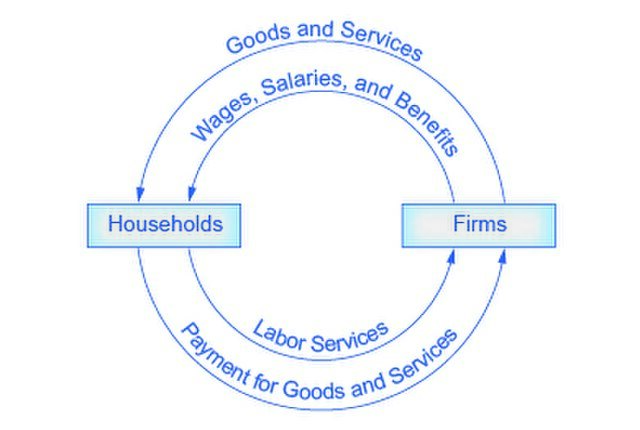
Models do the same thing for economic questions. They strip away the non-essential details to focus on the key relationships. For example, a model might help a government predict how a tax cut could affect consumer spending or how a new trade deal might impact jobs.
They aren't perfect crystal balls, but they are powerful tools for thinking clearly about complex problems and understanding the potential consequences of our choices.
Now that you've got the basics down, let's test your knowledge.
At its core, economics is the study of how people make choices to manage what?
A study analyzing how a single coffee shop sets its prices would be an example of macroeconomics.
Understanding these core ideas—what economics is, the difference between its micro and macro branches, and the role of models—provides a solid foundation for exploring the fascinating world of economic thought.