Introduction to Digital Products
Introduction to Digital Product Management
What Is Digital Product Management?
Digital product management is the process of guiding a product that exists in a digital format—like a mobile app, a website, or a piece of software—from its initial idea all the way to its launch and beyond. Think of the apps you use every day, from social media to banking. Each one has a team behind it, making decisions about what features to build, how it should look, and how to improve it over time.
A digital product is a software-based solution designed to solve specific user problems or enhance experiences through technology.
Unlike managing a physical product like a car or a coffee maker, digital products aren't static. They can be updated instantly and continuously. This key difference creates a unique set of challenges and opportunities. Digital product managers rely heavily on data to understand user behavior and make quick, iterative improvements. The goal is to create a product that not only works well but also evolves with its users' needs.
The Digital Product Manager
At the heart of this process is the digital product manager (PM). A PM is like the conductor of an orchestra, responsible for ensuring that all the different teams—engineering, design, marketing, and sales—are working together in harmony to build a successful product. They don't write the code or design the screens themselves, but they set the vision and strategy for what the product should be.
The product manager's core job is to define the 'what' and the 'why.' What problem are we solving? Why is it important for our users and our business?
Key responsibilities include conducting market research to understand the competition, talking to users to uncover their needs, defining product features, and creating a roadmap that outlines what the team will build and when. They are master communicators, constantly aligning stakeholders and keeping the team focused on the right priorities.
The role of a product manager is to bring together stakeholders, to align and focus the team, and to collaborate for the best possible outcome for the customer and the business.
Putting Users First
A core principle in modern product management is user-centered design. This means that every decision, from the smallest button to the biggest feature, is made with the user's needs and experience in mind. It's about building empathy for the people who will actually use the product.
User-Centered Design
noun
An iterative design process in which designers focus on the users and their needs in each phase of the design process.
Instead of guessing what users want, product teams conduct research, create user personas, and test prototypes with real people. This approach helps ensure that the final product is not only functional but also intuitive, efficient, and even enjoyable to use. Solving a real problem for users is the fastest path to building a product people love.
Having user-centered product design principles means emphasizing early user involvement and iterative refinement to give a product its best chance of meeting user expectations.
The Digital Product Lifecycle
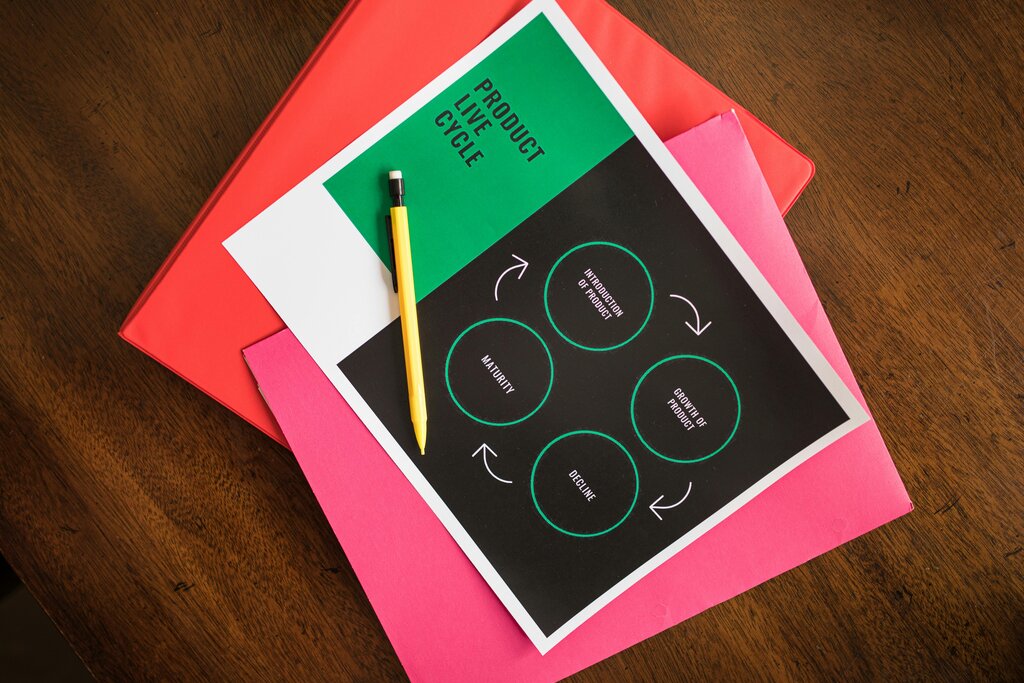
Every digital product goes through a lifecycle, a series of stages from its conception to its eventual retirement. While models vary, a typical lifecycle includes several key phases. Understanding this cycle helps teams plan, allocate resources, and adapt their strategy as the product and market mature.
- Ideation: This is the beginning, where problems are identified and potential solutions are brainstormed.
- Development: Once an idea is validated, the design and engineering teams build the actual product.
- Launch: The product is released to the market. This phase is all about getting the first users and gathering initial feedback.
- Growth: The product gains traction. The focus shifts to scaling, acquiring more users, and improving features.
- Maturity: Growth slows down as the product reaches a large portion of its target market. The goal is to retain existing users and fend off competition.
- Decline: The product becomes outdated or less relevant. Companies may decide to phase it out, pivot, or replace it with something new.
Now that you have a grasp of these fundamental concepts, let's test your knowledge.
What is the primary role of a digital product manager?
What is a key characteristic that distinguishes digital products from physical products?
Understanding these core ideas is the first step in learning how great digital products are built and managed.