Introduction to Digital Marketing
Introduction to Digital Marketing
What Is Digital Marketing?
At its core, digital marketing is simply marketing that uses electronic devices and the internet. It's how businesses leverage digital channels—like search engines, social media, email, and websites—to connect with current and prospective customers. Think of it as the modern way to get the word out, build a following, and drive sales.
Digital marketing encompasses all marketing efforts that use an electronic device or the internet. Businesses leverage digital channels such as search engines, social media, email, and other websites to connect with current and prospective customers.
Why does it matter so much? Because that's where people are. Whether they're searching for information, scrolling through social media, or checking their email, your customers are online. Digital marketing allows you to meet them where they spend their time.
From Traditional to Digital
For decades, marketing was dominated by print ads, television commercials, and billboards. This is what we now call traditional marketing. It was a one-way street: companies broadcasted their message, and everyone in its path received it, whether they were interested or not.
Digital marketing changed the game. It’s a two-way conversation. It allows businesses to interact with their audience in real time, build relationships, and get immediate feedback. The shift isn't just about technology; it's about a fundamental change in how businesses connect with people.
| Feature | Traditional Marketing | Digital Marketing |
|---|---|---|
| Reach | Often limited to a specific geographic area. | Potentially global reach. |
| Cost | Can be very expensive (e.g., TV ads). | More cost-effective, with options for any budget. |
| Targeting | Broad and less precise (e.g., a magazine's readership). | Highly specific, based on demographics, interests, and behavior. |
| Measurement | Difficult to measure direct results. | Highly measurable with real-time analytics. |
Key Advantages of Going Digital
The move to digital offers some powerful advantages. For one, it provides a global reach. A small shop in a quiet town can sell its products to customers on the other side of the world. This was nearly impossible with traditional methods.
Digital marketing is also more cost-effective. While a national television campaign can cost millions, a targeted social media campaign can be run for a fraction of that price, often with a better return on investment (ROI). You can start small, test what works, and scale up your budget as you see results.
Perhaps the biggest benefit is the ability to target specific audiences. You can show your ads to people based on their age, location, interests, and even past online behavior. This precision means your marketing budget is spent reaching people who are actually likely to be interested in what you offer.
Finally, everything in digital marketing is measurable. You can track exactly how many people saw your ad, clicked on it, and made a purchase. This data is invaluable for understanding what’s working and what isn't, allowing you to refine your strategy on the fly.
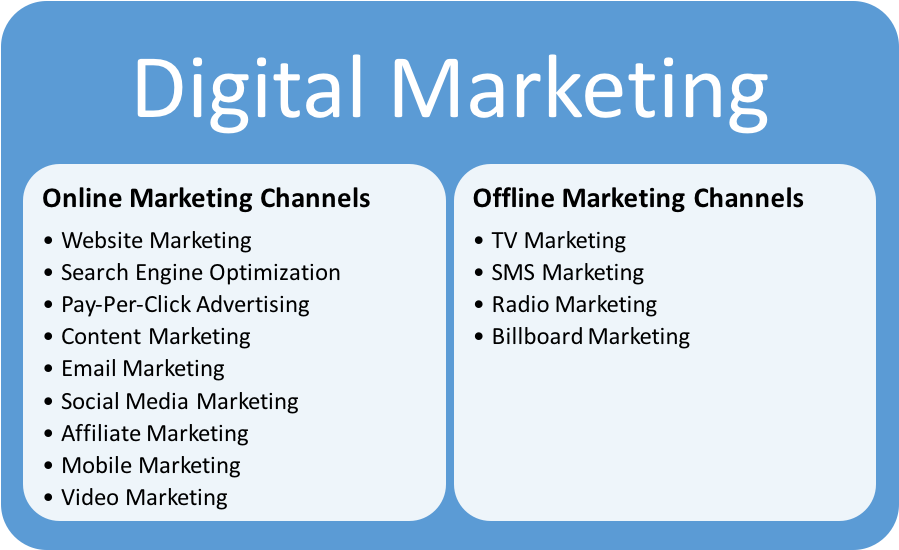
With so many channels available, it helps to have a framework for organizing them. One of the most effective ways to think about your marketing activities is the PESO model.
The PESO Model
The PESO model is a simple way to categorize your marketing efforts. It breaks down media into four types: Paid, Earned, Shared, and Owned. Understanding this framework helps you create a balanced and integrated marketing strategy.
-
Paid Media: This is marketing you pay for. It includes things like Google Ads, social media advertising, and sponsored content. It's a great way to reach a new audience quickly.
-
Earned Media: This is when others talk about your brand without you paying for it. Think of it as word-of-mouth. Examples include press mentions, customer reviews, and getting featured by an influencer.
-
Shared Media: This refers to the content shared across social media networks. It's about building a community and engaging in conversations with your audience. User-generated content is a powerful form of shared media.
-
Owned Media: These are the channels you control completely. Your website, blog, and email newsletter are all examples of owned media. This is where you build a direct relationship with your audience.
The most successful digital marketing strategies don't rely on just one of these channels. Instead, they integrate Paid, Earned, Shared, and Owned media to work together, creating a powerful, cohesive message.
Now, let's test what you've learned about the fundamentals of digital marketing.
What is the primary characteristic of digital marketing?
According to the PESO model, a company's own blog and website are examples of ________ media.
Understanding these core concepts is the first step. By grasping the what, why, and how of digital marketing and using frameworks like the PESO model, you can start building a strategy that connects with your audience in the right place, at the right time.