Introduction to DICOM
Introduction to DICOM
The Universal Language of Medical Images
When you get a medical scan like an X-ray, CT, or MRI, the machine produces a digital image. But how does that image get from the scanner to your doctor's computer, or to a specialist across the country, so they can all view it correctly? The answer is a standard called DICOM.
Digital Imaging and Communications in Medicine (DICOM) is the standard for the communication and management of medical imaging information and related data.
Think of DICOM as a universal translator for medical imaging. Before it existed, every manufacturer of imaging equipment used its own proprietary format. A scanner from one company couldn't share its images with a viewing station from another. It was like trying to play a Blu-ray disc in a VCR. Hospitals were locked into single-vendor systems, making it difficult to share vital patient information.
DICOM solved this by creating a common set of rules. It ensures that a CT scan taken in one hospital can be opened and understood by any other DICOM-compliant software, anywhere in the world.
A Brief History
The need for a standard became obvious in the 1980s as digital imaging technology advanced. To break down the communication barriers, two major organizations, the American College of Radiology (ACR) and the National Electrical Manufacturers Association (NEMA), joined forces.
Their goal was to develop a method for transferring images and associated information between devices made by different companies. The first version of their standard, known as ACR-NEMA 300, was published in 1985. After several revisions and improvements, it was renamed DICOM in 1993.
The collaboration aimed to create a single, shared language so any medical imaging device could communicate with any other system.
What DICOM Does
The DICOM standard handles two fundamental tasks: defining a file format and specifying a communication protocol. It's a two-for-one deal that ensures both the storage and transfer of medical images are standardized.
| Component | What It Does |
|---|---|
| Image File Format | Defines how a medical image is saved. A DICOM file is more than just a picture; it's a package containing the image itself plus a header with critical patient and study information. |
| Communication Protocol | Provides the rules for sending and receiving these files over a network. This allows different systems, like a scanner and a storage archive, to 'talk' to each other reliably. |
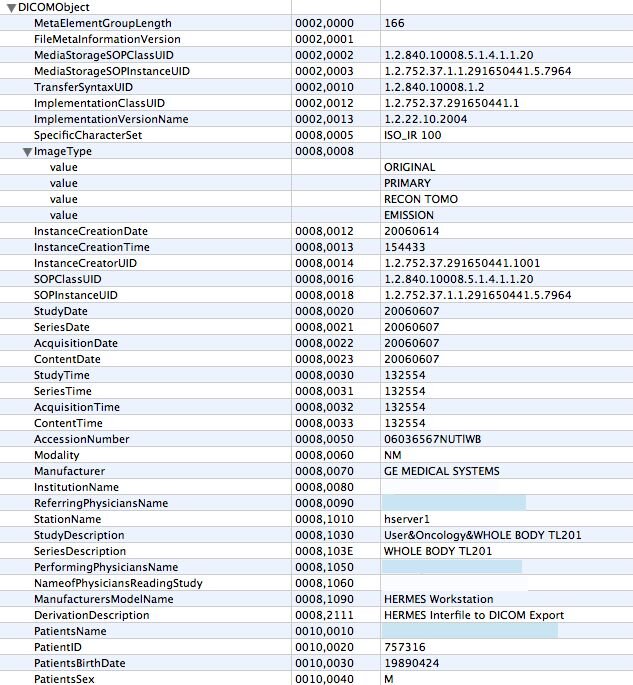
A DICOM file contains a treasure trove of information called metadata. This isn't just the patient's name and ID. It includes details like the date and time of the scan, the type of machine used, the specific settings of the scan (like slice thickness in a CT), and even the radiologist's annotations. This context is essential for accurate diagnosis.
Why Interoperability Matters
The true power of DICOM lies in enabling interoperability, which is just a technical term for the ability of different systems to work together seamlessly.
Imagine a patient being treated at a local clinic who needs a specialist's opinion at a major hospital. Without a standard like DICOM, sharing their MRI scans would be a logistical nightmare involving couriers and proprietary software. With DICOM, the images can be sent electronically and securely, arriving in moments and ready for immediate review on the specialist's system.
This smooth flow of information is what DICOM enables. It is the backbone of modern radiology, facilitating everything from routine diagnoses to complex surgical planning and research. By ensuring every piece of imaging equipment speaks the same digital language, DICOM helps deliver faster, more efficient, and better-integrated patient care.
What was the primary problem that the DICOM standard was created to solve?
Which two organizations collaborated to develop the standard that would later be named DICOM?