Introduction to Diamonds and Gemstones
Introduction to Gemology
The Science of Sparkle
Gemology is the science of studying, cutting, and valuing precious stones. At its heart, it’s about understanding what makes a mineral a gem. Gemologists are like detectives, using specialized tools and knowledge to identify stones, distinguish natural from synthetic ones, and determine their quality.
Gemology
noun
The science and study of natural and artificial gemstone materials. It is considered a geoscience and a branch of mineralogy.
This field blends chemistry, physics, and geology to uncover the secrets locked inside these beautiful natural treasures. It helps answer questions like: Is this ruby from Myanmar or Mozambique? Has this emerald been treated to enhance its color? What gives this opal its fiery flash?
The Unrivaled Diamond
When people think of gems, diamonds often come to mind first. What makes them so special? For starters, their composition is incredibly simple. A diamond is just carbon, the same element that makes up charcoal and the graphite in your pencil. The difference is the arrangement of the carbon atoms. In a diamond, they are locked into a rigid, tightly bonded crystal structure.
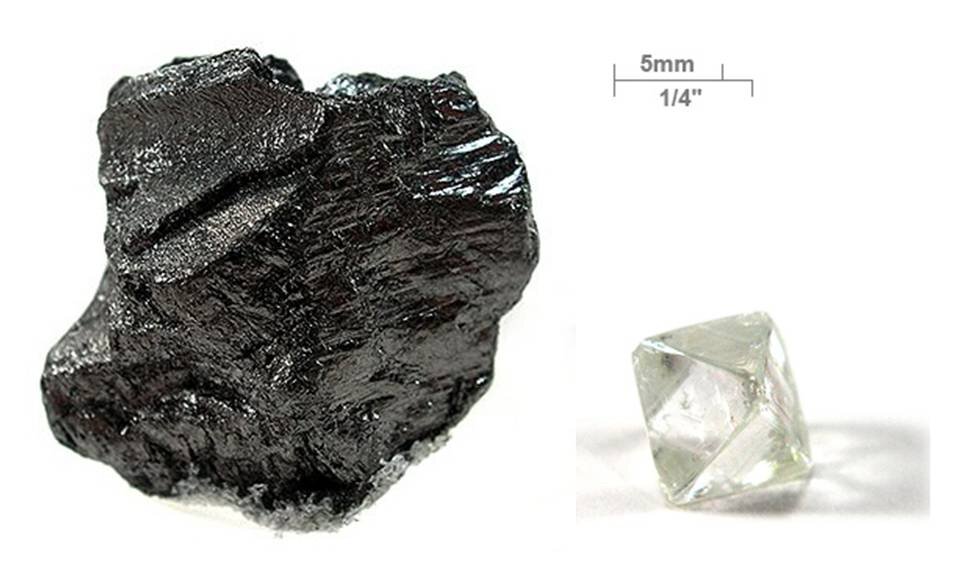
This structure makes diamond the hardest natural substance on Earth. Gemologists measure hardness on the Mohs scale, which ranks minerals from 1 (softest) to 10 (hardest). Diamond is a perfect 10.
| Mineral | Mohs Hardness |
|---|---|
| Talc | 1 |
| Fingernail | 2.5 |
| Copper Penny | 3.5 |
| Steel Nail | 5.5 |
| Quartz | 7 |
| Topaz | 8 |
| Corundum (Ruby/Sapphire) | 9 |
| Diamond | 10 |
This extreme hardness means a diamond can scratch any other material, and it’s very resistant to damage from daily wear. It’s not just tough; it also has a unique ability to manipulate light. Its high refractive index gives it exceptional brilliance (the brightness of white light reflection) and dispersion, often called “fire” (the splitting of light into rainbow colors).
A World of Color
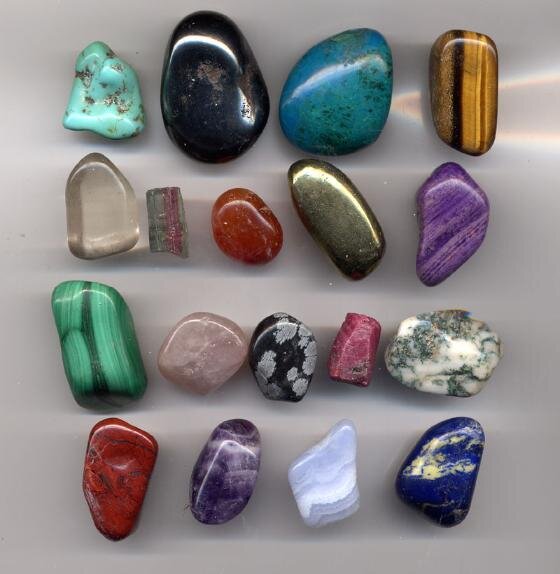
While diamonds are defined by their lack of color, most other gemstones are prized for it. Among the most famous are the “big three” of colored stones: ruby, sapphire, and emerald.
Rubies and Sapphires: These gemstones are varieties of the mineral corundum, with different trace elements imparting their distinctive red (ruby) and blue (sapphire) colors.
That’s right, rubies and sapphires are chemically the same mineral. The only difference is the trace elements that give them their color. A tiny amount of chromium makes corundum red, creating a ruby. Iron and titanium create the classic blue sapphire. Corundum without these impurities is colorless.
Emeralds, on the other hand, belong to a different mineral family called beryl. Like corundum, pure beryl is colorless. Add some chromium and vanadium, and you get the iconic deep green of an emerald.
Identifying Properties
Color can be a clue, but gemologists rely on a range of physical and optical properties to make a definitive identification. These properties are like a gem's fingerprint.
One key test is measuring the refractive index. This tells us how much a light ray bends as it enters a gemstone. Every gem has a characteristic refractive index, which can be measured with a tool called a refractometer. For example, quartz has a refractive index of about 1.54, while a diamond's is much higher at 2.42.
Another property is specific gravity, which is a measure of density. It compares the weight of a gemstone to the weight of an equal volume of water. Two stones that look the same size can have very different weights. A one-carat zircon, for instance, will be visibly smaller than a one-carat diamond because zircon is denser.
Gemologists also examine how a stone handles light. Some gems, like ruby, are pleochroic, meaning they show different colors when viewed from different directions. Others might exhibit phenomena like asterism (a star-like effect) or chatoyancy (a cat's-eye effect), all clues to their identity and structure.
Ready to test your knowledge? This quiz will cover the fundamental concepts of gemology we've just explored.
What is the primary element that makes up a diamond?
Which of the following describes the relationship between rubies and sapphires?
By understanding these basic properties, gemologists can piece together the identity and origin of a gemstone, appreciating the unique journey that brought it from deep within the Earth to a piece of jewelry.