Introduction to DevOps
Introduction to DevOps
What Is DevOps?
At its core, DevOps is a cultural shift that brings together software development (Dev) and IT operations (Ops). The goal is to break down the traditional barriers, or silos, that have long separated these two teams. Instead of working in isolation, they collaborate throughout the entire software lifecycle, from development and testing to deployment and maintenance.
DevOps provides a set of processes and philosophies that drive a cultural shift to an organization by promoting collaboration between the development and operations team.
To understand why this is so important, think about the old way of doing things. Developers would write code and then, figuratively, throw it over a wall to the operations team. The ops team was then responsible for making that code run. When something broke, the finger-pointing would begin. Developers would blame the infrastructure, and operations would blame the code. This friction led to slow release cycles, unreliable software, and a lot of frustration.
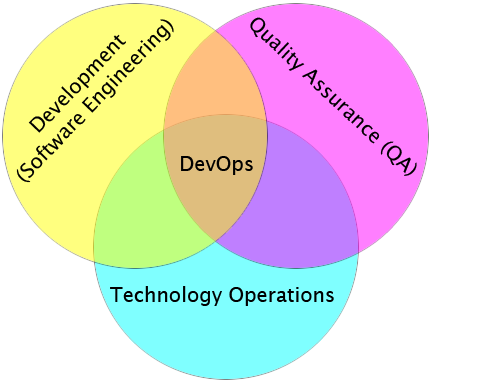
DevOps changes this dynamic by creating a culture of shared responsibility. Everyone on the team, regardless of their role, is accountable for the product's success from start to finish. This collaboration is the heart of DevOps.
The Goals and Benefits
The primary objective of DevOps is to shorten the software development lifecycle while delivering high-quality features, fixes, and updates that are closely aligned with business goals. It evolved from the principles of Agile software development, which focused on speeding up the creation of software. DevOps extends those ideas to cover the entire process, including deployment and operations.
By uniting development and operations, organizations can achieve several key benefits:
- Increased Speed: Teams can deliver software more frequently and quickly, giving them a competitive edge.
- Improved Reliability: With more frequent but smaller releases, it's easier to identify and fix bugs, leading to a more stable product for users.
- Better Collaboration: Breaking down silos fosters a more cooperative and productive work environment. Teams communicate more, share knowledge, and solve problems together.
- Enhanced Security: By integrating security practices into the development lifecycle from the beginning (a practice often called DevSecOps), teams can build more secure applications.
Ultimately, the purpose of DevOps is to connect the people in an organization to better serve their users and customers by delivering value faster and more reliably.
More Than Just Tools
It's a common misconception that DevOps is just about adopting a new set of tools for automation. While tools are an important part of the equation, they are enablers, not the solution itself. The real transformation comes from a change in mindset and culture.
DevOps is not just a set of tools; it's a cultural shift.
Adopting DevOps requires organizations to rethink their structures. Instead of separate, specialized teams, companies often create smaller, cross-functional teams that own a service or feature from conception to retirement. These teams are empowered to make decisions and have all the skills needed to build, test, deploy, and operate their service.
This shift emphasizes continuous learning and improvement. Teams are encouraged to experiment, learn from failures, and constantly look for ways to make their processes better. It’s a journey of ongoing optimization, not a one-time project.
Ready to check your understanding? Let's see what you've learned about the fundamentals of DevOps.
What is the fundamental principle at the heart of DevOps?
True or False: The primary goal of DevOps is simply to automate every possible task in the software development lifecycle.
By focusing on collaboration, shared ownership, and a unified workflow, DevOps helps teams build and deliver better software, faster.