Introduction to Design Thinking
Introduction to Design Thinking
A Human-Centered Approach to Problem-Solving
How do you build something truly useful? You could start with a groundbreaking technology, or maybe a solid business plan. But what if you started with people? That's the core idea behind Design Thinking.
Design Thinking is a process for creative problem-solving that puts human needs first. It’s a way to innovate by blending what people desire with what is technologically feasible and economically viable. Think of it as a three-legged stool: it needs all three legs to be stable.
It’s a solutions-focused mindset that tackles complex problems by understanding human needs, framing the problem in human-centric ways, and creating many ideas in brainstorming sessions to prototype and test.
Where Did It Come From?
The concept isn't brand new. Its roots trace back to the 1960s, with early ideas about matching human needs with available technology. Fields like architecture and industrial design have long used similar principles. If you're designing a chair, you have to think about the person who will sit in it.
The term “Design Thinking” gained popularity in the 1990s, championed by David Kelley and Tim Brown of the design firm IDEO. They helped bring this approach from the design studio into the business world, showing how it could be used to create everything from better products to more efficient services.
Applications Across Industries
Starting with the user seems obvious, but it’s a powerful shift from traditional business thinking. Instead of building a product and then trying to find a market for it, Design Thinking flips the script: find a human need, then build a solution for it. This reduces the risk of creating something nobody wants.
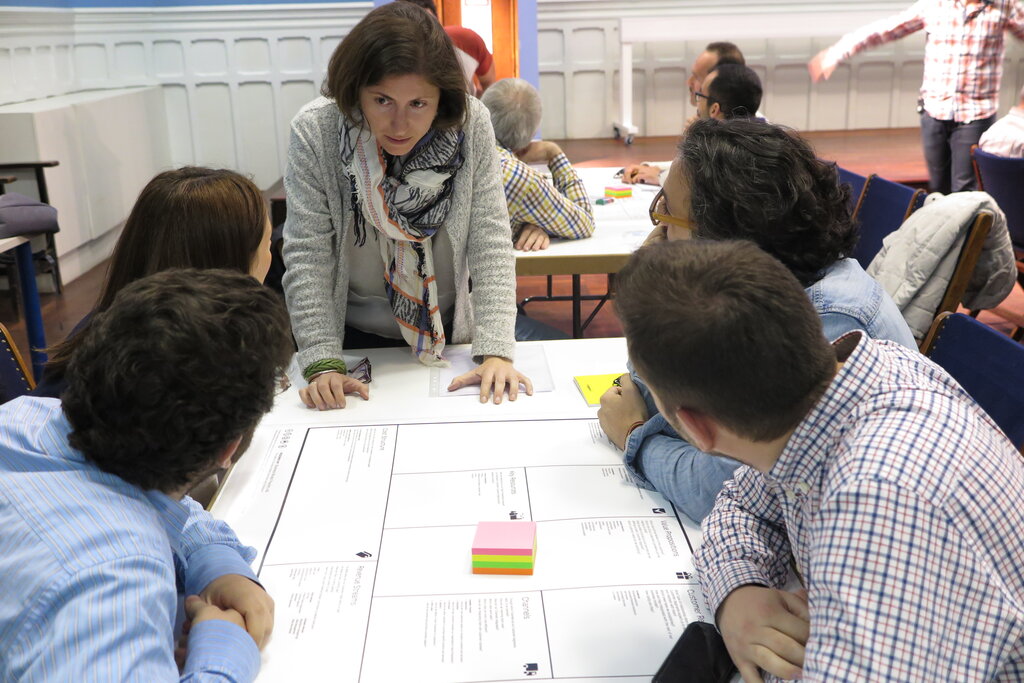
This approach isn't just for designing physical products. It's used everywhere:
- Technology: Companies use it to create apps and software that are intuitive and genuinely solve a user's problem.
- Healthcare: Hospitals apply it to improve the patient experience, from redesigning waiting rooms to simplifying medical billing.
- Education: Teachers and administrators use it to develop new curricula that better engage students.
- Finance: Banks use it to create simpler, more accessible online banking services.
At its heart, Design Thinking is a framework for iteration and learning. It generally follows a structured path, though the journey is rarely a straight line. The process encourages you to understand, explore, and then materialize your ideas.
| Phase | Goal |
|---|---|
| Empathize | Understand the user's experience and needs. |
| Define | State the user's needs and problems clearly. |
| Ideate | Brainstorm a wide range of creative solutions. |
| Prototype | Build a simple, testable version of the solution. |
| Test | Get feedback on the prototype from users. |
We will explore each of these phases in detail later on. For now, the key takeaway is that it’s a non-linear, iterative process focused on learning and adapting.
Let's check your understanding of these foundational ideas.
What is the primary focus of the Design Thinking process?
Design Thinking balances three core elements to create innovative solutions. Which of the following is NOT one of those elements?
Design Thinking provides a powerful toolkit for tackling challenges in a creative and effective way. By staying focused on the people you're designing for, you can build solutions that truly make a difference.