Introduction to Design Engineering
Introduction to Design Engineering
The Blueprint for a Solution
At its heart, design engineering is a systematic approach to solving problems. It's the process of taking a need or an idea and turning it into a tangible reality, whether that's a new smartphone, a more efficient bridge, or a smarter software application. It blends the creative process of invention with the rigorous principles of science and mathematics.
Think of it as creating a detailed recipe before you start cooking. You don't just throw ingredients into a pot. You identify what you want to make, consider who you're cooking for, brainstorm options, choose the best one, and refine it as you go. Design engineering provides that structured framework for innovation.
The Design Journey
While every project is unique, most follow a similar path from a fuzzy idea to a finished product. This journey is often called the engineering design process.
First, you must define the problem. What exactly are you trying to solve? Who is it for? What are the limitations, like budget, materials, or time? A clear problem statement is the foundation of a good solution. Without it, you're just guessing.
Next comes conceptualization, or brainstorming. This is where creativity takes center stage. The goal is to generate a wide range of potential solutions without judgment. The more ideas, the better. Some will be impractical, but even wild ideas can spark a practical insight.
Once you have a pool of ideas, it's time for analysis. You evaluate each concept against the requirements and constraints defined earlier. Which idea is the most feasible? Which is the most cost-effective? This stage narrows the field to the most promising design.
With a concept chosen, the next step is to build a prototype. This is an early model of the solution that allows you to see and interact with your idea in the real world. A prototype can be anything from a simple cardboard mockup to a basic working version of an app. Its purpose is to make the abstract tangible and test assumptions.
The Loop of Improvement
The design process is not a straight line from A to B. It's a cycle. After building a prototype, you test it. Does it work? Does it solve the problem? The feedback and data gathered during testing are crucial. This is where the real learning happens.
Engineering includes iteration – repeating something and making changes in an effort to learn more and improve the process or the design.
This cycle of prototyping, testing, and refining is known as iteration. Finding flaws isn't a failure; it's a necessary part of the process. Each iteration brings the design closer to an effective solution. The results from testing might send you back to the brainstorming stage or even force you to redefine the problem.
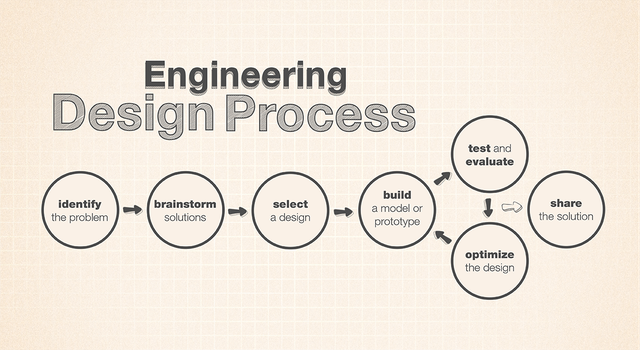
This loop continues until the design meets the goals. At the same time, engineers focus on optimization. This means making the design not just work, but work well. It involves refining the solution to be more efficient, durable, user-friendly, or less expensive. Optimization is about finding the best possible balance among competing priorities.
Finally, no great design happens in a vacuum. Collaboration is essential. Engineers work with other designers, clients, manufacturers, and end-users. Each person brings a unique perspective that can uncover blind spots and lead to a more robust and successful final product.

Let's check your understanding of these core concepts.
What is the primary purpose of the engineering design process?
During which stage is the main goal to generate a wide range of potential solutions without judgment?
Before you move on, review these key terms.
By following this structured yet flexible process of defining, brainstorming, prototyping, and iterating, design engineering transforms complex challenges into elegant solutions.