Introduction to Decentralized Finance
Introduction to DeFi
What is Decentralized Finance?
Decentralized Finance, or DeFi, is a new way to handle money. It uses technology to build financial tools on a public, shared digital record called a blockchain. The goal is to create a financial system that's open to everyone and doesn't rely on traditional gatekeepers like banks or brokerages.
Think of it like a digital marketplace that runs on its own, based on pre-written rules. Instead of a bank deciding who gets a loan, the rules are set in code that anyone can see. This system is built on a few key principles:
- Decentralization: No single company or person is in charge. The network is maintained by a global community of users.
- Transparency: Most transactions are recorded on a public blockchain, so anyone can audit and verify them. This is very different from the private ledgers used in traditional finance.
- Permissionless: Anyone with an internet connection and a crypto wallet can access DeFi services. You don't need to apply or get approved.
DeFi vs. Traditional Finance
The easiest way to understand DeFi is to see how it stacks up against the financial system we use every day, often called Traditional Finance or TradFi.
| Feature | Traditional Finance (TradFi) | Decentralized Finance (DeFi) |
|---|---|---|
| Control | Centralized; run by banks and institutions. | Decentralized; run by code and users. |
| Access | Requires approval and identification. | Permissionless; open to anyone. |
| Transparency | Opaque; operations are internal. | Transparent; transactions are public. |
| Operating Hours | Follows business hours (e.g., 9-5). | 24/7, 365 days a year. |
| Transaction Speed | Can take days to settle. | Can settle in minutes or seconds. |
In TradFi, you trust institutions to manage your money and facilitate transactions. They act as intermediaries, but they also introduce costs, delays, and restrictions. DeFi aims to remove these intermediaries, giving you more direct control over your assets and financial activities.
DeFi flips the traditional financial model on its head — giving people direct control over their assets and the freedom to innovate.
The Engine Behind DeFi
Two core technologies make DeFi possible: blockchain and smart contracts.
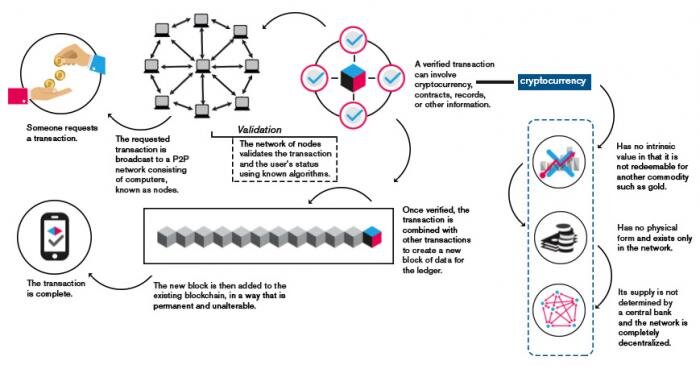
Blockchain is the foundation. It's a secure, distributed digital ledger that can't be easily altered. Think of it as a shared notebook that everyone can see but no one can erase. This creates a trustworthy record of transactions without needing a central authority to vouch for it.
On top of the blockchain run smart contracts.
Smart Contract
noun
A self-executing program that automatically carries out the terms of an agreement between two or more parties. The rules are written directly into code.
Smart contracts are the building blocks of DeFi. They handle the logic for everything from lending and borrowing to trading assets. Because they run on the blockchain, they are transparent and tamper-proof. Once a smart contract is deployed, it will execute exactly as written, creating a reliable and automated system.
Benefits and Risks
The structure of DeFi offers some powerful advantages. By cutting out the middleman, it can significantly reduce transaction costs. Its open and global nature promotes financial inclusion, offering services to people who may not have access to traditional banking.
However, DeFi is still a new and developing field, and it comes with risks. The code behind smart contracts can have bugs or vulnerabilities that hackers can exploit, leading to a loss of funds. The decentralized nature also means there is often no central authority to turn to if something goes wrong.
Finally, the regulatory landscape is still uncertain. Governments around the world are figuring out how to approach this new technology, and future rules could impact how DeFi platforms operate.
Ready to check your understanding of these core concepts?
What is the primary goal of Decentralized Finance (DeFi)?
Which technology acts as the foundational, secure digital ledger for DeFi applications?
That's a quick look at the world of Decentralized Finance. It's a system built on transparency and automation, aiming to create a more open financial future for everyone.