Introduction to Day Trading
Introduction to Day Trading
What Is Day Trading?
Day trading is a fast-paced approach to the financial markets. Unlike traditional investing where you might buy a stock and hold it for years, a day trader buys and sells within a single day. The goal isn't to benefit from a company's long-term growth, but to profit from small price fluctuations that happen minute by minute.
Day trading is the act of buying and selling a financial instrument within the same day or even multiple times over the course of a day.
Think of it like being a merchant who buys and sells goods quickly to take advantage of immediate changes in demand. A day trader does the same with financial assets, aiming to end the day with more cash than they started with, closing out all their positions before the market shuts down.
The Trader's Toolbox
Day traders work with a variety of financial instruments. Each has its own characteristics, and traders often specialize in one or two.
- Stocks: These represent a share of ownership in a public company. Traders buy and sell these shares, betting on their price going up or down within the day.
- Options: An options contract gives the holder the right, but not the obligation, to buy or sell a stock at a predetermined price before a specific date. They offer leverage, meaning a small price movement in the stock can lead to a large profit or loss.
- Futures: This is a contract to buy or sell an asset, like oil or corn, at a future date for an agreed-upon price. Traders speculate on the future price of the commodity or financial index.
- Currencies (Forex): The foreign exchange market involves trading one country's currency for another. It's the largest financial market in the world, and traders aim to profit from changes in exchange rates.
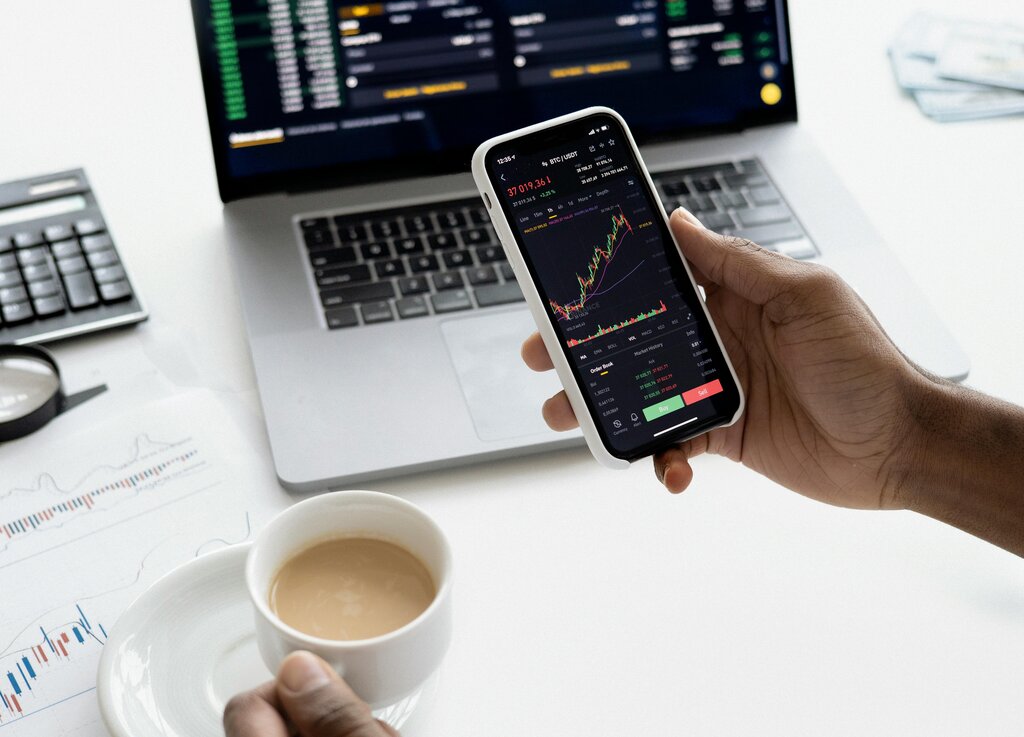
The instrument a trader chooses often depends on their strategy, risk tolerance, and the amount of capital they have.
| Instrument | What It Is | Key Feature for Day Traders |
|---|---|---|
| Stocks | A share of a company | High volume and news-driven moves |
| Options | Right to buy/sell a stock | High leverage, potential for large gains/losses |
| Futures | Contract for future delivery | Standardized contracts, often linked to commodities |
| Currencies | Foreign exchange | Open 24 hours a day, high liquidity |
More Than Just a Hunch
Successful day trading requires a specific set of skills. It's far from gambling; it's a discipline that demands preparation and a cool head.
First is analytical proficiency. Traders must quickly interpret charts, news, and economic data to predict short-term market direction. This isn't about having a crystal ball, but about making educated decisions based on available information.
Second is discipline. The market can be an emotional rollercoaster. Fear and greed can lead to impulsive decisions and costly mistakes. A successful trader sticks to a pre-defined trading plan, with clear rules for when to enter and exit a trade, no matter what their gut is telling them.
Without discipline, a trading strategy is just a list of good intentions.
Finally, and most importantly, is risk management. The number one rule of trading is to protect your capital. This means never risking more than you can afford to lose on a single trade. Professional traders often risk only 1% or 2% of their total account on any given position. This ensures that a few bad trades don't wipe them out, allowing them to stay in the game long enough for their strategy to pay off.
Ready to see what you've learned? Let's check your understanding.
What is the primary goal of a day trader?
Which financial instrument represents a contract that gives the holder the right, but not the obligation, to buy or sell an asset at a predetermined price?
Mastering these core ideas is the first step. Day trading is a challenging field, but it starts with a solid foundation in these principles.