Introduction to Data Science
Introduction to Data Science
What Is Data Science?
Data science is the art and science of finding meaningful patterns in data. Think of it like being a detective. You're given a huge collection of clues (the data), and your job is to sift through them, piece them together, and tell a clear story about what happened, what's happening now, or what might happen next.
This isn't just about numbers on a spreadsheet. Data can be anything from customer reviews and social media posts to satellite images and medical scans. The goal is always the same: to turn raw information into useful insights that can help people make better decisions.
At its core, data science is about asking interesting questions and using data to find the answers.
The field is incredibly broad. Businesses use it to understand what customers want and to recommend products. Scientists use it to analyze experimental results and accelerate new discoveries. City planners use it to manage traffic flow and improve public services. Essentially, anywhere data exists, data science can provide value.
A Mix of Skills
No single person is expected to be a world-class expert in everything, but data science draws from three main areas of knowledge. It's the intersection of computer science, statistics, and what's called "domain expertise."
Let's break that down:
-
Computer Science: This is the "how." It provides the tools and techniques to collect, store, and process large amounts of data efficiently. Think of programming languages like Python or databases that can handle massive datasets.
-
Statistics: This is the "why." It provides the mathematical foundation for analyzing data. Statistical methods help us separate meaningful patterns from random noise and quantify our confidence in the results.
-
Domain Expertise: This is the "what." It's the specialized knowledge of a particular field, like biology, finance, or marketing. Someone with domain expertise understands the context of the data, knows what questions are important to ask, and can interpret the results in a meaningful way.
A great data scientist doesn't just know how to run the numbers; they understand what the numbers actually represent in the real world.
The Data Science Journey
A data science project usually follows a series of steps, often called the data science process or lifecycle. While the specific details can change, the general flow is consistent.
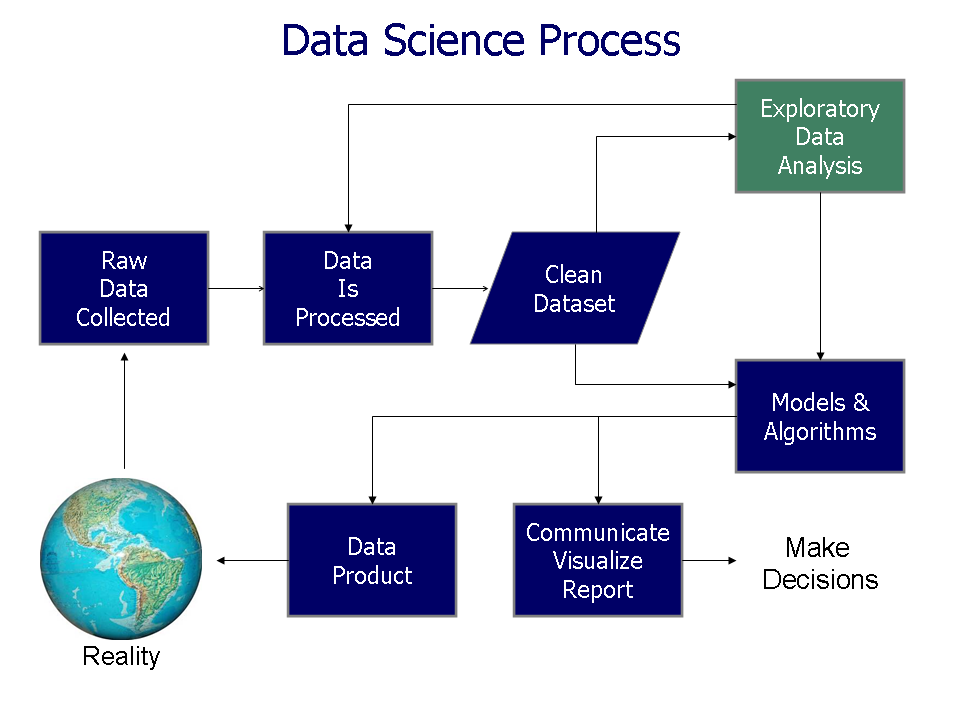
Here are the key stages:
-
Problem Definition: It all starts with a question. What are we trying to figure out? A clear, well-defined goal is crucial. Examples might be "Which customers are likely to stop using our service?" or "How can we optimize our delivery routes?"
-
Data Collection: Once you know the question, you need the right data to answer it. This might come from company databases, public sources, surveys, or sensors.
-
Data Preparation: Real-world data is often messy. It can have missing values, errors, or inconsistencies. This stage involves cleaning and organizing the data to get it ready for analysis. It's often the most time-consuming part of the process.
-
Analysis & Modeling: This is the discovery phase. Data scientists explore the data, look for patterns, and may build predictive models. This is where they apply their statistical and programming skills to uncover insights.
-
Communication & Reporting: An insight is only useful if it can be understood and acted upon. The final step is to present the findings in a clear, compelling way, often using charts and visualizations. This helps stakeholders make informed, data-driven decisions.
Data science is a large field covering everything from data collection, cleaning, standardization, analysis, visualization and reporting.
This process isn't always a straight line. Often, findings in the analysis stage will lead to new questions, sending the data scientist back to earlier steps to collect new data or refine the problem.
What is the primary goal of data science?
Data science is often described as the intersection of which three main areas of knowledge?
By following this structured approach, data scientists can systematically tackle complex problems and turn vast amounts of information into valuable knowledge.