Introduction to Data Science
Introduction to Data Science
What Is Data Science?
Data science is the process of using data to understand the world and make better decisions. It's like being a detective, but instead of clues, you use information to solve problems. This could be anything from a business figuring out what products to recommend to a scientist tracking the spread of a disease.
Data Science is an interdisciplinary field that uses various techniques from statistics, mathematics, computer science, and domain-specific knowledge to extract insights from vast amounts of data.
The term "interdisciplinary" is key. Data science isn't just one skill; it's a blend of several. Think of it as a Venn diagram where a few different fields overlap.
A data scientist draws on:
- Computer Science: To collect, manage, and process large amounts of data.
- Math & Statistics: To analyze the data, find patterns, and build predictive models.
- Domain Expertise: To understand the context of the problem. A data scientist working in healthcare needs to understand medicine, just as one in finance needs to understand markets.
The Data Science Cycle
Data science isn't a single action but a full lifecycle. It's a structured process for turning raw data into meaningful insights. While it can get complex, the cycle generally follows five main steps.
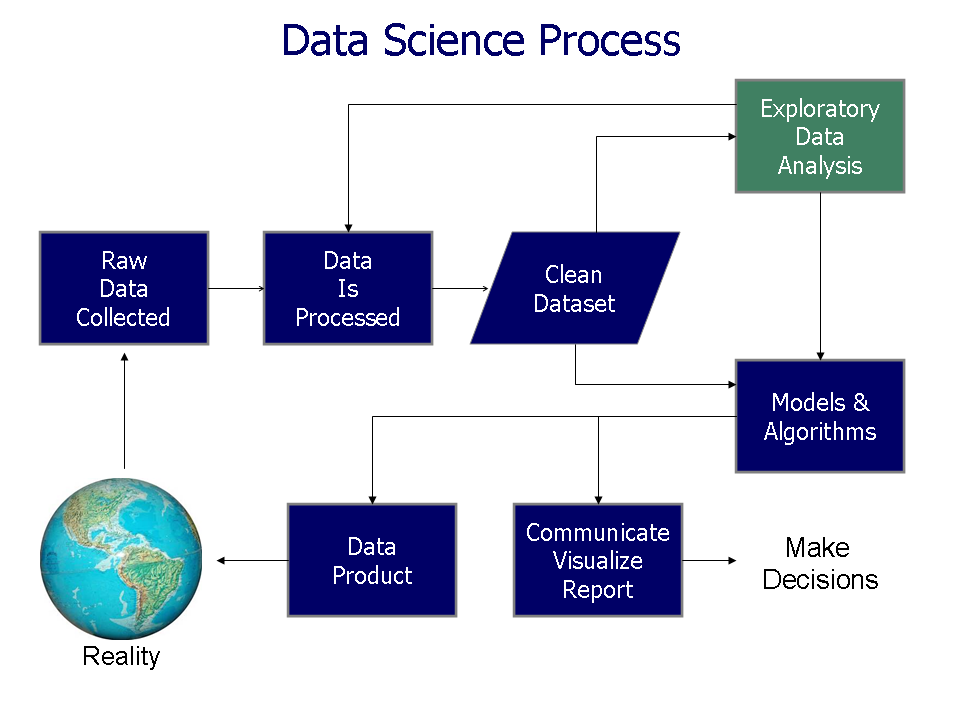
1. Problem Definition This is the starting point. Before you can find an answer, you need to ask the right question. What are we trying to solve? A clear, well-defined question guides the entire process. A vague goal like "improve sales" is less helpful than a specific one like "which marketing channel brought in the most new customers last quarter?"
2. Data Collection Once you know the question, you need to gather the necessary information. Data can come from anywhere: customer surveys, website traffic, sales records, or public databases. This stage is about assembling the raw materials for your investigation.
3. Data Preparation Raw data is almost never perfect. It can be messy, incomplete, or inconsistent. This step, often called data cleaning, involves fixing errors, handling missing values, and structuring the data so it's ready for analysis. It's a critical and often time-consuming phase that ensures the quality of your results.
4. Data Analysis This is where you explore the data to find patterns, trends, and connections. You might use statistical methods or machine learning algorithms to sift through the information and uncover insights that aren't obvious at first glance. It's the core discovery phase of the cycle.
5. Data Reporting Finding an insight is only half the battle. The final step is to communicate your findings to others. This usually involves creating visualizations like charts and graphs, and presenting the story the data tells in a clear, understandable way. A good report can drive action and lead to real change.
This five-step process is a cycle, not a straight line. The insights from one project often lead to new questions, starting the cycle all over again.
Now, let's test your understanding of these core concepts.
What is the primary goal of data science?
Which of these is the best example of a well-defined problem for a data science project?
Understanding this cycle is the first step in thinking like a data scientist. It provides a roadmap for tackling complex problems and turning data into knowledge.