Introduction to Data Science
Introduction to Data Science
What Is Data Science?
At its heart, data science is the art of telling stories with data. It’s a field dedicated to finding patterns, insights, and meaning within vast amounts of information. Think of it as a blend of detective work and storytelling. A data scientist sifts through clues (data) to solve a puzzle or answer a question, and then presents the findings in a way that everyone can understand.
The goal is to move beyond just looking at what happened in the past. Data science aims to explain why things happened, predict what might happen next, and even suggest the best course of action. It's about turning raw information into actionable knowledge.
This ability to extract valuable insights is why data science has become so important. Companies, non-profits, and governments all use it to make smarter decisions, create better products, and serve people more effectively.
A Mix of Skills
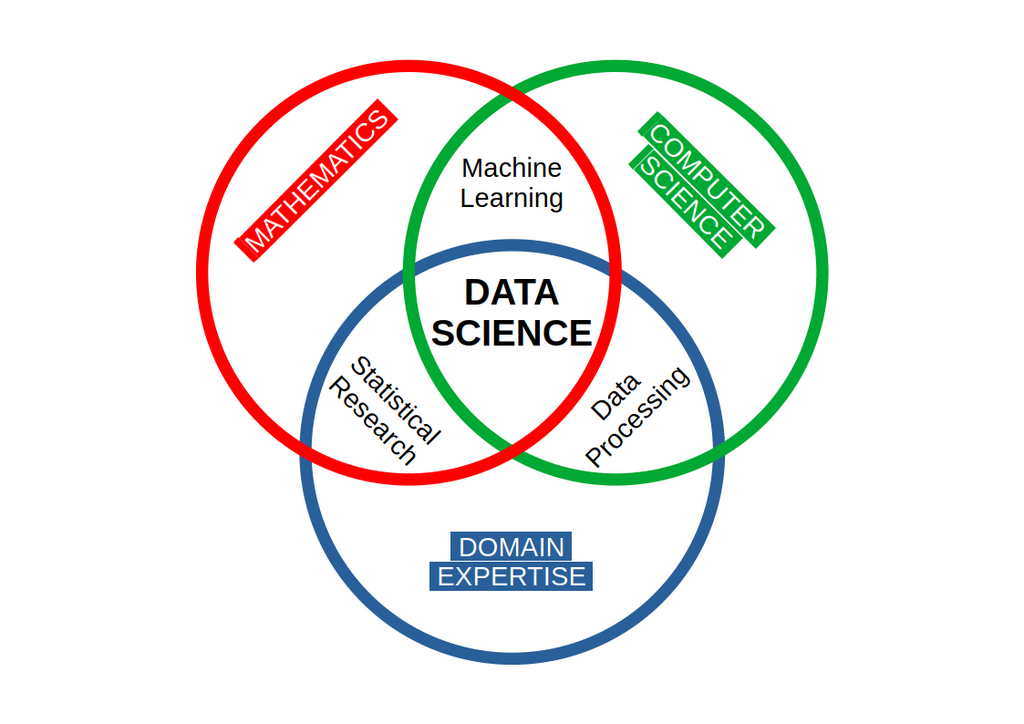
Data science isn't just one skill; it's an intersection of several key areas.
First, there's computer science. Data is often messy and massive, so you need programming skills to collect, clean, and manage it efficiently. This is the technical foundation that makes modern data analysis possible.
Next comes statistics and mathematics. This is the toolbox for finding patterns. Statistical principles help data scientists design experiments, test ideas, and separate meaningful trends from random noise. It provides the rigor needed to make confident conclusions.
Finally, and perhaps most importantly, there's domain expertise. This is deep knowledge of a specific field, like healthcare, finance, or marketing. You can't find meaningful answers if you don't know which questions to ask. A data scientist working for a hospital needs to understand medicine, just as one working for a bank needs to understand finance. It’s this context that turns data into solutions for real-world problems.
Without domain knowledge, a data scientist is just a statistician with a computer. Without the other two, they're an expert who can't prove their ideas.
How We Got Here
Using data to make decisions is nothing new. In the 1850s, a physician named John Snow mapped cholera cases in London to trace the source of an outbreak to a contaminated water pump. That was a form of data science.
So what’s different today? The sheer scale of it all. The rise of computers and the internet created an explosion of data. Suddenly, we had more information than we could ever analyze manually. This flood of data required new tools and techniques to handle.
The term "data science" began to gain traction in the early 2000s, as people realized that the skills needed to work with this new scale of data didn't fit neatly into traditional fields like statistics or computer science. It was something new, requiring a unique combination of abilities.
Data Science in Action
Data science isn't just an abstract concept; it's at work all around us. When a streaming service recommends a movie you might like, that’s data science. It analyzes your viewing history and compares it to millions of other users to make an educated guess.
In transportation, logistics companies use data science to plan the most efficient delivery routes, saving time, fuel, and money. In finance, it's used to detect fraudulent credit card transactions in real time by spotting unusual spending patterns.
Even in sports, teams use data science to analyze player performance and scout new talent. They look for hidden patterns in game statistics to gain a competitive edge. From personalizing your shopping experience to helping scientists discover new medicines, the applications are nearly endless.
Ready to test your knowledge? Let's see what you've learned about the fundamentals of data science.
What is the primary goal of data science?
Which of the following is NOT considered a core intersecting area of data science?
Data science is a powerful field that combines technology, statistics, and expertise to uncover insights and drive progress across countless industries.