Introduction to Data Science
Introduction to Data Science
What Is Data Science?
Data science is the art of asking questions and finding answers in data. It's a field that blends computer science, statistics, and business knowledge to turn raw numbers into meaningful stories. Think of it as a modern form of detective work, where the clues are hidden in vast amounts of information.
Data Science is an interdisciplinary field that uses various techniques from statistics, mathematics, computer science, and domain-specific knowledge to extract insights from vast amounts of data.
At its heart, data science is about understanding the world more deeply through the lens of data. It isn't just one skill, but a combination of several. A data scientist needs the programming skills of a software engineer, the analytical mindset of a statistician, and the practical knowledge of an expert in a specific field, like healthcare or finance.
This unique combination of skills is what allows data scientists to tackle complex problems that can't be solved by one discipline alone.
The Data-Driven Advantage
Why has data science become so important? Because it powers data-driven decision-making. In the past, many business decisions were based on intuition or experience. While valuable, this approach has its limits. Data provides concrete evidence to guide choices and measure results.
Imagine a company launching a new product. Instead of guessing which customers might be interested, a data scientist can analyze past purchase history, website clicks, and demographic information to identify the most likely buyers. This allows for targeted marketing campaigns that are far more effective than casting a wide, expensive net.
Streaming services like Netflix use data science to recommend shows you might like, and e-commerce sites like Amazon suggest products based on your browsing habits. These aren't just clever tricks; they are core business strategies built on understanding user behavior through data.
Data helps organizations move from 'we think' to 'we know'.
This shift transforms how industries operate. In healthcare, data science helps predict disease outbreaks. In finance, it's used to detect fraudulent transactions. In sports, it helps teams scout players and develop game strategies. By leveraging data, organizations can become more efficient, innovative, and responsive to the needs of their customers.
A Typical Workflow
While every project is different, the data science process generally follows a series of steps. It’s a journey that starts with a question and ends with an answer.
First, a problem is defined and relevant data is collected from various sources. This data is often messy, with missing values or inconsistencies, so the next step is cleaning and preparing it for analysis. This is a critical stage, as the quality of the data directly impacts the quality of the insights.
With clean data, the exploration begins. The data scientist looks for patterns, trends, and relationships. This is where they might apply statistical techniques or use machine learning models to make predictions. Finally, the findings must be communicated clearly, often through charts, graphs, and reports, so that others can understand them and take action.
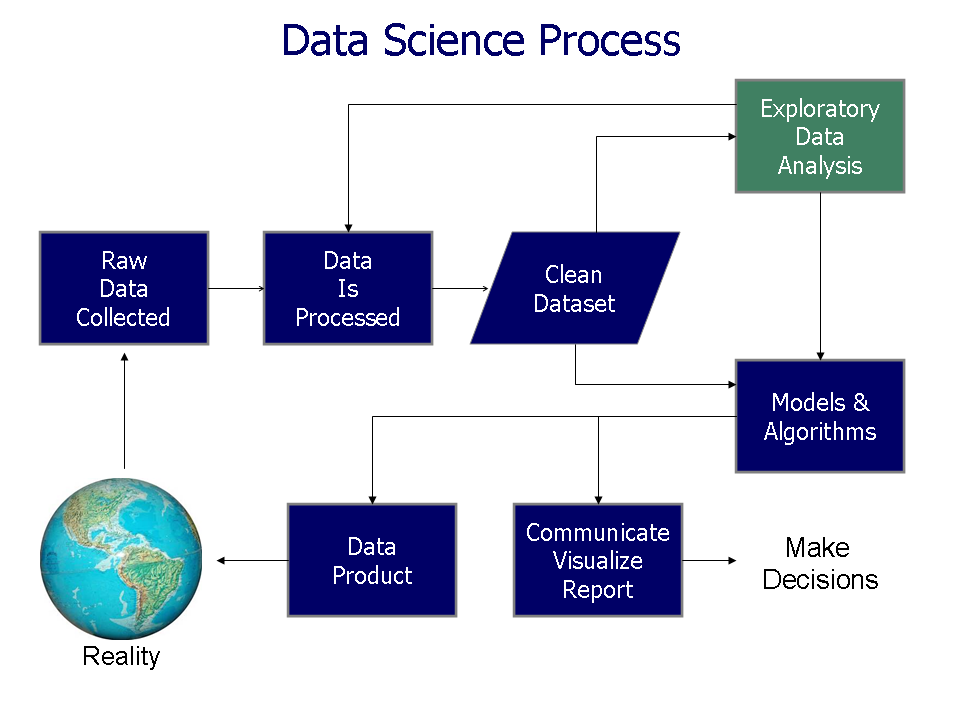
A data scientist is part storyteller, part analyst, and part engineer. They are responsible for guiding this entire process, from understanding the initial business problem to presenting the final solution. Their role is to bridge the gap between the technical world of data and the practical world of business decision-making.
Now, let's test your understanding of these core concepts.
Which combination of skills best describes a data scientist's expertise?
What is the primary goal of the data cleaning and preparation step in the data science process?
Data science is a powerful field for making sense of our increasingly complex world. By understanding its core principles, you've taken the first step toward thinking like a data scientist.